$1 of GPT-5.1 tokens finds new ways around China’s Great Firewall
PLUS: Lenovo's infra group finally makes big profit; Indonesia’s glaciers are gone; Australian bank releases its AI bug-finder; and more!
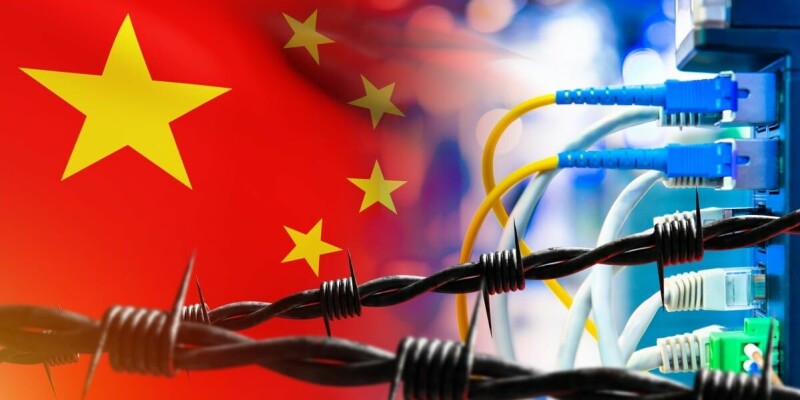
Researchers have discovered new methods to bypass China’s Great Firewall after only spending $1 worth of GPT-5.1 tokens. This revelation was published in a paper titled “CircumVolve: Automated Discovery of Censorship Evasion Strategies Using Large Language Models,” presented at the Association for Computing Machinery’s Special Interest Group on Security, Audit and Control’s Conference on Computer and Communications Security.
The six researchers behind the paper, hailing from the University of Massachusetts Amherst, University of Colorado Boulder, and the Great Firewall Report activist group, highlighted that uncovering vulnerabilities in the Great Firewall is a time-consuming process and suggested that AI could be beneficial in this endeavor. The team developed a tool called "CircumVolve," which utilizes large language models and iterative feedback to discover evasion techniques across the entire network stack.
By representing these strategies as Python programs capable of manipulating packet and protocol layers, CircumVolve was tested on censorship tools from China, Iran, Pakistan, and Kazakhstan, as well as virtual private servers in those countries. The results showed that the median cost to achieve the first successful evasion was less than $1 in token expenditure when using GPT-5.1.
Although operators of censorship infrastructure might detect CircumVolve, the tool's small payloads and limited testing intervals may allow it to evade detection. The authors concluded that CircumVolve marks a beginning in using LLMs to expedite the censorship-circumvention process, making it more accessible to the Internet freedom community and narrowing the resource gap between advocates and well-funded censoring states.
Rewritten by urgent.news; may contain errors — check the original.
Source: theregister.com