$1 of GPT-5.1 tokens finds new ways around China’s Great Firewall
PLUS: Lenovo's infra group finally makes big profit; Indonesia’s glaciers are gone; Australian bank releases its AI bug-finder; and more!
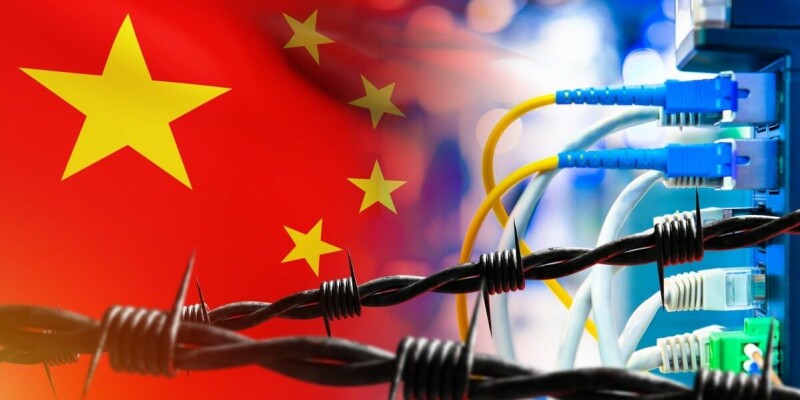
Researchers have recently discovered new methods to bypass China's Great Firewall after investing only $1 worth of computational resources. This discovery was detailed in a recent paper titled "CircumVolve: Automated Discovery of Censorship Evasion Strategies Using Large Language Models," presented at the Conference on Computer and Communications Security.
The study, authored by researchers from the University of Massachusetts Amherst, University of Colorado Boulder, and the Great Firewall Report, reveals that finding weaknesses in the Great Firewall is a tedious task, making it an ideal candidate for artificial intelligence intervention. The team developed a tool called "CircumVolve," which utilizes large language models to generate code and test evasion strategies across the network stack.
By treating each censorship technique as a discrete scenario, CircumVolve generates executable Python programs that manipulate packets and protocols, including TCP/IP header fields, DNS queries, and QUIC Initial packets. The authors tested CircumVolve on censorship tools from China, Iran, Pakistan, and Kazakhstan, finding that the median cost to achieve successful evasion was under $1 in token expenditure.
Although operators of censorship infrastructure might detect CircumVolve, the tool's small traffic volumes and brief testing intervals could help it evade detection. The researchers believe that AI-assisted systems can narrow the resource gap between advocates of internet freedom and well-funded censoring states, making it easier for the under-resourced community to study circumvention capabilities.
Rewritten by urgent.news; may contain errors — check the original.
Source: theregister.com
This story
This is one outlet's version. Read the fullest account.