Weltklimakonferenz: Wut und Frust in Antalya: Klimagipfel schafft keine Einigung
Zwei Wochen haben Tausende Diplomaten aus knapp 200 Staaten über Wege zur Eindämmung der Erderwärmung debattiert. Trotzdem endet der Gipfel ohne angemessene Antwort auf die eskalierende Krise.
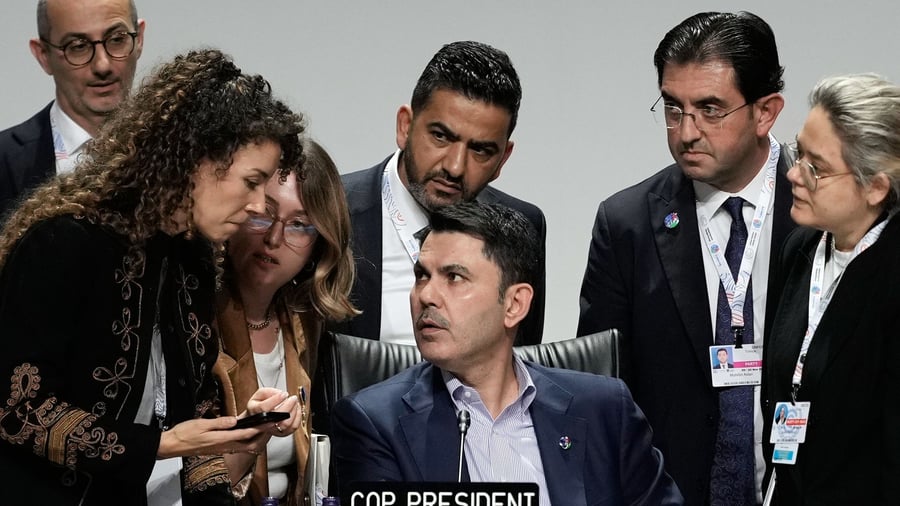
The end of the longest climate conference in history in Turkey saw anger, frustration, and sharp accusations. Despite two weeks of negotiations, the world's longest climate conference in Turkey failed to agree on a final declaration. Several states rejected the "Antalya Pact" presented by the Turkish-Australian conference leadership, including the EU.
"The EU strongly rejects this text," said Irish Climate Minister Darragh O'Brien on behalf of the G7. They would not accept a final declaration that does not even mention fossil fuels. Coal, oil, and gas are the main drivers of the climate crisis, O'Brien said, adding that the draft response does not come close to addressing the urgent need for climate action.
Turkish conference president Murat Kurum, who had just a few days earlier seen the agreement in reach, had to admit that the draft lacked the necessary unanimous support. The conference was marked by attempts by powerful oil states like Saudi Arabia and Russia to roll back past decisions. In late-night negotiations, the EU and a number of allied countries, including small island states, African countries, and less developed states, had opposed it.
The group even formed the clear majority of 130 countries. However, climate conferences require all decisions to be made by consensus, giving individual states veto power. EU Climate Minister Carsten Schneider also rejected the draft as "unacceptable." The ten-page paper did not provide a sufficient response to the climate crisis, but even went a step backwards, the German politician said.
Schneider accused oil states of blocking progress. The overwhelming majority of states were engaged in climate action, he said, while some deservedly profited from oil and gas and were not ready to reduce them. Even the chief diplomat of the Marshall Islands, threatened by rising sea levels, rejected the final declaration. The text was the "worst possible response" to the climate crisis and endangered the security and future of their home.
However, there were also countries that pushed for the adoption of the final declaration. A Saudi Arabia representative stated that the Arab states were responsible for only a very small share of the greenhouse gases emitted in the past. He also advocated carbon capture and storage (CCS) as a solution to climate change. China, Pakistan, and African states also lamented the failure.
EU Climate Commissioner Wopke Hoekstra attributed the failure to the strong focus of oil states on expensive storage technologies, saying CCS had appeared suddenly as a "new solution for all problems" in the negotiations, as if fossil fuels could simply be forgotten and CCS could somehow solve the problem. This was not acceptable, and that is why a "heavy heart" had to say no. The first failure to agree on a final declaration was particularly unfortunate given that this year has seen tens of thousands of heat-related deaths and devastating natural disasters as a result of global warming.
Observers noted that this was the first time a climate conference had specifically negotiated a final declaration that ultimately failed in plenary. Now, in a year with tens of thousands of heat-related deaths and devastating natural disasters, environmentalists did not necessarily view the outcome as a disaster. "After all, a handful of fossil states like Saudi Arabia and Russia blocked a clear commitment to phase out coal, oil, and gas," said Greenpeace Germany's Executive Director Martin Kaiser.
"No agreement is ever better than one that leaves the fossil industry in the driver's seat." Oxfam's Jan Kowalzig spoke of a "sign that the majority of states could not force the blockers of a fossil exit." But the fact that this far had been reached was also due to the EU's lack of flexibility in financial support for poorer countries, which had prevented alliances.
Mohamed Adow, Director of Power Shift Africa, accused the EU. European governments demanded different timelines for phasing out fossil fuels while expanding their own use of oil, gas, and coal and blocking the financial resources poorer countries needed for the transition. "The EU cannot sabotage negotiations on the one hand and pose as the conscience of the world on the other."
There were still results, however. A new form of climate diplomacy emerged in Antalya. Alliances of states formed or strengthened their resolve to move quickly on specific issues. For example, about 30 states have already submitted their own plans to phase out coal, oil, and gas or announced their plans. In July, dozens of states will meet in the Pacific island nation of Tuvalu to exchange ideas on phasing out fossil energy.
Dozens of states also backed a Turkish presidency initiative to increase the share of electricity in global energy consumption from the current 23% to 35%. However, this goal should have been included in the central final text. Germany, the EU, and twelve other states are pushing for stronger action on the climate gas SF6.
Rewritten by urgent.news; may contain errors — check the original.
Source: handelsblatt.com