Versteckte Steuererhöhung: Söder lässt bei kalter Progression nicht locker
Durch die kalte Progression streicht der Staat Milliarden Steuern ein. Für einen Ausgleich fand die Koalition kein Geld. Jetzt macht ein Ministerpräsident Druck – auch auf seine Kollegen.
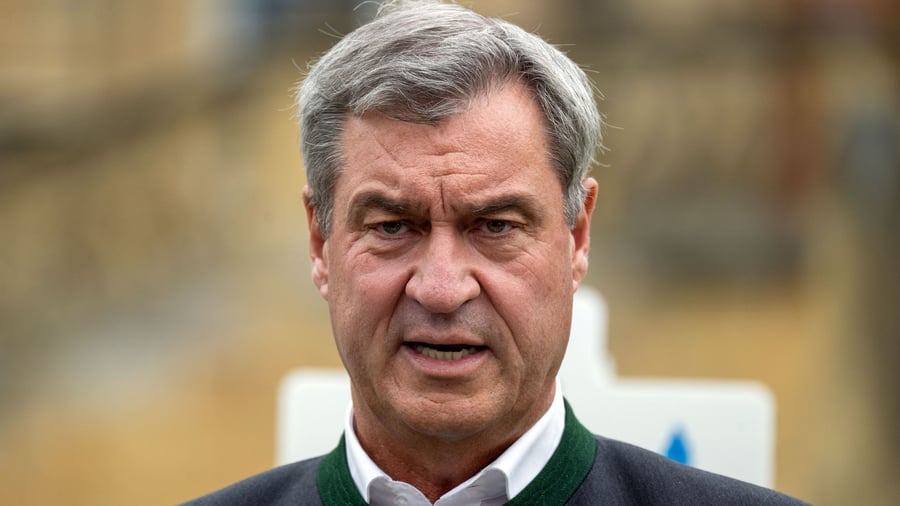
CSU leader Markus Söder remains insistent in the coalition dispute and demands an immediate balancing of the tax burden increase caused by the cold progression for all citizens, according to the "Bild am Sonntag". The state of Bavaria is willing to contribute to the costs of eliminating income tax imbalances. The cold progression, a hidden tax burden, arises because the income tax does not account for inflation.
When income rises, individuals must pay more taxes, even if they cannot afford it due to higher prices. A complete balancing of this phenomenon in 2027 would cost the federal government, states, and municipalities around 4.2 billion euros. No room was found for this in the budget negotiations between Union and SPD, and the SPD demanded solid financing, which the Union was unwilling to provide.
As a result, significant cuts had to be made in the budget. Söder puts pressure on his Bavarian colleagues, arguing that in difficult economic times, one should not abandon a long-standing political custom. This is a matter of fairness and credibility. The cold progression is not only harmful to purchasing power but also deeply unjust.
This stance puts pressure not only on Klingbeil and Chancellor Friedrich Merz (CDU) but also on his fellow minister presidents. If the states were to contribute their share of costs, the federal government would only need to finance the federal share of 1.8 billion euros and possibly the share of municipalities (0.6 billion euros).
The states would contribute an additional 1.8 billion euros. It is necessary to have a joint effort between the federal and state governments, says Söder to the "Bild am Sonntag". However, many other states are unwilling to give up tax revenues, as they have much less financial flexibility. The readiness of the other states to contribute is low.
Many of them have significantly less financial room. Bavaria is by far the largest contributor in state financing. The minister president of Rhineland-Palatinate, Gordon Schnieder, firmly rejected the initiative. "The state budgets are finalized, the federal budget has been negotiated, and the parliament and coalition committee have finalized it.
Whoever now demands additional reliefs at short notice must finance them entirely with federal funds," said the CDU politician in the "Rheinischen Post". The question now is which projects we should implement in what order and if the mother pension III should be a priority, said Schnieder. Even if more states agree to finance the progression balancing, the initiative for the federal budget in 2027 would be too late.
The budget will be discussed and decided on in the Bundestag this week. However, it is not entirely out of the question that the cold progression for 2027 might still be balanced. Union fraction leader Thorsten Frei (CDU) has already stated that the balancing could be decided retroactively in the course of the next year, if the money is available.
Rewritten by urgent.news; may contain errors — check the original.
Source: handelsblatt.com