Animal disease: Bird flu cases increasing, especially in the north
Again more bird flu cases are coming to the lab. However, the situation is not as severe as it was last year. And that is not the only difference.
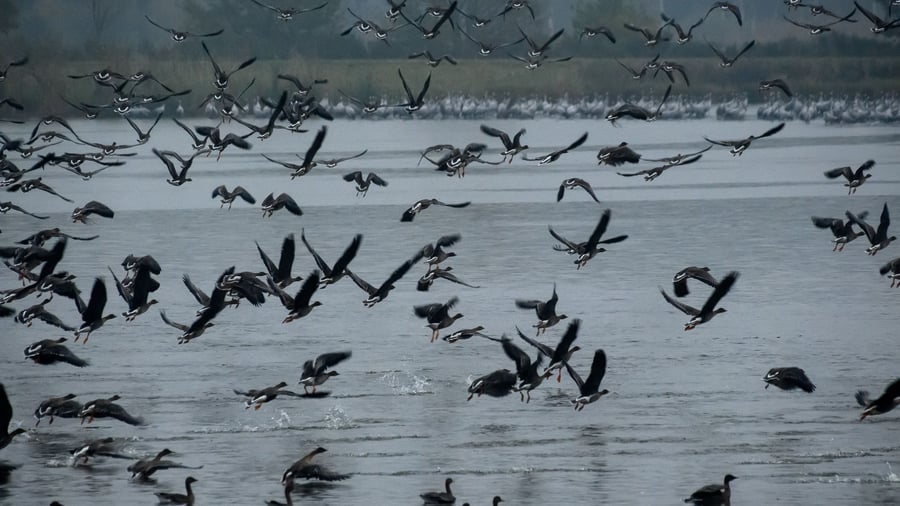
The number of avian influenza cases is increasing, particularly in northern Germany. Timm Harder, from the Friedrich-Loeffler-Institut (FLI) in Greifswald, noted that while there were only isolated cases in the weeks before, there are now entire groups of 10 to 20 sick or dead wild birds. The focus of the infection is currently on the Wadden Sea, with Schleswig-Holstein, Hamburg, and Lower Saxony being the primary areas of concern.
While outbreaks in poultry are less severe, Schleswig-Holstein has experienced more frequent outbreaks. There have been reported cases in Mecklenburg-Western Pomerania and Brandenburg, as well as a mute swan recently tested positive in the Trier area of Rhineland-Palatinate. The number of cases is far from what was seen last year.
In the past month, there have been four outbreaks of poultry in Schleswig-Holstein, three in Lower Saxony, and one in Mecklenburg-Western Pomerania. Compared to last year, the current infection situation is relatively moderate. Harder acknowledged that the situation could still change, as surprises are always possible. Last year, there were unprecedented numbers of cranes affected by avian influenza, but none were found in recent tests.
No particular species is currently more affected. Large goose breeds, such as Canadian geese, greylag geese, and mute geese, have seen a significant impact, as have ducks, gulls, and occasionally raptors. The FLI has also tested a black-headed gull for the first time, confirming it as positive. This development may be due to immunity rather than a change in the virus, but comprehensive blood samples from live tested wild birds are needed to confirm this.
Wildfowl are currently experiencing the majority of infections, as they spend the winter in Germany. Avian influenza vaccinations are of particular concern for goose owners, who keep their birds outdoors in water-filled enclosures that are favorable conditions for the virus to infiltrate. Goose and duck owners have been urging for avian influenza vaccinations to be started before the holiday season, as selling animals around November and December is often necessary.
However, unlike other poultry species, there is currently no approved vaccine for geese. The main obstacle is the fear that third countries outside the EU may close their markets for European poultry if vaccinations are implemented.
Rewritten by urgent.news; may contain errors — check the original.
Source: handelsblatt.com