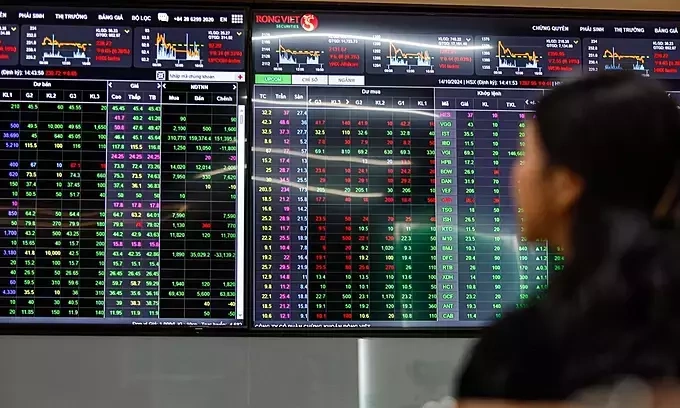
The Stock Market Is Doing Something for Only the 5th Time This Century, and History Says It's Obvious What Comes Next for Stocks
If things seem too perfect for investors, they often are.
As the end of 2026 approaches, the stock market is proving to be a marvel by achieving record highs. This surge is primarily due to advancements in artificial intelligence (AI) infrastructure, improved corporate earnings, and initial public offering (IPO) enthusiasm. However, experts warn that bull markets, while typically long-term, cannot endure indefinitely.
While numerous challenges could potentially disrupt the Dow, S&P 500, and Nasdaq Composite, the most significant concern is the premium stock valuations. While past events cannot guarantee future outcomes, history provides valuable insights for investors.
One crucial metric used to assess the health of the stock market is the Shiller P/E Ratio, also known as the Cyclically Adjusted P/E Ratio (CAPE Ratio). This tool calculates inflation-adjusted EPS over a 10-year period, providing a more accurate valuation for stocks during recessions when EPS turns negative. Over the past 156 years, the average Shiller P/E Ratio stands at 17.45, yet as of November 17, the S&P 500's ratio has skyrocketed to 38.76, more than 122% above this long-term average.
This elevated reading suggests that the market's valuations are excessively high, signaling potential trouble ahead.
Historically, when the CAPE Ratio surpasses 30, a significant downturn in the major stock indexes has followed. Such instances have occurred six times since 1871 and five times this century, including the current situation. Despite the market's current seemingly perfect performance, history emphasizes that premium valuations are unsustainable in the long run.
While stock market corrections, bear markets, and even crashes are normal and healthy events, they typically last only 9.5 months on average, making them far shorter than bull markets, which persist for nearly 3.6 times as long.
Even during periods of economic turmoil, such as recessions, depressions, wars, pandemics, or high inflation, the stock market has historically delivered positive returns for patient investors. For instance, if an investor had purchased an S&P 500 index fund at any point between 1900 and 2006 and held it for 20 years, they would have always generated a profit, even when buying near market highs. This demonstrates that, amidst adversity, maintaining a long-term perspective can yield significant benefits for investors.
Rewritten by urgent.news; may contain errors — check the original.
Sources: fool.com · nasdaq.com