The Fortunes of a Dim Sun
Bad news for habitable planets in the galaxy: It’s hard to both make an ocean and then keep it The post The Fortunes of a Dim Sun appeared first on Nautilus .
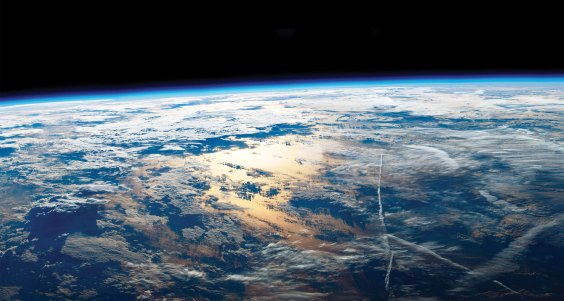
Recent research challenges the notion that a faint young sun prevented Earth from retaining its oceans. The paradox, first proposed in 1972 by astronomers Carl Sagan and George Mullen, puzzled scientists because the early sun was much less luminous than it is today. However, a fresh perspective suggests that Earth's early oceans might have been saved by the sun's reduced brightness.
To grasp this, consider the fates of Venus and Earth, the two planets that formed as neighbors. Both harbored significant amounts of water, according to the latest understanding. This water likely existed from the very beginning of their formation. On Venus, this water was eventually transformed into deuterium-rich steam and eventually lost to space, leaving the planet arid. On Earth, however, a different story unfolded.
Planetary impacts, particularly giant ones that formed the moon, heated the surfaces of young planets, boiling away any surface water. The rate at which these planets rotated played a critical role in determining whether their oceans could form. A faster rotation would have dispersed any water into space. Conversely, a slower rotation, like Earth's current 24-hour day, allowed water to condense into oceans.
Earth's slow rotation, a result of gravitational interactions with the moon, created a stable climate conducive to ocean formation. In contrast, Venus's slower rotation, coupled with the thick sulfuric acid clouds formed by its steam atmosphere, kept temperatures high enough to prevent rain from ever reaching the surface. These calculations suggest that for oceans to condense, sunlight levels must be about 95% of today's.
Earth received about 70-75% of current sunlight, allowing its oceans to form, whereas Venus received about 135%, maintaining its steam-dominated atmosphere.
Thus, the faint young sun paradox may not be as insurmountable as once thought. The young Earth, bathed in less sunlight, was able to keep its oceans intact, while the young Venus, with its enhanced solar input, retained its inhospitable steam atmosphere.
Rewritten by urgent.news; may contain errors — check the original.
Source: nautil.us