Shrimp exports top $4.2B in 10 months
Vietnam’s shrimp exports rose 9% year-on-year to US$4.22 billion in the first 10 months of 2026.
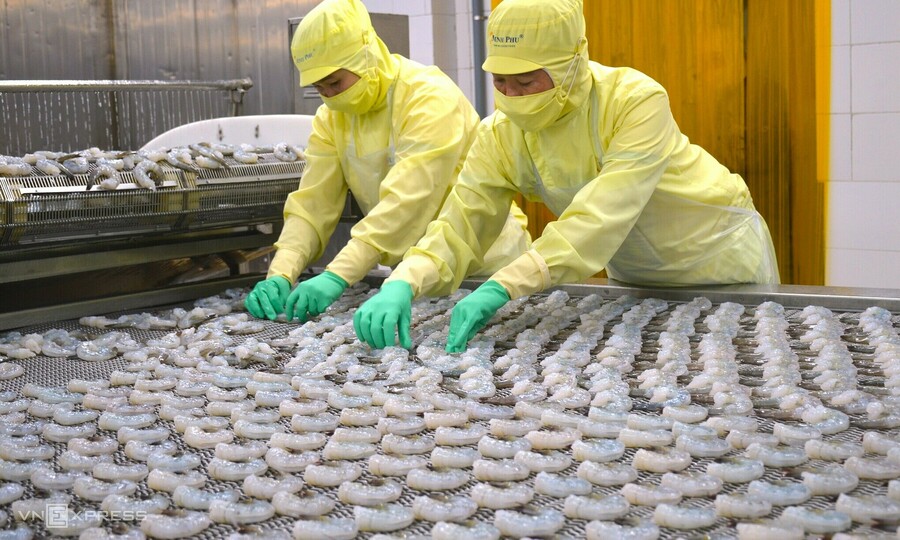
Vietnam's shrimp exports reached a record $4.2 billion in the last ten months, with mainland China and Hong Kong accounting for the largest portion at $1.42 billion. The United States took the second-largest share, with exports valued over $563 million, followed by Japan ($503 million), the European Union ($461 million), and Australia ($241 million). Whiteleg shrimp dominated exports, totaling $2.62 billion, while green lobster and black tiger shrimp contributed $915 million and $407.2 million, respectively.
The Vietnam Association of Seafood Exporters and Producers expects abundant shrimp supplies from Ecuador and India next year, which could intensify price competition. Market demand is projected to be inconsistent across regions and product types, while trade will be influenced by tariff policies and import barriers. Value-added, convenient, and premium shrimp products are gaining importance, and production costs, traceability, and sustainability are becoming crucial factors determining competitiveness.
Vietnam has approximately 759,500 hectares dedicated to shrimp farming, with 637,400 hectares for black tiger shrimp and 122,100 hectares for whiteleg shrimp. Production is forecast to increase by 5% year-over-year to 1.47 million tonnes this year, with whiteleg shrimp comprising 69% of the output. The goal for next year is to produce 1.5 million tonnes. The Mekong Delta is the leading producer, responsible for 94% of the area and 88% of the nationwide output.
Vietnam currently operates 488 shrimp-processing facilities that are eligible for export, with a combined designed capacity of about 1.4 million tonnes per year. The industry is confronted with several challenges, including fragmented production, insufficient infrastructure in farming regions, and insufficient controls over the quality and traceability of shrimp seed.
Integration of data on environmental monitoring, disease outbreaks, and production remains inadequate, and cooperation among farmers, cooperatives, and businesses is weak. The Department of Fisheries and Fisheries Surveillance noted that increased production does not always lead to higher profits and incomes for farmers. They emphasized the need for improved coordination and management of the entire value chain, from shrimp seed and farming conditions to purchasing, processing, and distribution.
Rewritten by urgent.news; may contain errors — check the original.
Source: e.vnexpress.net