Schelling, la esencia de la libertad humana
Friedrich Schelling cuestiona la identificación entre libertad y razón al plantear el mal como una posibilidad real de la voluntad humana y explorar los límites del entendimiento para explicar nuestras decisiones
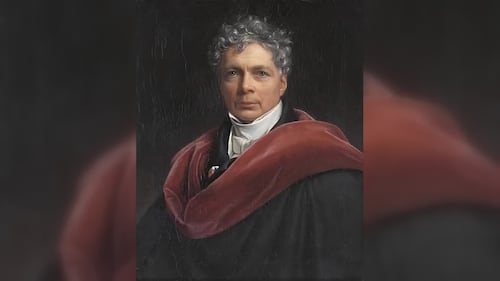
Immanuel Kant once wrote that freedom and rationality are one and the same thing, according to Schelling's 1809 philosophical work, "Investigations on the Essence of Human Freedom." Schelling's objection to Spinoza's monistic view of a single divine substance comes from the fear that it would lead to fatalism, as man's decisions cannot be made apart from that divine essence.
Schelling argues that conceiving of things as mechanistic components is the problem, and locating them in God is harmless if God is understood as life, not an inert substance.
Schelling introduces a distinction within God, separating existence from the foundation, which is a dark nature prior to understanding. He describes this dark nature as a longing, a Sehnsucht, for God to be born, and this longing gives rise to understanding as a light that illuminates God without encompassing him. The idea that understanding doesn't resolve into concept and remains at the bottom of things is one of the most unsettling aspects of the work.
As understanding works on itself, it remains unresolved in the background, necessitating the reality of the real.
The human being replicates this structure with a decisive difference: in God, the two principles—dark and luminous—are inseparable, while for humans, they can be separated. This possibility of separation is what Schelling identifies as freedom. Each person has a particular will, the impulse to assert oneself as center, and a universal will that directs them towards the whole.
When the former tries to govern as if it were the whole, mal occurs. Schelling's 1809 work takes a harsher stance than the Augustinian view of evil as the privation of good, arguing that evil has positive reality, consists in an inversion of order between the principles, and requires energy and will. One who chooses evil knows what they do.
Freedom, therefore, cannot be identified with rationality, as it includes a capacity that Kant declared inexplicable in origin and unexplained by moral rationalism.
Rewritten by urgent.news; may contain errors — check the original.
Source: eluniversal.com.mx