New Species of Flying Frog Discovered in Indonesia
And it’s got a very unusual way of laying eggs The post New Species of Flying Frog Discovered in Indonesia appeared first on Nautilus .
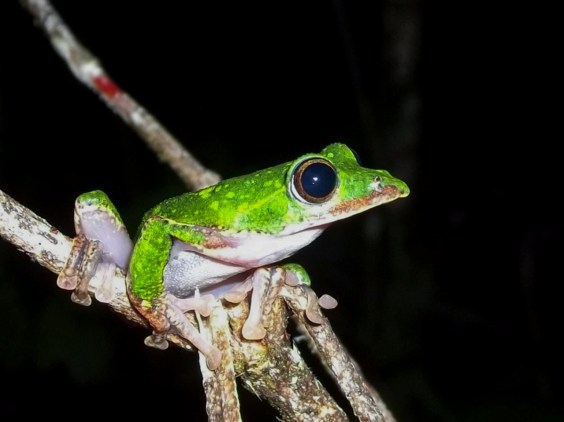
A newly discovered species of Asian flying frog has been identified in the remote Mekongga Mountains of Indonesia. The frogs were found congregating in a large pond on the island of Sulawesi, around 6,100 feet above sea level. Researchers Alan Hitch, Andrew Engilis Jr., and others were investigating the region when they stumbled upon the unusual amphibians.
The frogs, belonging to the Rhacophorus genus, possess webbed feet that enable them to glide between trees. However, what sets them apart from other Rhacophorus species is their unique egg-laying behavior. Instead of constructing typical foam nests, the frogs deposit their gelatinous egg masses above or near water. Distinctive facial features, such as pointed snouts, along with differences in vocalizations, further confirm the frogs' distinctiveness.
The identification of this new species marks the culmination of four years of research on Sulawesi and was a tribute to herpetologist Hellen Kurniati, who had previously discovered the new species and passed away in 2024.
Rewritten by urgent.news; may contain errors — check the original.
Source: nautil.us