Netanyahu, Eisenkot resume talks on forming Israeli government
Netanyahu and Eisenkot parties resume talks to form Israel government
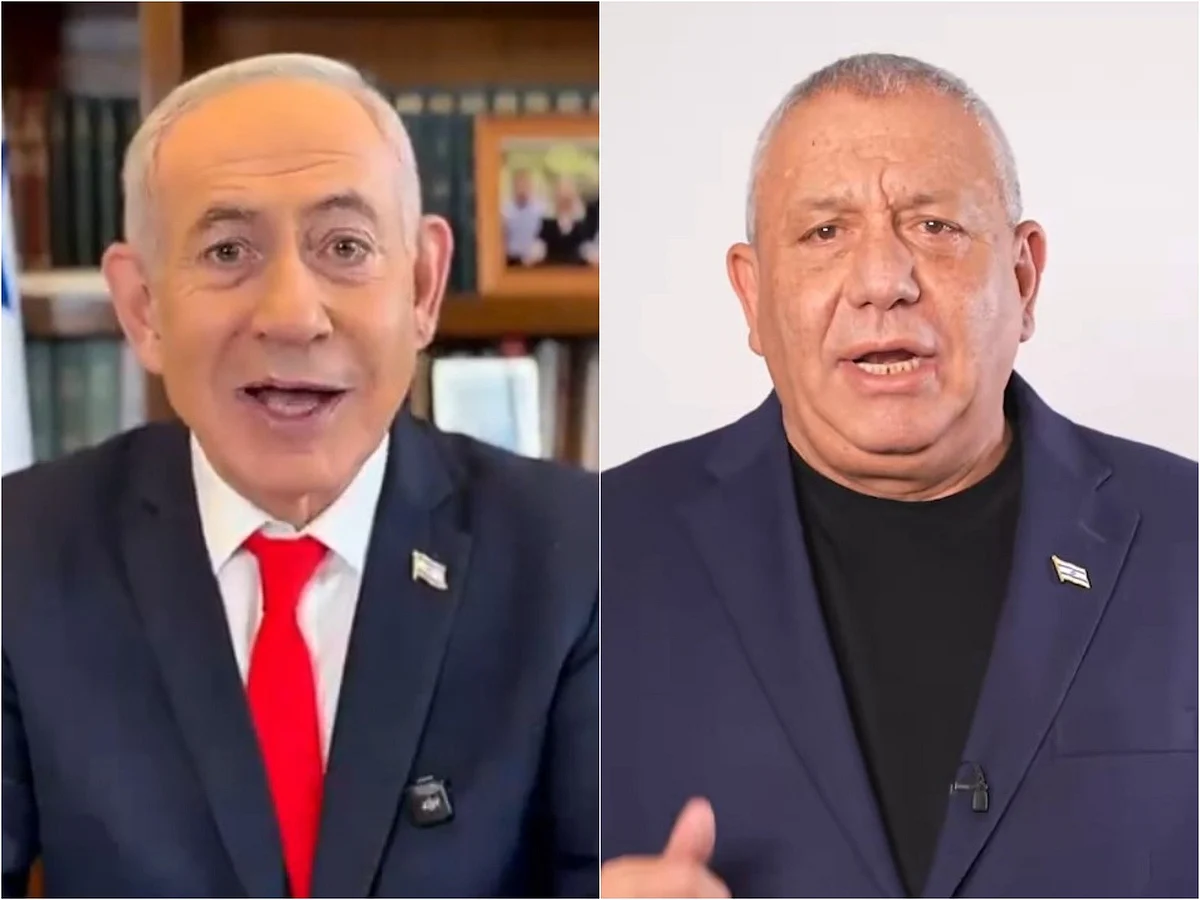
Jerusalem: Benjamin Netanyahu and his rival Gadi Eisenkot are preparing for fresh talks on Sunday to potentially form an Israeli coalition government. Delegations from Eisenkot's Yashar party and Netanyahu's Likud will convene at 1:00 pm on Sunday at a hotel in Herzliya, a city close to Tel Aviv, for their second consecutive Sunday of negotiations, according to Channel 14 news.
Former army chief Eisenkot has until December 6 to form a government, with a potential 14-day extension after October elections failed to produce an absolute majority for either side. However, within his bloc, there is division about whether to create a coalition through an alliance with ultra-Orthodox parties, reconciliation with Arab parties, or a national unity government with Likud.
Yashar described the resumption of talks as "a genuine commitment to forming the broadest possible government," stating that Eisenkot requested his representatives to consider all options. Yet, Likud promptly set several conditions for participating in a unity government, including an end to personal attacks on Netanyahu and his government, inclusion of all parties supporting Israel as the Jewish nation's state, with no participation from Arab parties, and agreement on several major policy stances.
Netanyahu and his allies frequently criticize Arab parties, who won 19 seats in the legislature and oppose Netanyahu's continued leadership. Likud also seeks consensus on key policy positions, notably opposing the establishment of a Palestinian state, maintaining control over territories in Syria, Lebanon, and Gaza, and reaching a compromise on conscription of ultra-Orthodox Jews, a particularly sensitive issue in Israel.
Eisenkot cautioned Netanyahu against striking a deal with Iran, as Israel grapples with a political transition. A unity government could potentially rotate the prime minister role between the two leaders, a formula previously implemented in Israel. Eisenkot, however, ruled out serving in a government led by Netanyahu. His ally Naftali Bennett, a previous prime minister, reiterated on Saturday his refusal to join a coalition with "Netanyahu or his bloc, under any circumstances."
Eisenkot warned on Friday that he would not permit the talks to continue indefinitely, stating he was prepared to present to parliament an "emergency national government." While he didn't specify the details, his remarks imply a two-stage plan: swiftly establishing a minority government based on the primary opposition parties, followed by expanding it.
Rewritten by urgent.news; may contain errors — check the original.
Sources: english.ajel.sa · timesofisrael.com · gulfnews.com