Nach Niedrigwasser: Rhein-Pegel könnte nach Regen auf 3,30 Meter steigen
Schiffe laden wieder mehr, doch Bundesamt und Nabu warnen vor zu viel Hoffnung. Warum in den nächsten Monaten sogar Hochwasser nicht ausgeschlossen ist.
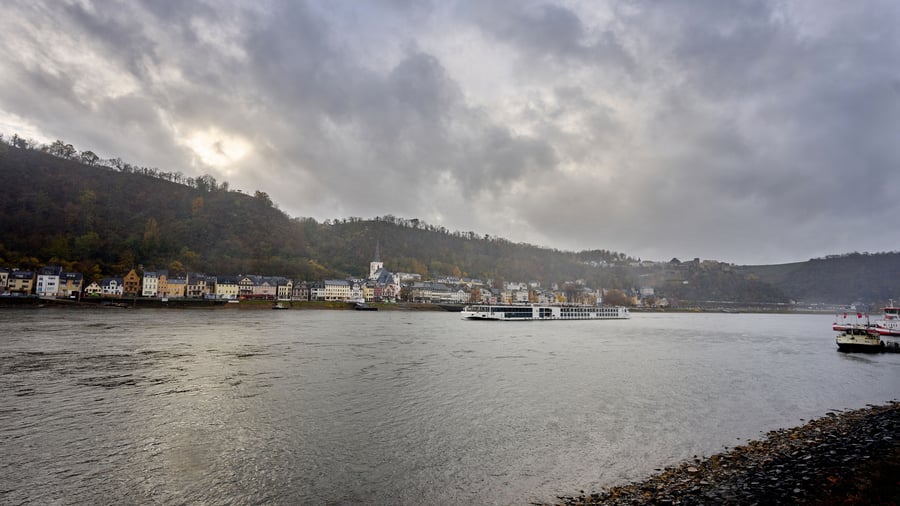
After months of low water levels, the Rhine's water levels are expected to rise significantly due to ongoing rain. This increase in water levels will provide a noticeable relief for inland shipping, allowing ships to carry more cargo. However, the development is only a short-term relief from an environmental standpoint, according to the Federal Institute for Hydrology (BfG) in Koblenz.
The institute anticipates that water levels in the western German rivers will reach medium water levels or even exceed them in the coming days. At the Kaub gauge, which is a bottleneck in the middle Rhine and where low water levels temporarily halted shipping, levels could reach about 3.30 meters, which is more than three meters above the recent extreme low water marks.
Similar rises are expected on the Weser and Danube rivers. The impact on the Elbe and Oder rivers is expected to be more moderate. The increase in water levels will allow for more cargo to be transported by inland ships. The responsible federal authority states that the Rhine is one of the most heavily used waterways in the world, with hundreds of ships passing through cities like Mainz, Düsseldorf, and Cologne daily.
Fabian Spieß, the deputy managing director of the Deutsche Binnenschifffahrt (BDB), said that the increased rainfall in recent days has led to a significant rise in water levels, and this trend is expected to continue in the coming days. With 150 centimeters of water, most ships will be able to carry full loads again, Spieß said.
The low water level also hindered construction work on the Pfaffendorfer Bridge in Koblenz, which was scheduled for the end of September. Now, the two steel segments weighing around 475 tons each can be delivered by ship. Whether the industry can now recover some of the transport lost during the low water phase remains to be seen, as it will depend on the freight traffic statistics in spring 2027.
Rewritten by urgent.news; may contain errors — check the original.
Source: handelsblatt.com