Mathematician Neena Gupta makes TIME100 Next for 1949 breakthrough
Neena Gupta gained worldwide acclaim in 2014 for her groundbreaking work on the Zariski Cancellation Problem. Her research challenged a longstanding 70-year question posed by Oscar Zariski, revealing that two mathematical spaces could indeed seem equivalent when one dimensionality is added. For her contributions, she received several honors, including the prestigious Infosys Prize in Mathematical…
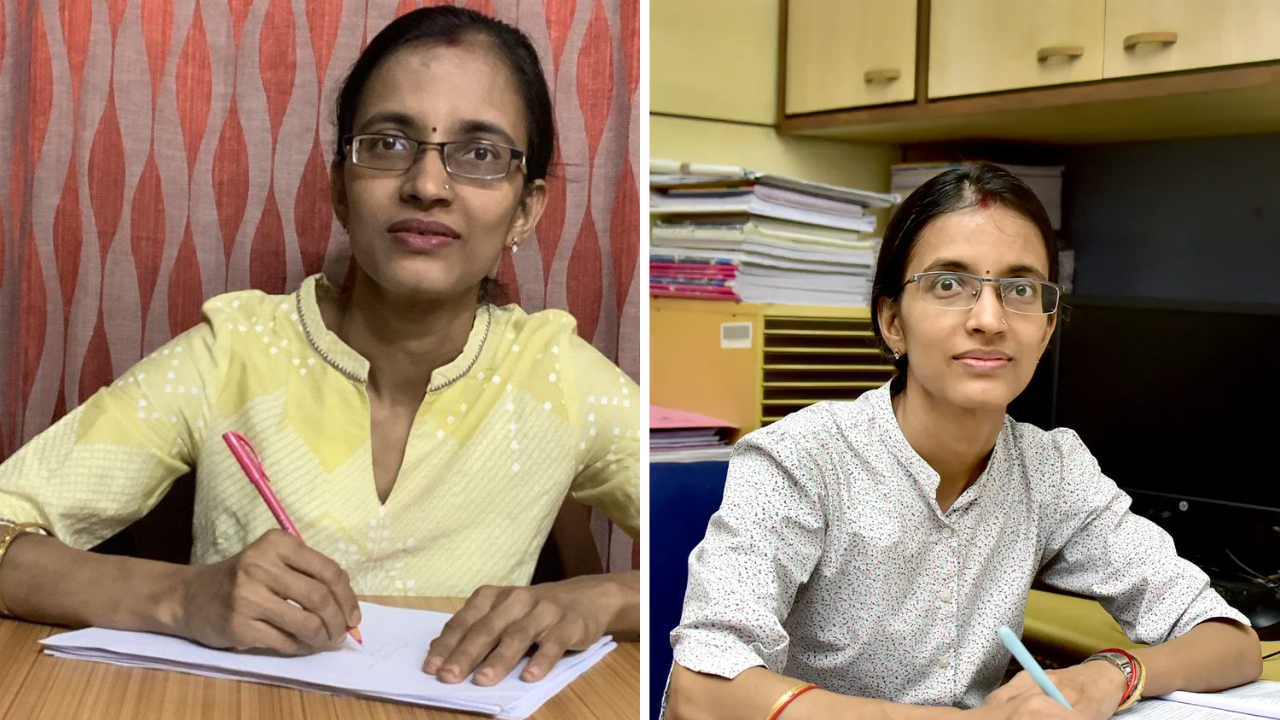
In 1949, mathematician Oscar Zariski posed the Zariski Cancellation Problem, which questioned whether two seemingly different mathematical structures could appear equivalent once an extra dimension was added. For nearly seven decades, this perplexing issue remained unsolved until Kolkata mathematician Neena Gupta made a groundbreaking discovery in 2014. Her research demonstrated that the answer was not always a resounding 'yes,' challenging the prevailing assumption held by mathematicians for decades.
Gupta, a professor at the Indian Statistical Institute in Kolkata, earned international acclaim when she unveiled her findings in a 2014 paper titled 'On the Cancellation Problem for the Affine Space A3 in Characteristic p.' Her work showcased a counterexample to Zariski's original question, revealing that a three-dimensional affine variety constructed by mathematician Takanori Asanuma could serve as evidence that the cancellation property did not always hold in positive characteristic.
This achievement placed Gupta in the esteemed TIME100 Next India 2026 list, recognizing emerging leaders shaping India's future. Her accomplishment centers on the Health and Science Innovators category, as her research holds significance in the field of algebraic geometry. By introducing an additional dimension to mathematical structures, Gupta was able to demonstrate that two seemingly different objects could, in fact, be equivalent, even though their original structures were not.
Gupta's breakthrough not only addressed a long-standing question in algebraic geometry but also earned her several prestigious awards. In 2019, she received the Shanti Swarup Bhatnagar Prize for her work on the Zariski Cancellation Problem and her exploration of K-theoretic methods related to invariants of group actions on affine spaces.
In 2021, she was honored with the Ramanujan Prize for Young Mathematicians from Developing Countries. In 2022, she received the Nari Shakti Puraskar, and in 2024, the Infosys Prize in Mathematical Sciences was awarded to her for her solution to the Zariski Cancellation Problem. With her inclusion on the TIME100 Next India 2026 list, Gupta's monumental contribution to mathematical research has been further acknowledged, cementing her status as a trailblazer in the field.
Rewritten by urgent.news; may contain errors — check the original.
Source: timesofindia.indiatimes.com