Invertir en las infraestructuras del futuro
EL PAÍS y Acciona organizan un encuentro para debatir sobre cómo la IA o la autonomía estratégica impulsan una nueva ola de financiación en el sector
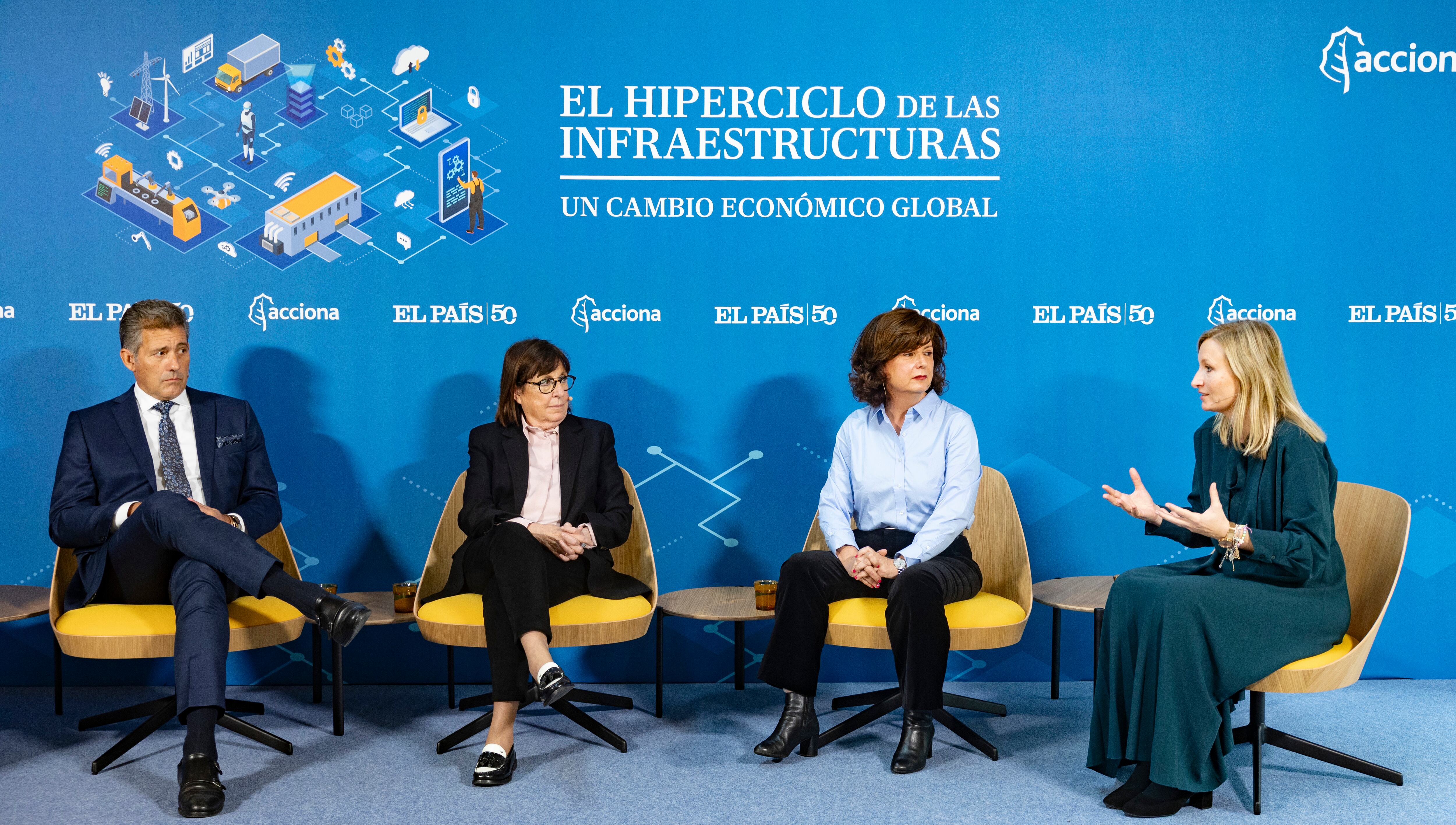
The rapid pace of technological change demands the construction of new infrastructures to support the future. The transition to a greener world, climate change effects, strategic autonomy, and artificial intelligence (AI) advancement dominate the sector. Juan Gil, head of construction at Acciona, described the arrival of AI as perhaps the second greatest revolution since the Industrial Revolution, with an accelerating factor.
Karolina Mlodzik, Deloitte's partner for infrastructure and transport strategy, risk and transactions, stated that building and rethinking systems to support this technology requires various infrastructures such as land, water, and electricity networks, storage, and generation. However, these processes are slow and evolving. The deployment of AI brings the construction of new infrastructure like data centers, while also impacting existing ones linked to fundamental resources.
Energy and water are undoubtedly necessary for these massive server farms. María Jesús Delgado, a professor at Carlos III University, mentioned that Spain is betting heavily on this, which could change competitiveness and regional positioning. However, residents of municipalities hosting these facilities have started questioning their impact and cost-benefit ratio.
The energy consumption of these centers can strain the system, increase bills, transform the landscape, and generate noise and low employment. Gil argued that if these facilities are built here, it's better than having them in countries like China, Russia, or Africa. Spain must plan and implement policies to regulate and provide a rational approach.
AI promises to transform business operations, increasing efficiency, productivity, and reducing costs. However, the expert, Mas Ivars, expressed pessimism about this aspect. The gap between large and small and medium-sized enterprises (SMEs) remains significant, and public aid for adoption and training of SMEs is necessary. Gil believes AI is accessible to everyone, and SMEs and large enterprises need to take action.
Mlodzik emphasized that the potential is "spectacular," but there is a risk of becoming overly dependent on external AI development. Modern infrastructure must also anticipate adverse weather events associated with climate change and not rely on external sources.
Rewritten by urgent.news; may contain errors — check the original.
Source: elpais.com