India's space startups are going global. Why is that sparking debate at home?
A satellite startup's US defence expansion has prompted questions over whether its international operations could influence Indian government projects. Experts tell CNA why overseas business matters to the industry and how companies can balance growth with national interests.
India's burgeoning space startups are expanding their horizons globally, but this expansion has ignited a heated debate within the nation. The issue centers around whether these overseas ventures could jeopardize national interests, control sensitive technology, and influence Indian government projects. Bengaluru-based Pixxel, a satellite startup, recently announced its move into the US defense and intelligence sector, prompting concerns over potential foreign access to proprietary information tied to its government initiatives.
Pixxel's expansion was highlighted by its establishment of a US subsidiary, Pixxel Federal, which has raised questions on social media about the company's allegiance and the security of its operations. The controversy deepened when fellow Indian space technology firm GalaxEye questioned the practice of forming companies in various jurisdictions to attract international government contracts, without singling out Pixxel.
In response, Pixxel's founder, Awais Ahmed, insisted that the company remains "Indian-headquartered, Indian-owned, Indian-managed, and Indian-controlled." Other Indian space technology startups, including Digantara and Bellatrix Aerospace, have also set up US subsidiaries to capitalize on the American market and cater to customers there.
Space industry experts acknowledge that overseas expansion raises valid concerns about ownership, intellectual property, technology transfers, and sensitive data. However, they emphasize that national security and international commercial growth are not mutually exclusive. Anil Prakash, director general of the space body Satcom Industry Association-India (SIA-India), pointed out that companies should be evaluated individually based on their impact on national security and international commercial expansion.
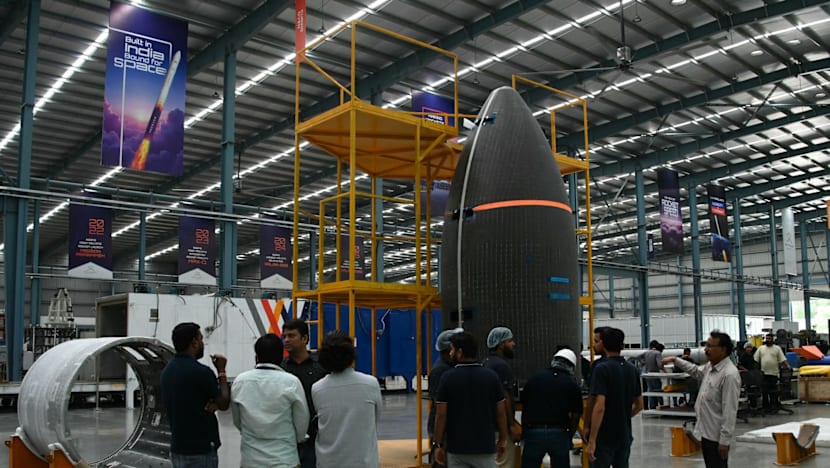
For startups like Agnikul Cosmos, global growth is integral to their business model. The rocket maker's co-founder and COO, Moin SPM, highlighted the importance of international demand in achieving scale and cost efficiency, with a recent partnership aimed at manufacturing and launching radar satellites in India. Despite potential financial pressures from Indian government contracts, startups may benefit from diversifying revenue streams through overseas commercial customers and accessing more established financing ecosystems.
Nonetheless, the debate remains whether these overseas ventures are driven by a genuine need for growth or a potential threat to national interests.
Rewritten by urgent.news; may contain errors — check the original.
Source: channelnewsasia.com