EU To Strengthen Sanctions Enforcement: European Commission Creates Dedicated Office
The European Commission announced the creation of an EU Sanctions Office, which will coordinate the development and application of restrictive measures and counter their circumvention. In addition, a new European Union Special Envoy for Sanctions Implementation has been appointed. The European Commission reported this, FREEДOM's special correspondent in Europe Vitalii Syzov relays. The new office…
The European Commission has announced the establishment of an EU Sanctions Office, which will oversee the creation and enforcement of restrictive measures. A new European Union Special Envoy for Sanctions Implementation has also been appointed to the role. Vitalii Syzov, FREEДOM's correspondent in Europe, reported this on behalf of the European Commission.
The new office will consolidate the Commission's expertise in all aspects of sanctions policy, ranging from drafting measures to tracking compliance and dealing with third nations.
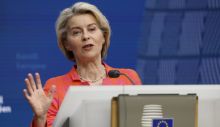
Commission President Ursula von der Leyen emphasized that EU sanctions are crucial in countering Russia's aggressive actions in Ukraine. She added that for sanctions to be effective, their implementation must be thorough, compliance strict, and any attempts to circumvent them must be prevented. The office will be instrumental in supporting the European Special Envoy for Sanctions Implementation, Lars Danielsson, who will assume his position on February 6, 2027, following the tenure of David O'Sullivan.
The office's responsibilities will encompass all EU sanctions regimes, particularly those targeting Russia and Belarus, as well as Iran, North Korea, and Syria. It will also address restrictive measures aimed at combating hybrid threats and organized crime. Furthermore, the office will offer operational guidance to EU member states on sanctions compliance, facilitate data exchange, and conduct economic and technical analysis.
The European Commission highlighted that the intricacy and breadth of the restrictive measures necessitate enhanced coordination among EU countries and increased cooperation with international partners. Notably, the EU is currently drafting its 22nd sanctions package against Russia, expected to be approved before Christmas. In November, the Council of the EU expanded the sanctions list, adding 113 individuals and entities, including Russian banks, energy firms, and companies tied to Russia's shadow fleet.
Rewritten by urgent.news; may contain errors — check the original.
Source: uatv.ua