EFEDCOM calls for regional cyanide production to strengthen mining supply chains
The Executive Director of the ECOWAS Federation of Chambers of Mines (EFEDCOM), Ing. Dr Kenneth Ashigbey, has called on member Chambers to explore the establishment of a regional cyanide manufacturing plant to reduce West Africa’s dependence on imported mining inputs and expand local manufacturing. Speaking at EFEDCOM’s 7th Annual General Meeting in Abidjan, Ing. Dr […]
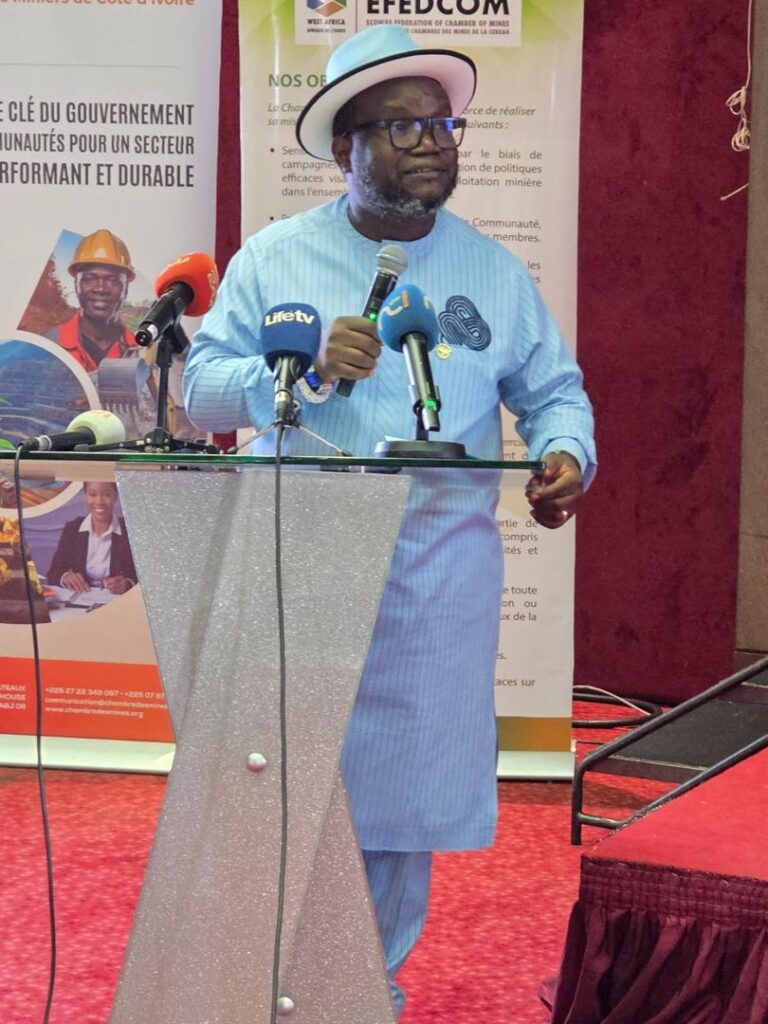
The ECOWAS Federation of Chambers of Mines (EFEDCOM) has urged member Chambers to create a regional cyanide manufacturing plant to lessen West Africa's reliance on imported mining inputs and boost local industry. During EFEDCOM's 7th Annual General Meeting in Abidjan, Ing. Dr Kenneth Ashigbey, the organization's Executive Director, announced the proposal following a cyanide management training program in collaboration with the International Cyanide Management Institute (ICMI).
Ashigbey highlighted that West Africa possesses gold, bauxite, manganese, and iron ore deposits that could bolster a robust industrial base. However, the region currently exports most of its mineral output while importing many necessary goods and services for its mines. He emphasized that EFEDCOM can assist member Chambers in identifying shared demand, linking manufacturers with mining companies, and creating cross-border markets for mining inputs and services.
The Ghana Chamber of Mines, working with various national authorities, is expanding domestic gold refining at the Royal Ghana Gold Refinery. Ashigbey called for regional refining capacity to cater to responsibly sourced gold producers across West Africa, along with investments in downstream industries like jewelry manufacturing.
He urged member countries to enhance enforcement against illegal mining, safeguard water bodies, and support responsible artisanal and small-scale mining. Ashigbey also suggested making International Cyanide Management Code certification mandatory in West African countries. He stressed that industrial investment depends on reliable energy, competitive infrastructure, skilled workers, and predictable regulation.
Governments expect fair returns and meaningful local participation, while investors need transparent rules to rely on when committing long-term capital. Ashigbey urged member Chambers to identify viable cross-border supply chains, agree on common investment and regional trade priorities, and strengthen partnerships with governments, manufacturers, and training institutions.
He concluded that the true measure of mineral wealth is not just the ounces and tonnes produced, but the factories established, skills developed, businesses grown, and communities improved.
Rewritten by urgent.news; may contain errors — check the original.
Source: myjoyonline.com