Urgent.News

What's breaking now, across hundreds of outlets.

Tech

Can you safely use a 140w charger on an iPhone?

A 140-watt charger is far more juice than your iPhone needs, but does that really matter? Yes and no -- we can explain.
Can you safely use a 140w charger on an iPhone?

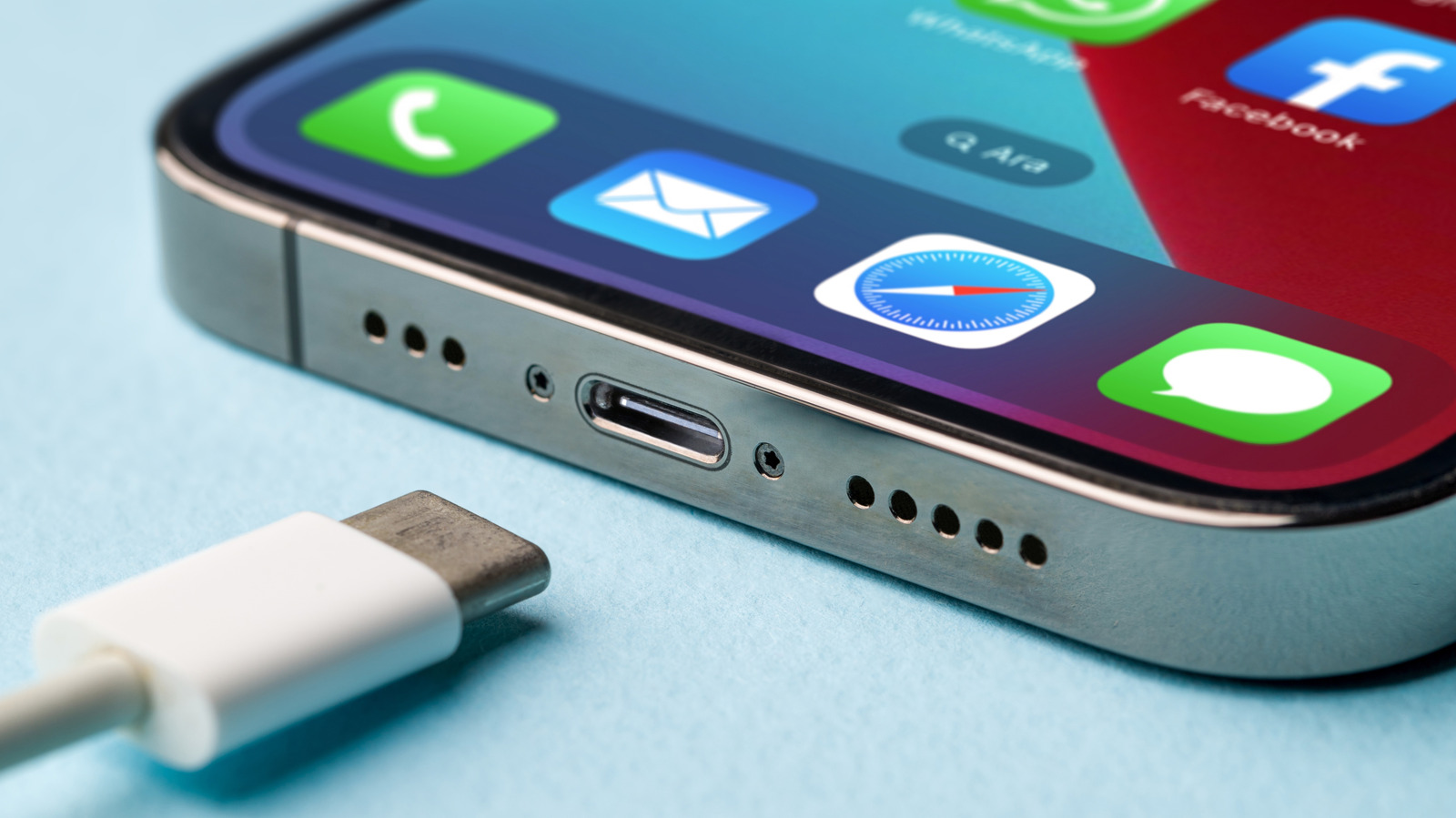
An iPhone can safely use a 140-watt charger, although it is not necessary as the device's maximum charging capacity is 52W. USB Power Delivery (USB PD) chargers typically top out at 100W, but newer versions called Extended Power Range (EPR) can reach up to 240W. iPhones do not reach 140W, even the latest models like the iPhone 18 Pro and iPhone Duo.

The issue of safety mainly lies with the charger, not the iPhone. Apple discourages the use of third-party chargers that don't meet safety standards, as they could cause injury or death. Apple's own power adapters and cables are expensive but meet safety standards. Various iPhone models require different wattages for fast charging, with the iPhone 18 Pro series and iPhone Duo needing a 60W adapter with Adjustable Voltage Supply (AVS), USB PD 3.2, and a USB-C cable capable of handling 60W or more.

USB ports vary in wattage, with USB 2.0 ports supplying 2.5W, USB 3.0 and 3.1 ports going up to 4.5W, and USB-C ports with Power Delivery reaching up to 240W.

Rewritten by urgent.news; may contain errors — check the original.

Source: engadget.com
Read the original at engadget.com →

Report a problem with this story

More in Tech

Peugeot moves car shopping to Naver

Peugeot is moving more of the car-buying journey online by offering vehicle reservations and test-drive bookings through its official Naver store, allowing customers to compare prices and…

Turning a Chinese open-ended contract rule into code: four boundary cases

I spent a day turning a Chinese employment rule into code, and the rule that looked simple turned out to be four boundary conditions wearing a trench coat.

  • Four boundary conditions identified in translating Chinese employment rule into code
  • "Full ten years" term in contract counting is inclusive of zero days
  • 11-month extension does not count as second contract for open-ended clause

Zero-downtime credential rotation in OpenTofu: the two-phase pattern (and the two bugs it taught me)

Rotating a long-lived credential sounds trivial: create a new one, hand it out, delete the old one. In practice "hand it out" is never instant.

  • Implement two-phase pattern for zero-downtime credential rotation in OpenTofu
  • Phase 1 and Phase 2 slots alternate with overlap window (W) of credential lifespan (E)
  • Three resources manage timeline: locals, cycletimer, and deterministictime

More from Sunday 22 November →