Can armies trust tech giants with the future of warfare?
Defence, AI, high tech: a delicate balance between armies and industry
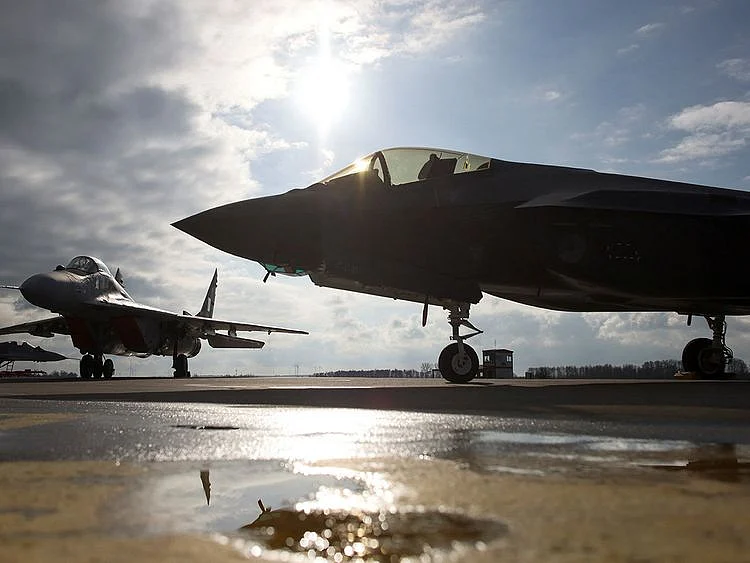
Izmir, Turkey hosted NATO Edge, a conference discussing the integration of advanced technology and artificial intelligence (AI) into military operations. This development poses a dilemma: should governments entrust key aspects of their future to private companies while risking their sovereignty? Digital tech specialists, driven by market forces, are developing mission-critical technologies, while military leaders, who answer to political authority, focus on strategy and secrecy.
The use of AI-powered weapons raises concerns about a new era of warfare, with data generated at terabit levels potentially deciding the outcome of conflicts. The civilian Starlink satellite network, owned by Elon Musk's SpaceX, has become crucial for Ukraine, whose armed forces have faced restrictions on access since Russia's invasion in 2022. Musk's stance on Ukraine has been inconsistent, blaming Washington for any disruptions.
At the conference, Tom Barton, an analyst at Janes, stated that military forces need access to confidential data to create a "networked battlefield," but there is a fine line between giving such access and compromising sovereignty. Governments are advocating for closer relationships with industry, but there is a concern that this could lead to harm, as seen with Elon Musk's actions in Ukraine.
Major General Rainer Beeck, a NATO cyberspace commander, expressed the difficulty in finding a solution, emphasizing the need for a balance between trust and sovereignty. Admiral Pierre Vandier, NATO's Supreme Allied Commander Transformation, stressed that trust is "the most important thing," including trust in data sharing, AI agents, and decision-making tools.
Beeck also highlighted the need for a proactive approach, especially for smaller defense budgets, suggesting that increased capacity and satellite ownership could help fill the gap.
Ultimately, the debate centers around the best way to utilize AI in warfare, with the bottleneck often being permission, classification boundaries, national rules, and trust decisions. NATO aims to make AI adoption possible at scale, ensuring secure, interoperable, and deployable capabilities within its infrastructure, while personnel understand both its value and limitations.
Rewritten by urgent.news; may contain errors — check the original.
Source: gulfnews.com