Allianz commercial report: Rising AI litigation and hidden exposures signal surge in corporate insurance claims
A new Allianz Commercial report warns that rapidly rising AI litigation and hidden operational exposures are building toward a major wave of corporate insurance claims, urging businesses to prioritise AI governance and human oversight.
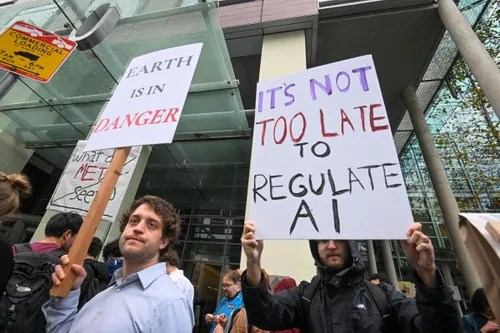
Allianz Commercial's latest report reveals how artificial intelligence (AI) is transforming business landscapes while simultaneously amplifying new risks for corporations. As AI becomes increasingly pervasive, incidents and corresponding legal disputes are skyrocketing, hinting at a surge in forthcoming corporate insurance claims.
The insurance giant is currently monitoring multi-million-euro claims stemming from AI-related incidents, including accidents with allegedly flawed vehicle safety systems and shareholder lawsuits against companies for allegedly misleading AI disclosures. These cases could collectively lead to around US$100 million in total losses for the insurance industry.
However, these reported claims are merely a fraction of the actual risk exposure, as attributing AI involvement or logging it under conventional cyber, directors' and officers' (D&O), product liability, or crime policies is often a challenge. Embedding AI into regular business operations means that even minor errors can rapidly result in widespread failures.
Consequently, AI has surged from the 10th to the 2nd most pressing risk category in Allianz Risk Barometer 2026, marking the highest annual increase in any risk category. "AI presents tremendous value, but it also poses a risk management challenge unlike any before, given its capacity to cause direct losses or exacerbate risks across all industries," states Thomas Lillelund, CEO of Allianz Commercial.
"The current modest number of confirmed claims masks the true scope of exposures. Business leaders must prioritize AI in their governance and resilience planning, backed by clear accountability, human oversight, and functional contingency plans." AI's widespread adoption, often involving shared foundational large language models, training data, and cloud infrastructure, introduces systemic risks.
To assist businesses in categorizing these exposures, the report classifies four types of potential losses: Global AI incidents have been on the rise. The MIT AI Risk Initiative recorded 453 incidents in 2025, a more than 150% increase from 179 incidents in 2023. These incidents are fueling lawsuits over copyright infringement, data privacy breaches, AI-generated hallucinations, and biases—over 100 cases of intellectual property disputes have been filed by media and entertainment firms by mid-2026.
D&O insurance is experiencing a notable uptick as well. By August 2026, 22 AI-related securities class actions were initiated in the United States, surpassing the 16 filed in all of 2025 and seven in 2023, with most driven by AI-washing claims. In contrast, Allianz Commercial's analysis indicates that AI-driven detection tools, such as real-time fraud monitoring and predictive maintenance, can significantly reduce breach and interruption costs.
An unchecked AI-enhanced ransomware attack can be 1,000 times more expensive than one identified and stopped early. "Confirmed AI losses today are merely the tip of the iceberg," remarks Michael Daum, Head of the AI Risk and Claims Center of Excellence at Allianz Commercial. "Since losses follow emerging risks, a future wave of claims is building.
Insurers can leverage this early data to assist companies in calibrating their risk management strategies."
Rewritten by urgent.news; may contain errors — check the original.
Source: iol.co.za