AI agents design an entirely new CPU architecture from scratch, startup claims
Architect Labs says its AI agents designed Frostbite, an interaction-net CPU with 4.59x the performance per watt of an in-order core.
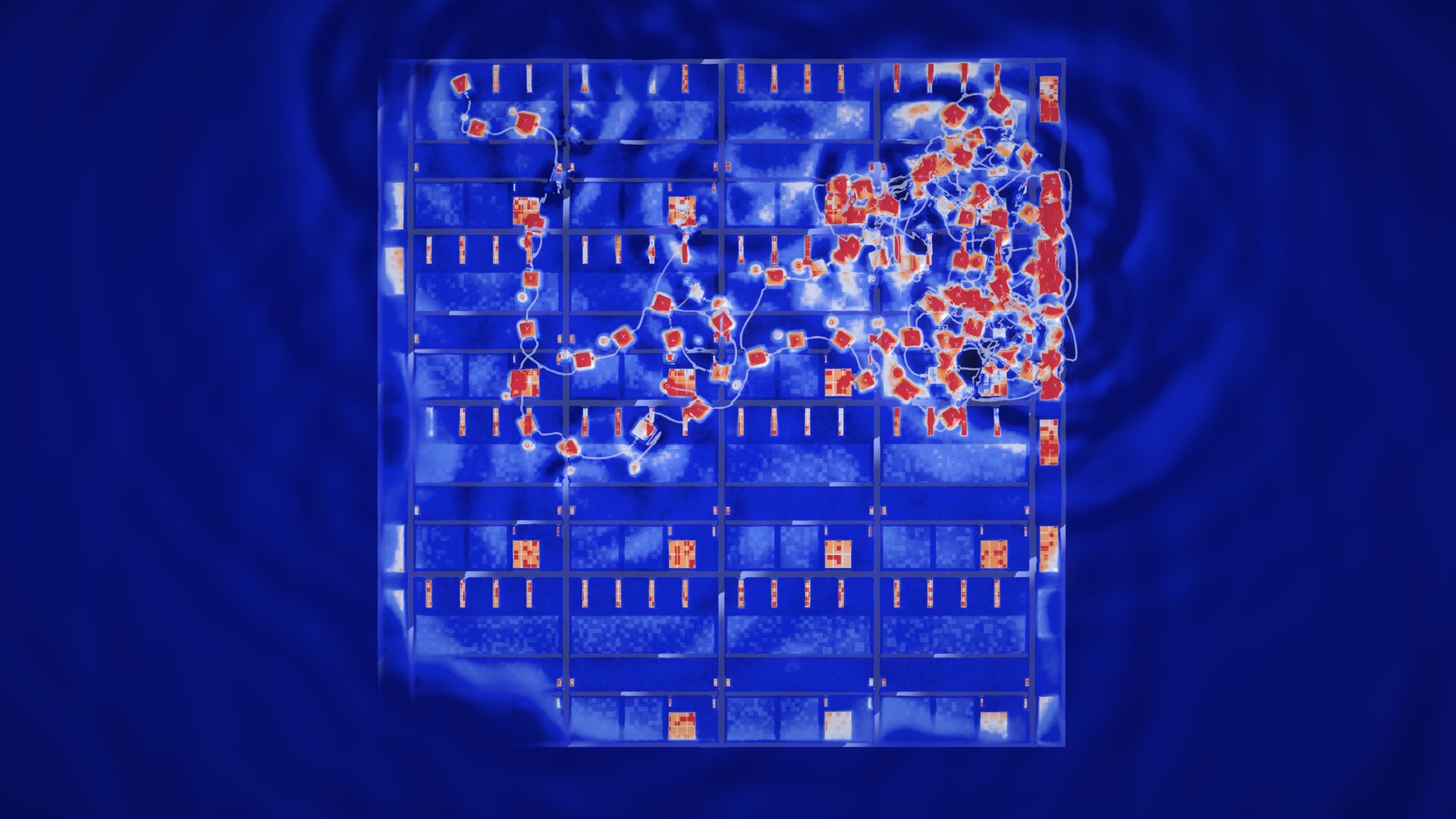
Architect Labs, a startup based in Palo Alto, has claimed that its AI systems have designed and verified an entirely new CPU architecture called Frostbite. This general-purpose CPU boasts a unique instruction set created from scratch. When compared to a similarly sized conventional CPU core, Frostbite delivers an impressive 4.59 times the performance per watt across 25 workloads in a simulated 7nm design.
However, the fully functional chip has not yet been manufactured in silicon, and Architect Labs cannot disclose the name of the conventional core used for comparison due to legal reasons. The company also emphasizes that Frostbite's design is built around a distinct paradigm called "multithreading for free," which requires no threads, locks, or out-of-order hardware.
Instead, programs are compiled to interaction nets, a model of computation from 1990, where computation happens by rewriting pairs of connected nodes. Each node's value is used exactly once, allowing data to stay in small local memories instead of large shared caches. This approach eliminates the need for deep cache hierarchies and coherence protocols found in traditional CPUs, resulting in significant efficiency gains.
The Frostbite chip is composed of small identical processing units called tiles, each with its own small local memory. Four tiles, along with four L3 nodes, form the benchmarked cluster, while the full layout consists of 16 tiles. This CPU reached 800 MHz during early synthesis but ultimately operated at 500 MHz in the final layout.
Frostbite also shows superior performance per area, averaging 8.77 times the comparison core's performance per watt. The AI behind Frostbite began with no preconceived architectural ideas, relying solely on reading papers, benchmarks, and building Python models. The company's own language, ASL, was used to write the chip's specification, which is then machine-checked using Lean, a proof checker, to minimize bugs and prevent gaming of objectives.
Rewritten by urgent.news; may contain errors — check the original.
Source: tomshardware.com