A Song From Earth, Bound For The Stars: Kesarbai Kerkar's Voice On NASA's Voyager 1
Eight minutes is all it takes for sunlight to reach Earth. But a voice recorded decades ago is now travelling billions of kilometres away from our planet, carrying a piece of India's musical heritage into the vastness of space. As NASA's Voyager 1 approaches the historic milestone of reaching a distance of one light-day from Earth, approximately 25.9 billion kilometres away, it carries a…
The distance sunlight travels to Earth in just eight minutes pales in comparison to the incredible journey of a voice recorded decades ago. That voice, belonging to legendary Hindustani classical vocalist Kesarbai Kerkar, is now traversing billions of kilometres away from Earth aboard NASA's Voyager 1. As the spacecraft approaches a historic milestone, reaching one light-day distance from Earth, specifically around 25.9 billion kilometres, it carries with it a recording by Kerkar performing Jaat Kahan Ho in raga Bhairavi.
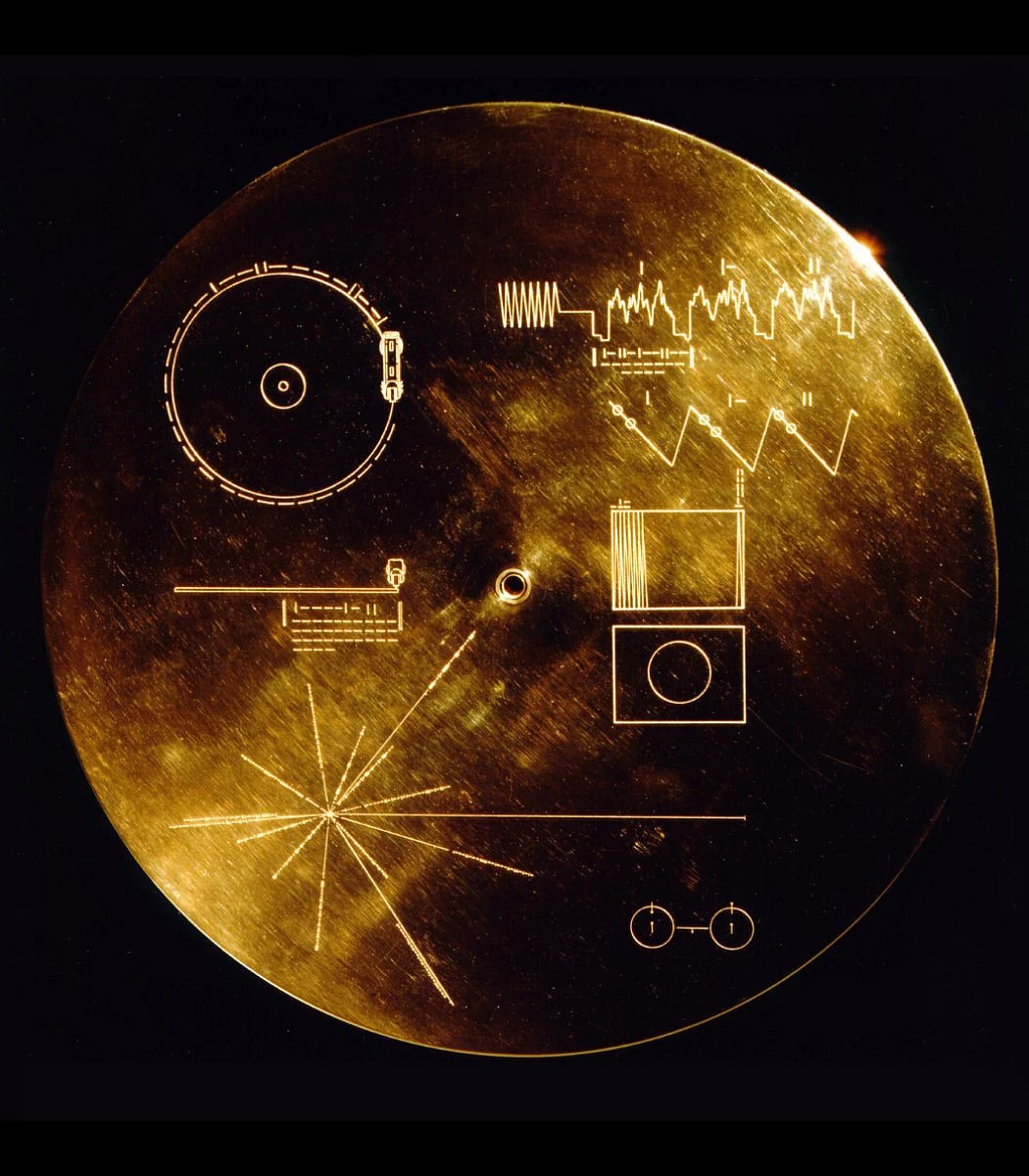
This momentous recording is part of the Golden Record aboard Voyager 1, a 12-inch, gold-plated copper disc created as a message for potential extraterrestrial life. This disc contains images, natural sounds, greetings in 55 languages, and 27 musical recordings representing various cultures. Among these, Kerkar's three-minute-and-30-second performance is a significant contribution from India, embodying the lasting influence of her music on the vastness of space.
Ketaki Gharpure, a classical singer and learner, highlights the recognition Kerkar received during her lifetime and the enduring impact of her music. The selection of Kerkar's music for the Golden Record reflects the curator's aim to represent the diverse musical traditions found on Earth. American ethnomusicologist Robert Brown played a pivotal role in this selection, recognizing Kerkar's performances as some of the finest examples of Indian classical music.
Her inclusion in Voyager 1 is not surprising, given her iconic status in classical music history. Kerkar's legacy extends beyond her musical contributions. She was an emblematic figure for women in classical music during an era when pursuing such a career faced significant social barriers. By pioneering the path for future female vocalists, Kerkar inspired generations of women to embrace classical music as a career.
Born in Keri village in Goa on July 13, 1892, Kerkar's musical identity was deeply rooted in the Jaipur-Atrauli gharana. Her training under esteemed gurus such as Ustad Abdul Karim Khan, Ramkrishnabuwa Vaze, and Ustad Alladiya Khan, the founder of the Jaipur-Atrauli gharana, shaped her unique style. The richness and timelessness of her musical approach can be attributed to her grounding in the Jaipur-Atrauli gharana, where the connection between a composition's words and melody formed the crux of classical music.
Emotions played a crucial role in her performances, where the fusion of notes and their corresponding words conveyed deep emotional resonance to the listener. As Voyager 1 embarks on its limitless voyage, Kerkar's voice remains preserved as a testament to humanity's quest for understanding and connection across the universe. Whether or not another civilization will ever uncover the Golden Record is uncertain, but the composition asking 'Where are you going?' has become an enduring part of our message to the cosmos, ensuring that a piece of India's musical heritage continues its journey beyond our planet.
Rewritten by urgent.news; may contain errors — check the original.
Source: freepressjournal.in