'Like walking the plank': For 3,000 years, Indigenous people herded bison off a unique cliff in Texas, study reveals
At a cliff site in Texas, archaeologists discovered hundreds of bison bones, stone tools and arrowheads, suggesting Indigenous people used "bison jumps" to hunt.
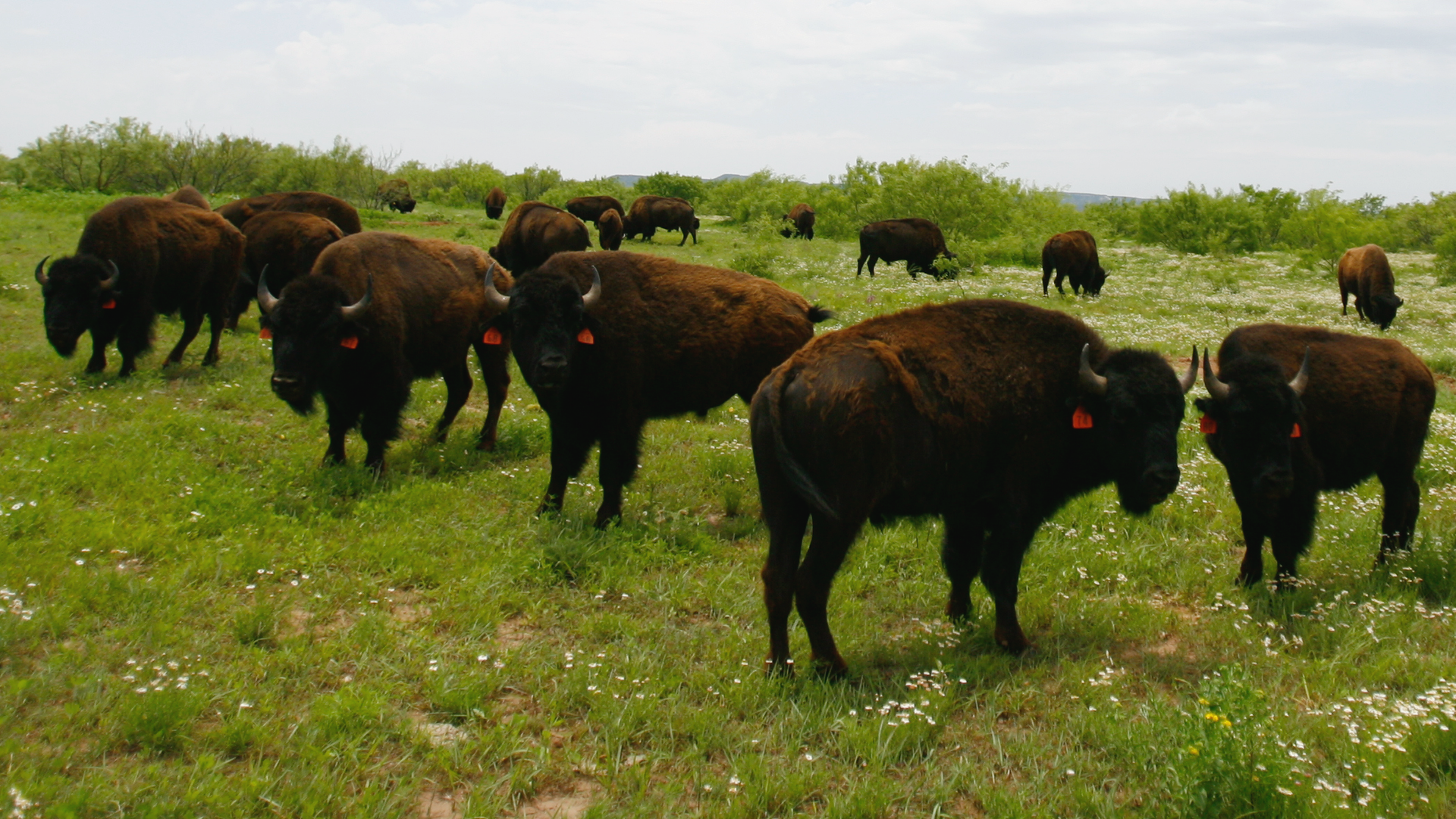
For decades, scholars have debated whether ancient Native American communities in the Southern Plains employed a sophisticated technique to hunt bison by driving herds over cliffs. However, recent research led by August G. Costa of Rice University suggests otherwise. At a site in the Texas Panhandle known as Nighthawk, scientists have uncovered compelling evidence that Indigenous hunters repeatedly utilized a cliff for bison hunting over a span of 3,000 years.
This discovery marks only the second scientifically verified bison jump in Texas, providing fresh insights into the resourcefulness, cooperation, and hunting traditions of ancient societies. Located within Caprock Canyons State Park, the Nighthawk site challenges long-held assumptions about the bison hunting practices of Southern Plains communities.
Bison jumping, a large-scale hunting method, involved guiding herds towards cliffs, where the animals would fall or become incapacitated. Unlike smaller hunts, these operations demanded extensive planning and collaboration among multiple groups. The Nighthawk site, identified as a bison jump only recently, presents a unique case due to its exposed cliff, unlike many northern Plains jumps where terrain may obscure the cliff edge.
Costa underscores the social significance of such hunts, noting that they likely fostered community bonding through ceremonies, trade, and celebrations. The site's evidence of at least seven distinct hunting events over thousands of years indicates a sustained relationship between ancient hunters and the location. Despite significant cultural and environmental shifts, including changes in hunting tools and landscape, the community consistently returned to Nighthawk.
This consistency highlights a deep connection to the site. The discovery also prompts questions about how hunters adapted their techniques in different environments. The Nighthawk site's distinctive setting contrasts with the typical northern Plains bison jumps, where terrain may obscure the cliff edge. Costa and his team are now expanding their search for additional bison jump sites across the Southern Plains, aiming to refine understanding of ancient bison migration patterns and the broader cultural significance of these hunting practices.
Rewritten by urgent.news; may contain errors — check the original.
This story
This is one outlet's version. Read the fullest account.