Indonesia, South Korea encouraged to realize AI pact within two years
The suggestion came months after Indonesia and South Korea agreed to a series of bilateral agreements in April during President Prabowo Subianto’s state visit to his counterpart Lee Jae Myung in Seoul, some of which concerned the AI industry.
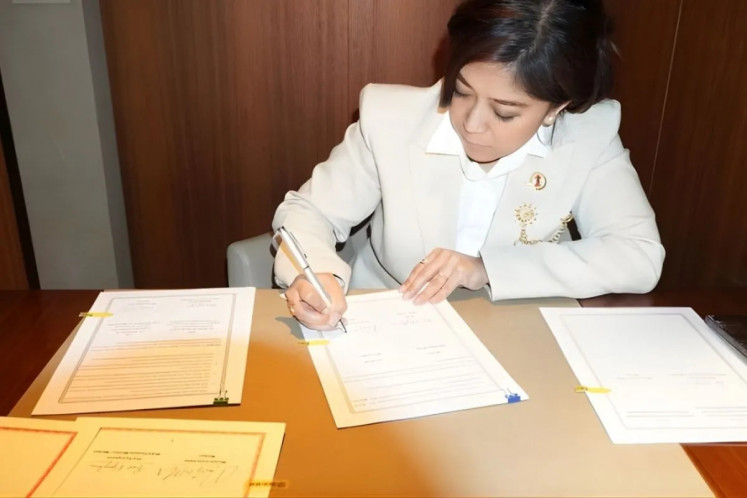
The Financial Supervisory Service of South Korea has issued a request for major banks, securities firms, and insurers to disclose their financial ties to artificial intelligence companies, aiming to uncover potential risks stemming from the sector's rapid growth. The questionnaire covers investments both directly and indirectly in AI businesses, as well as loans extended to these entities.
While some institutions have already submitted responses, no aggregate exposure figures or identification of unusually large positions have been disclosed by the authorities. The exercise aims to understand the extent of South Korea's financial sector's connection to an industry that is attracting significant investment and borrowing.
Choi Bumjeon, head of the Financial Supervisory Service's financial industry supervision team, emphasized that the inquiry is preventive, addressing concerns over hyperscale cloud providers and AI companies. The scale and distribution of this exposure remain unknown, with the regulator not specifying the number of institutions included, the deadline for questionnaire completion, or the plans for publishing the results.
South Korean financial entities can have AI exposure through various financial arrangements, including direct investments, investment funds holding related assets, and loans to borrowers undertaking costly infrastructure projects. The supervisory review comes as central banks and financial authorities worldwide assess whether enthusiasm for AI has created concentrations that are difficult to measure using traditional financial reporting.
The central question is not the commercial viability of the technology but whether financing commitments and market valuations adequately reflect uncertain future returns. The US Federal Reserve's discussions on this matter, as reflected in its minutes from the October 27–28 policy meeting, highlighted the possibility of disappointing AI investment returns and the rapid expansion of AI-related debt.
South Korean supervisors hope that gathering comparable information from various financial institutions will help differentiate direct commitments to AI developers from broader technology sector holdings and identify whether firms share exposure to the same borrowers or investment vehicles.
Rewritten by urgent.news; may contain errors — check the original.
This story
This is one outlet's version. Read the fullest account.
- South Korea seeks financial firms’ AI exposure details thearabianpost.com
- No buttons, no wifi, and R1,3 million bounties: Inside South Korea’s extreme crackdown on AI exam cheating iol.co.za
- South Korea’s Lee urges faster AI investment during $5.2bn data center visit investing.com
- South Korea's Lee says speed is vital in AI race on data centre visit channelnewsasia.com
- South Korea rides AI boom to new height as exports hit $1 trillion asia.nikkei.com