NASA’s Voyager 1 reaches one light-day from Earth in historic milestone
Launched in 1977, the deep-space probe has far outlived its expected five-year lifespan by more than four decades
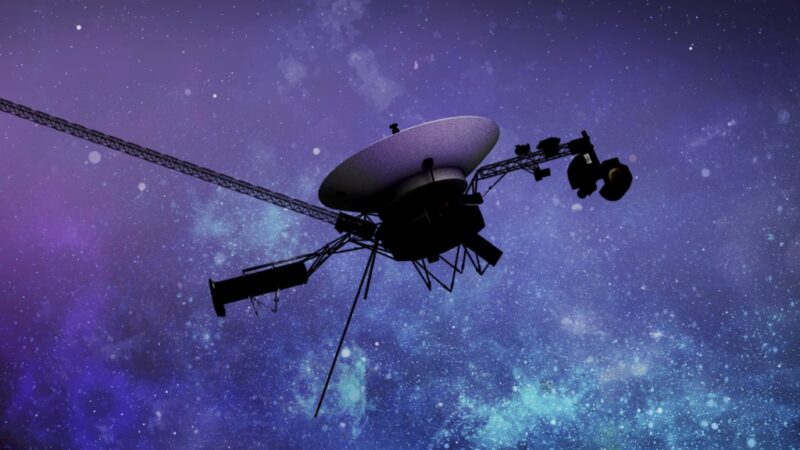
NASA has confirmed that its Voyager 1 spacecraft has entered a record-breaking 1 light-day distance from Earth, marking a significant milestone for the nearly 50-year-old probe. However, the progress comes with its own set of challenges, as the mission team recently discovered that the spacecraft had ceased sending science data back to Earth.
Despite this setback, the team detected a carrier signal, confirming that the probe remains powered and oriented correctly. Voyager project manager Suzanne Dodd expressed confidence that the science data will resume transmission soon. Voyager 1's distance from Earth, approximately 16.1 billion miles (25.9 billion kilometers), is the farthest any human-made object has traveled, making troubleshooting extremely difficult due to the probe's age and hardware limitations.
The current issue is believed to originate from the spacecraft's onboard computer, responsible for collecting and transmitting data from its science instruments. The mission team is employing a similar approach to resolve the problem as they did with a similar issue in 2023. As Voyager 1 continues its journey, the mission team anticipates encountering more anomalies due to the extreme distance and the probe's age, while also collecting valuable data on the uncharted interstellar medium.
Written by urgent.news from Live Science's reporting — not their text. Machine-written — may contain errors; check the original before relying on it.
This story
This is one outlet's version. Read the fullest account.