Celebrate as Voyager 1 reaches 1 light-day from Earth! Here’s how
The Voyager 1 spacecraft -- launched from Earth in 1977 -- will become the 1st human-made object to reach 1 light-day from Earth on November 18. The post Celebrate as Voyager 1 reaches 1 light-day from Earth! Here’s how first appeared on EarthSky .
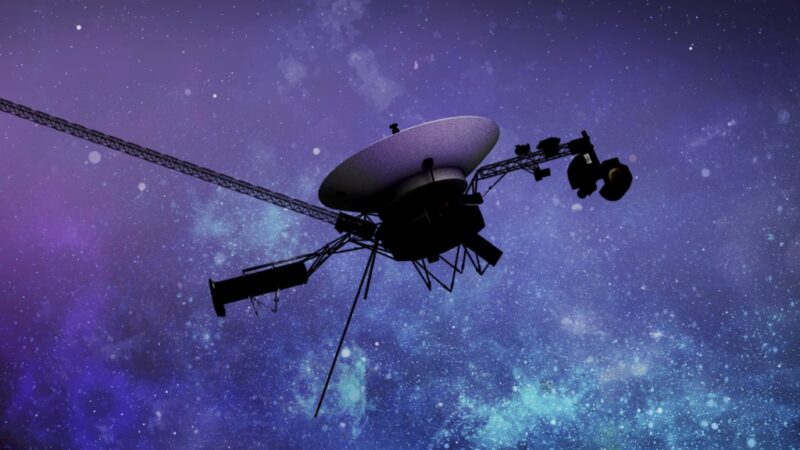
On November 18, 2026, Voyager 1, the most distant human-made object from Earth, will reach a significant milestone: 1 light-day from our planet. Launched in 1977, Voyager 1 has ventured beyond our solar system, becoming the first to exit the heliosphere. At 12:16:07 a.m. CST on this date, NASA predicts the spacecraft will travel 1 light-day, equivalent to approximately 16.1 billion miles (25.9 billion kilometers) or 173.14 astronomical units (AU) from Earth.
Currently, Voyager 1 is around 15.98 billion miles (25.72 billion km) away, with light from the spacecraft taking 23 hours, 52 minutes, and 30 seconds to reach Earth. To commemorate this achievement, NASA is planning a worldwide Shine Bright celebration. On November 17, participants can join by shining a flashlight, phone, glow stick, or similar light toward the sky and spelling out "V-G-R" in Morse code, representing Voyager.
This light display aims to honor humanity's remarkable accomplishment of sending a spacecraft farther into space than any other creation. Voyager 2, launched a few weeks before Voyager 1, is slightly closer to Earth but still far behind in terms of distance. Voyager 1 is moving "up" out of the solar plane, while Voyager 2 is headed "down," towards the constellation Andromeda.
Both spacecraft are still communicating with Earth, though most of their instruments are no longer functional due to power conservation measures. Despite this, the golden records aboard Voyager 1 and 2 remain a symbolic representation of Earth, potentially offering a glimpse into our civilization for any future interstellar civilizations that might discover them.
Written by urgent.news from EarthSky's reporting — not their text. Machine-written — may contain errors; check the original before relying on it.