Metall- und Elektroindustrie: IG Metall setzt weiter auf ganztägige Warnstreiks
BMW und Audi in Bayern, Werften im Norden: Tausende Beschäftigte legen für 24 Stunden die Arbeit nieder. Ein neues Gesprächsangebot hat die Streikwelle vorerst nicht gestoppt.

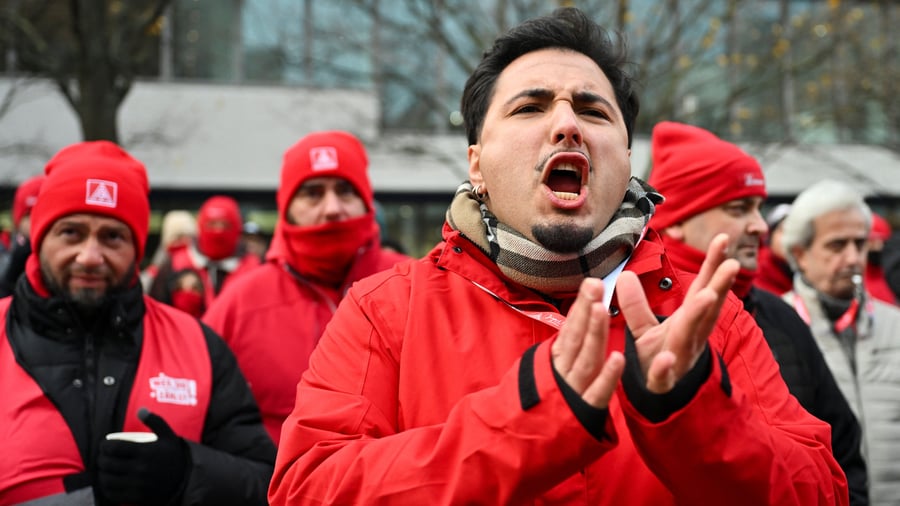
The IG Metall union continues its nationwide whole-day warning strikes despite a new offer from employers. The action began on Friday, with thousands of employees stopping work in numerous factories across the country. The focus areas included the auto industry in Bavaria with BMW and Audi plants, and the shipyards in the North.
The union reported a positive preliminary assessment: "The initial feedback from the factories shows that the 24-hour strike is underway. Our members are united behind our demands," said Daniel Friedrich, the district leader and negotiator for IG Metall Küste. "On Monday, we will continue the 24-hour strikes in more factories." Similar announcements were made in other IG Metall districts.
The Berlin-Brandenburg district announced whole-day warning strikes as early as Tuesday (November 24). Employers' association Südwestmetall in Baden-Württemberg invited the union to return to the negotiating table, but the IG Metall rejected the offer, stating that the initiative would lead to further escalation, not a solution.
Employers demand solutions, not escalation. The IG Metall's district leader in Baden-Württemberg, Barbara Resch, countered that the proposal from Südwestmetall was on the table, but what mattered now was whether the employers were ready to make real moves. This marks the first time the union has used 24-hour strikes since eight years.
Unlike brief warning strikes, IG Metall pays its members strike pay. Employers reacted with sharp criticism, stating that the affected companies suffered significant damages in the already strained economic situation. Jobs, entire sites, and future investments were threatened, according to the employers. Volkswagen is negotiating separately.
Around 3.7 million men and women work under the flat rate agreement. Industries involved include auto, machinery, electronics, and metallurgy. Only Volkswagen is excluded as it has its own separate tariff. IG Metall demands 5 percent more money for a 12-month period and agreements on locations and employment for its employees. Disagreements exist over individual factory deviations.
Employers offered a one-time payment and a 1.3 percent increase for 2028 within the annual salary increase in a 26-month period. They justified these offerings as a cost burden above the general price increase and pointed to the impending layoff of a hundred thousand jobs, which would continue in poor conditions. Both sides disagree on how to deviate from the tariff, such as during economic hardships or large-scale investments.
IG Metall requires negotiations on the tariff level and reliable promises from companies. Employers, on the other hand, have stated that they prefer automatic easing and possible agreements at the plant level.
Written by urgent.news from Handelsblatt's reporting — not their text. Machine-written — may contain errors; check the original before relying on it.
This story
This is one outlet's version. Read the fullest account.