The Window for Peace Remains Open: Can Russia’s War Against Ukraine End by 2027?
Any potential peace agreement will depend on whether Moscow is prepared to abandon its maximalist demands concerning Donbas and European security Nearly five years of Russia’s full-scale invasion have made Europeans understandably skeptical of any renewed talk of a “peace process.” Nevertheless, developments in November 2026 suggest that a diplomatic opening may still exist. Negotiations have…

A potential peace deal hinges on Russia's readiness to drop its stringent demands in Donbas and European security. Although five years of Russia's full-scale invasion have made Europeans doubtful about any new "peace process," recent developments indicate a diplomatic opening may still be possible. Negotiations resumed in November 2026, with Europe forming its own negotiating team and the U.S. President Donald Trump aiming to reach an agreement between Ukraine and Russia by the G20 summit in December. Russian President Vladimir Putin has been invited to participate.
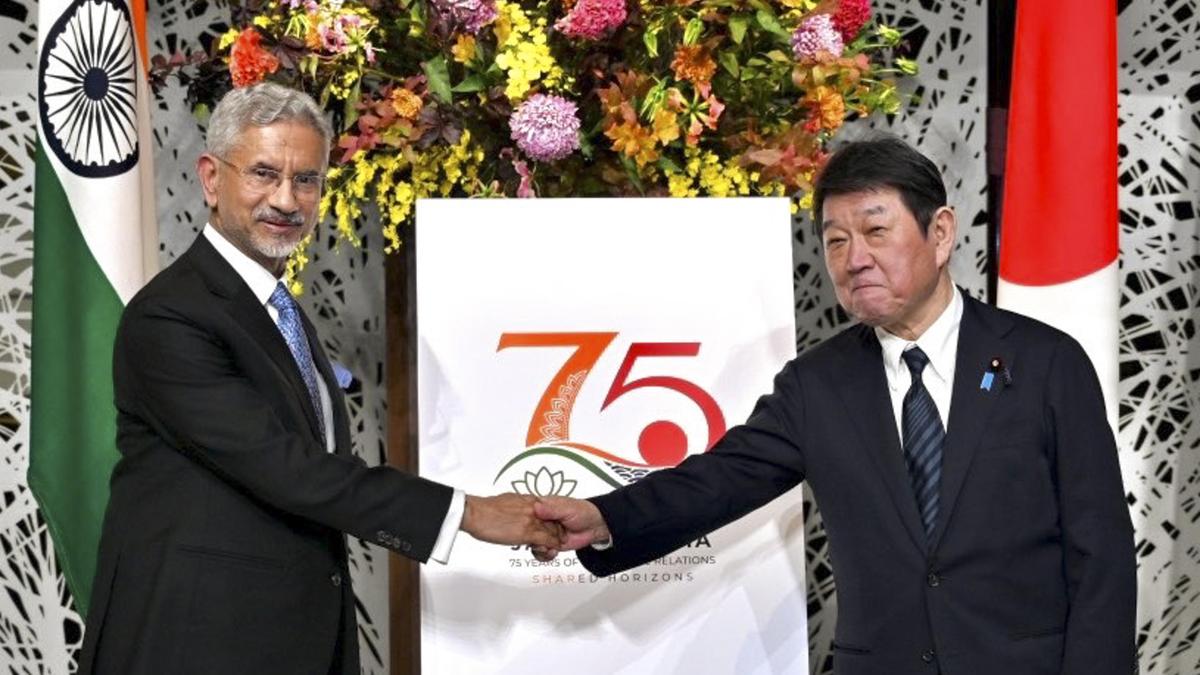
The Abu Dhabi talks of November 10-11, the first tripartite negotiations between Ukraine, Russia, and the United States in nine months, did not yield significant political progress. However, they allowed the sides to openly express their positions, and concluded with a large-scale prisoner exchange. Europe's role has evolved, with representatives from the EU, NATO, the UK, France, Germany, and Italy collaborating alongside Ukrainian and American officials.
In Dublin, EU leaders established a joint negotiating team comprising EU institutions and five Coalition of the Willing members: France, Germany, Italy, Poland, and the UK.
Donbas remains the most significant hurdle. Russia insists on Ukrainian forces voluntarily leaving the parts of Donetsk region that Moscow has been unable to occupy for nearly five years. However, the battlefield suggests this demand is unrealistic, as Ukrainian forces both held their ground and even gained some territory in autumn 2026.
Operation Vivaldi liberated over 100 square kilometers in the Lyman direction, and the Finnish Black Bird Group reported the largest reduction in Russian-occupied territory since June 2023. Retreating from fortified cities such as Sloviansk and Kramatorsk could be strategically indefensible, as it would expose Russian forces to potential advances and disregard the rights and safety of civilians residing there.
The concept of transforming Ukrainian-controlled areas of Donbas into a demilitarized free economic zone has received little backing, primarily due to Russia's interpretation of the proposal—Russian aide Yuri Ushakov has openly suggested Russian administrative structures, Rosgvardia and police, operating in these regions, which the expert views as a form of occupation in disguise.
Another proposal involves incorporating the Ukrainian-held areas of Donetsk region into neighboring Ukrainian regions without necessitating a withdrawal of troops. However, Russia has not publicly responded to this suggestion. The Kremlin is also attempting to expand the talks beyond Ukraine by revisiting its demands on Europe's security architecture, mirroring Washington's ultimatum from December 2021.
Moscow is demanding the withdrawal of NATO forces from Central and Eastern Europe, a ban on further enlargement, and bilateral non-aggression pacts with European states. These demands would affect countries that joined NATO after 1997, including Poland, the Baltic states, and Finland. While some issues could potentially be negotiated, such as arms control, communication channels, and agreed limitations on offensive systems, these proposals must adhere to two principles: commencement following the end of the Russian-Ukrainian war and reciprocal restrictions.
The expert acknowledges that weakening NATO's eastern flank unilaterally would not enhance Europe's security and could teach the Kremlin that pressure can be effective, as demonstrated by Russia's actions in 2008, 2014, and 2022. Ukraine prefers a sequence of first achieving a comprehensive ceasefire, followed by substantial discussions on territory, security assurances, and reconstruction.
In contrast, Moscow insists on addressing political concessions before halting the fighting. Russian negotiators refused even a limited ceasefire covering energy infrastructure strikes in Abu Dhabi. Zelensky has repeatedly emphasized that a ceasefire must be the starting point, and after the talks in Dublin, he pointed out an opportunity to end the war before 2027, warning that evolving political landscapes in Europe and the United States could complicate diplomacy.
As long as missiles continue to strike Ukrainian cities, negotiations risk turning into a means for Russia to secure concessions it failed to obtain on the battlefield. Popov argues that "peace through strength" could encourage Moscow to compromise. If the economic burden of the war continues to rise, battlefield losses fail to yield decisive gains, and Russia's international partnerships grow increasingly strained, Russia may be compelled to seek a peaceful resolution.
Written by urgent.news from UATV English's reporting — not their text. Machine-written — may contain errors; check the original before relying on it.