Gold tongues and hundreds of stone coffins uncovered in ancient Egyptian cemetery
Egyptian archaeologists have uncovered hundreds of stone coffins and tongue-shaped pieces of gold at an ancient cemetery in the northern province of Menoufia. The discovery was made at Tell Kom Abu Billo, within the site of the ancient city of Terenouthis, the Ministry of Tourism and Antiquities said. The city stood near the eastern entrance to Wadi El Natrun, a valley west of the Nile Delta…
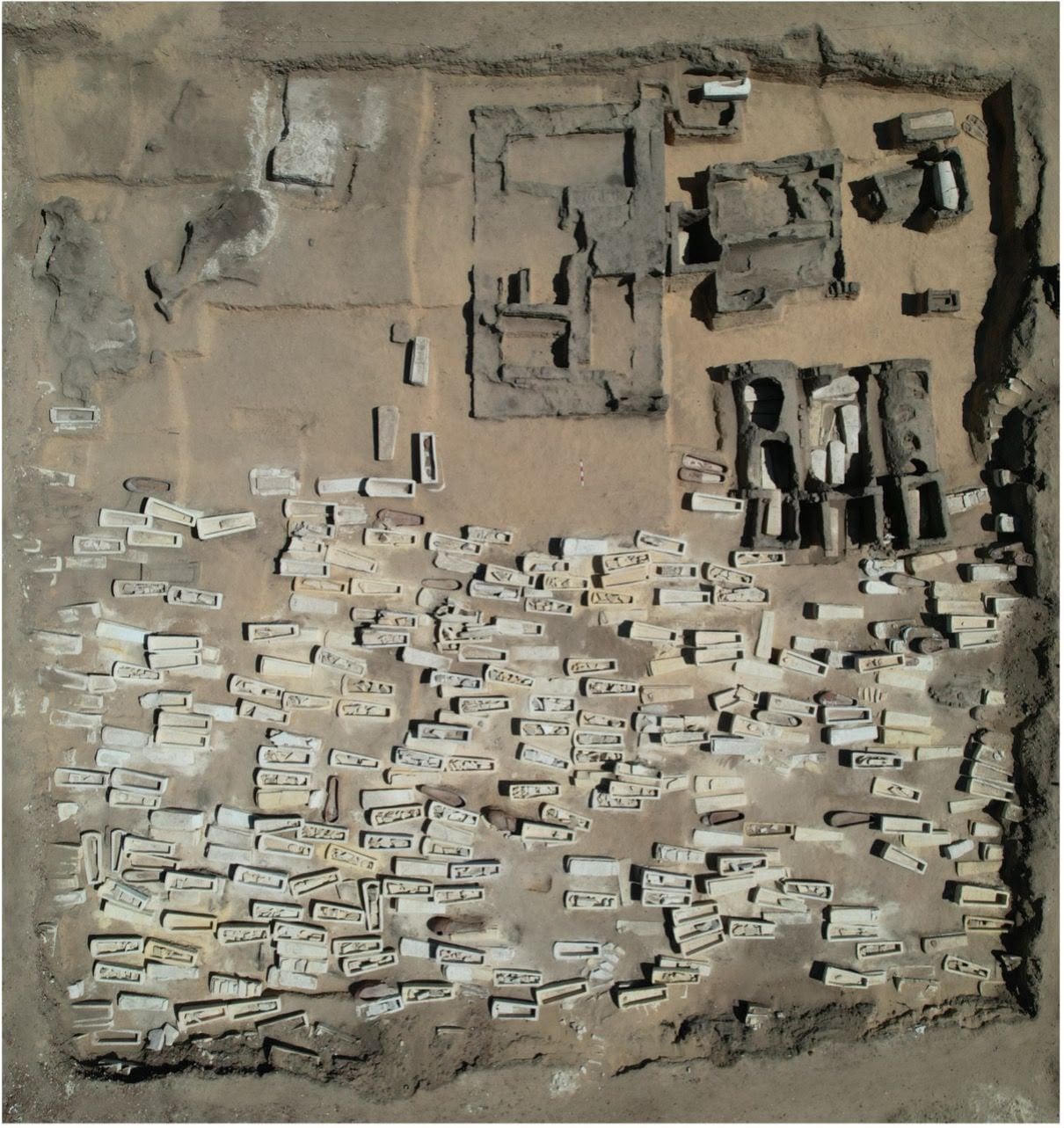
Egyptian archaeologists have unearthed hundreds of stone coffins and intriguing gold tongues at an ancient cemetery in Menoufia's northern province. The find was made at Tell Kom Abu Billo, within the remnants of the ancient city of Terenouthis, according to the Ministry of Tourism and Antiquities. The city stood close to the eastern entrance of Wadi El Natrun, a valley west of the Nile Delta famed for its deposits of natron, a salt mixture historically used to dry bodies before wrapping.
Earlier excavations at Kom Abu Billo revealed the city's remains and a temple dedicated to the goddess Hathor. The gold tongues hint at another facet of ancient Egyptian beliefs surrounding death: the notion that the deceased would need to converse in the afterlife. Among the artifacts recovered were jewelry, scarab amulets, and small figurines buried with the dead. Moreover, the site yielded two falcon burials.
The stone coffins were clustered in an open courtyard, a concentration never observed before at the site, according to the Supreme Council of Antiquities. Some coffins were missing their lids, while others had been shattered by prior looting and quarrying. The team also unearthed pottery coffins, fragments of wooden coffins, and tombs constructed from mudbrick. The burials span the late period of Egypt's history, up to the early Roman era.
Preliminary studies suggest most of the cemetery dates to the third and second centuries BC, coinciding with the reign of the Ptolemaic dynasty in Egypt. The grave goods left with the dead provide insights into who was buried there. Preliminary analysis of the artifacts indicates the cemetery primarily served the middle class. Excavations are ongoing, and the full extent of the burial ground remains unknown.
Written by urgent.news from The National UAE's reporting — not their text. Machine-written — may contain errors; check the original before relying on it.