Nasa’s Voyager 1 to reach one light-day from Earth today; why it's important
Nasa's Voyager 1 spacecraft will shortly reach a distance of approximately 25.9 billion kilometers from Earth. This milestone, known as one light-day, means that signals will take 24 hours to travel to and from the spacecraft. Voyager 1 was launched in 1977 to study the outer planets, and it has been sending data back to Earth.
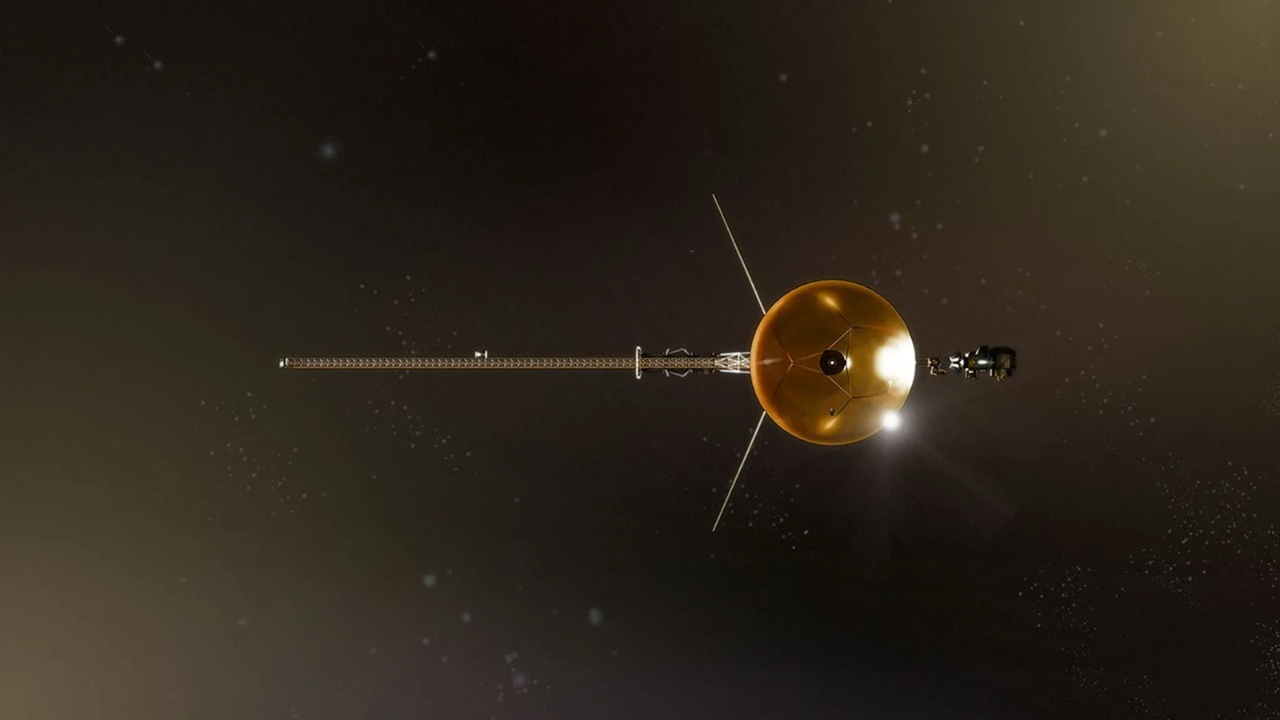
Nearly 50 years after launching, NASA's Voyager 1 spacecraft is nearing a significant milestone: traversing one light-day from Earth. This accomplishment, anticipated on November 18, 2026, at 5:16:07 a.m. EST (1016:07 GMT), underscores the staggering distances Voyager 1 has covered and the communication hurdles posed by operating in the solar system's outer regions.
Astronomers employ a unit called a light-day to denote the distance light travels in 24 hours. Given that light travels at about 186,000 miles (300,000 kilometers) per second, one light-day equates to roughly 16 billion miles (26 billion kilometers), according to a NASA statement. Although "light-day" could be misconstrued as a measurement of time, it is, in fact, a measure of distance, similar to a light-year.
Astronomers favor light-based units due to the impracticality of using conventional miles and kilometers to describe the vast interstellar distances. To contextualize Voyager 1's journey, sunlight takes about eight minutes and 20 seconds to reach Earth, placing our planet approximately 8.3 light-minutes from the sun. Radio signals between Earth and Mars span from three to 22 minutes, depending on the planets' orbital positions.
Upon reaching one light-day from Earth, a radio signal dispatched from Voyager 1 will require 24 hours to arrive at mission control on Earth, and a command sent from Earth will need an additional 24 hours to reach the spacecraft. A NASA illustration depicting Voyager 1 gazing back at the solar system as it nears one light-day away from our planet.
(Image credit: NASA/JPL-Caltech) This communication delay significantly impacts how engineers manage spacecraft at such immense distances. Unlike probes closer to Earth, which can receive instructions and transmit data with minimal delay, interacting with Voyager 1 necessitates mission controllers to factor in the extended signal travel time when orchestrating spacecraft operations, diagnosing technical issues, and assessing the outcomes of commands sent to the probe.
Voyager 1 embarked on its journey away from Earth on September 5, 1977, now cruising through interstellar space at approximately 38,000 mph (61,000 kph). Over its 49-year mission, the spacecraft has traveled the distance light covers in a single day. Despite its speed, Voyager 1 remains moving at a relatively leisurely pace compared to light.
Its sister probe, Voyager 2, launched in 1977 on a different trajectory, is projected to reach the one-light-day milestone in November 2035. As Voyager 1 and, eventually, Voyager 2 venture further from Earth, their increasing distances serve as a testament to the scope of human exploration and the communication challenges inherent in sending spacecraft farther into the cosmos.
Written by urgent.news from Space.com's reporting — not their text. Machine-written — may contain errors; check the original before relying on it.
This story
This is one outlet's version. Read the fullest account.