NASA Completes Prelaunch Instrument Testing for Hydrosat Osiris
Satellites designed to track water dynamics and temperature changes across Earth’s surface launch in 2027 The post NASA Completes Prelaunch Instrument Testing for Hydrosat Osiris appeared first on NASA Science .
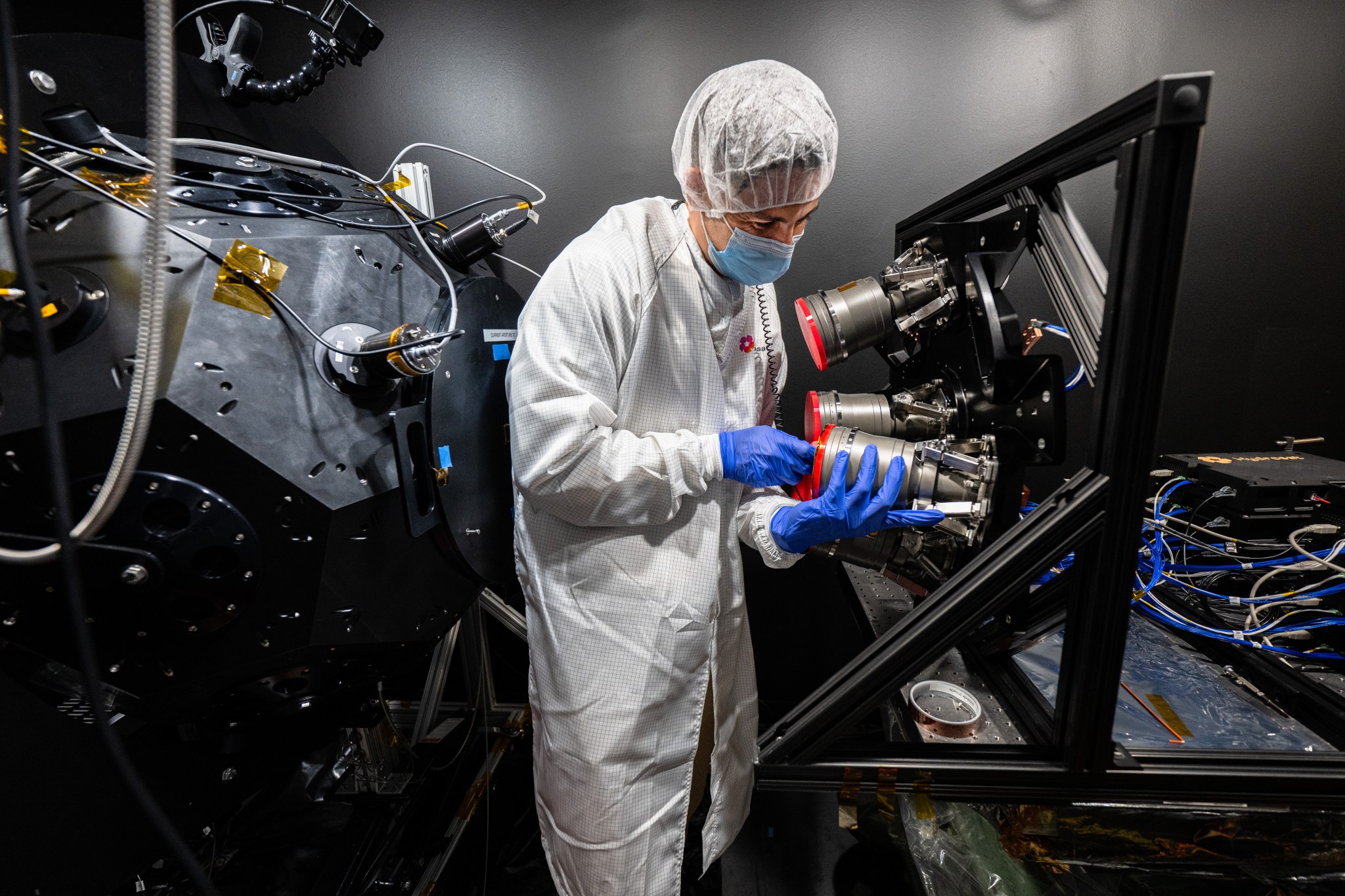
On October 30, NASA finalized the calibration for the Hydrosat Osiris satellite fleet, a group of four spacecraft equipped to capture images of Earth's surface from space. Each satellite is refrigerator-sized and houses an instrument payload containing an array of visible-near-infrared and long-wave-infrared sensors. These sensors are designed to collect data with applications ranging from monitoring crop health to assessing infrastructure damage following hurricanes.
Julia Barsi, director of NASA’s Calibration Laboratories at the Goddard Space Flight Center, emphasized that the goal of these instruments is to detect minute changes on Earth's surface. Ensuring the reliability and accuracy of the data produced by these instruments is crucial for generating impactful scientific results.
The Hydrosat Osiris satellites will receive their sensors on October 16. Three days later, eight of these visible-near-infrared cameras were brought to the NASA Goddard Laser for Absolute Measurement of Radiance lab for testing. The lab's integrating sphere, a large chamber designed to uniformly reflect light in every direction, was used to maintain a consistent light source.
During calibration, the light emitted from the sphere changed color from blue to red, with the Hydrosat team closely monitoring the incoming data to ensure their measurements matched the wavelength of the light generated by the lab's laser. The laser is unique for its ability to generate light accurately across the entire visible and near-infrared spectrum.
The sensors on Hydrosat's satellites can detect light invisible to the human eye, capturing otherwise imperceptible data about Earth's surface. For instance, when passing through a cornfield, the satellites might identify patches of plants that are drying out or turning yellow, even though they appear healthy to the naked eye. Combined with temperature data from the satellites' thermal sensors, this information can assist farmers in optimizing irrigation practices.
By targeting only the crops showing signs of stress, farmers can conserve water, enhance crop yields, and reduce costs.
To ensure the instruments' ability to accurately detect such small changes, NASA's calibration testing involved adjusting the power of the laser's light source up and down to observe how the Hydrosat instruments respond across a spectrum of brightness levels. Unlike Earth's surface, which reflects light across various colors and brightness levels, an integrating sphere provides a controlled environment for testing.
The data collected from these tests will enable Hydrosat Osiris to produce reliable data accessible to authorized users through NASA’s Commercial Satellite Data Acquisition (CSDA) program.
Written by urgent.news from NASA Science's reporting — not their text. Machine-written — may contain errors; check the original before relying on it.