ULA lost a Vulcan Centaur rocket carrying 40 Amazon satellites 10 minutes after launch — but the failure began just after liftoff
United Launch Alliance's Vulcan Centaur rocket failed during its launch on Sunday (Nov. 15) because of an issue with its first-stage booster, according to the company.
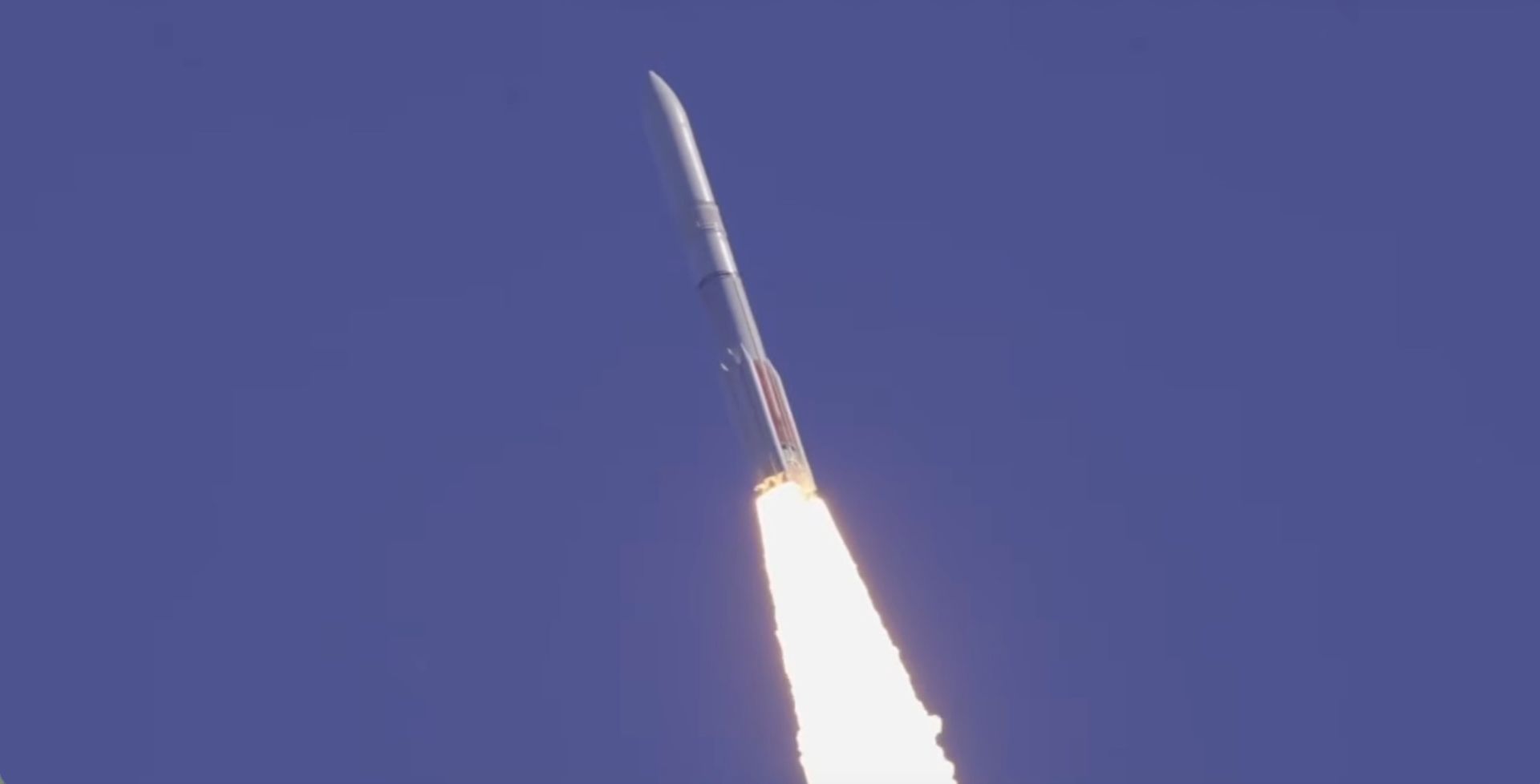
Amazon’s effort to launch a fleet of broadband satellites suffered a setback on Sunday when 40 of its spacecraft failed to reach orbit. This loss is particularly significant as it marked the first Amazon launch utilizing a rocket specially designed for the purpose, created by United Launch Alliance (ULA). ULA built this rocket, a variant of its Vulcan heavy lifter featuring a six-booster configuration and a Centaur V upper stage optimized for delivering payloads into low Earth orbit.
Amazon had announced the launch, known as LV-01, as the inaugural mission of a planned 38 missions with ULA, with LV-02 expected to follow shortly thereafter. The two companies had intended to test new hardware during the initial "several" flights using the custom rocket. Amazon had loaded 40 satellites onto the Sunday mission and expressed plans for larger configurations in future missions.
However, the launch mission was abruptly halted after an anomaly occurred 10 minutes into its flight. Initially, the flight proceeded smoothly, with the Vulcan rocket reaching an altitude of 95 miles (150 km) and successfully completing the first phase. Six minutes into the mission, both the main booster and payload fairing separated as planned, followed by the ignition of the Centaur V engines for the first planned firings to achieve low Earth orbit.
Nevertheless, an anomaly occurred, rendering the mission unsuccessful in delivering Amazon’s satellites into orbit. ULA stated that the mission "failed to deliver the Amazon mission to orbit," and acknowledged that every flight generates valuable data. However, as the anomaly had just taken place, ULA and Amazon did not yet possess specific information to determine the cause of the failure.
Amazon already possesses more than 200 satellites in orbit and had hoped to launch its satellite broadband service this year, with plans for 20 or more launches in 2027. The impact of this mission failure on Amazon’s ambitions remains unclear.
Written by urgent.news from The Register Science's reporting — not their text. Machine-written — may contain errors; check the original before relying on it.
This story
This is one outlet's version. Read the fullest account.