Astronomers discover rare black holes that formed when stars failed to go supernova
Gravitational waves have revealed a population of black holes that may have been born when masssive stars failed to go supernova.
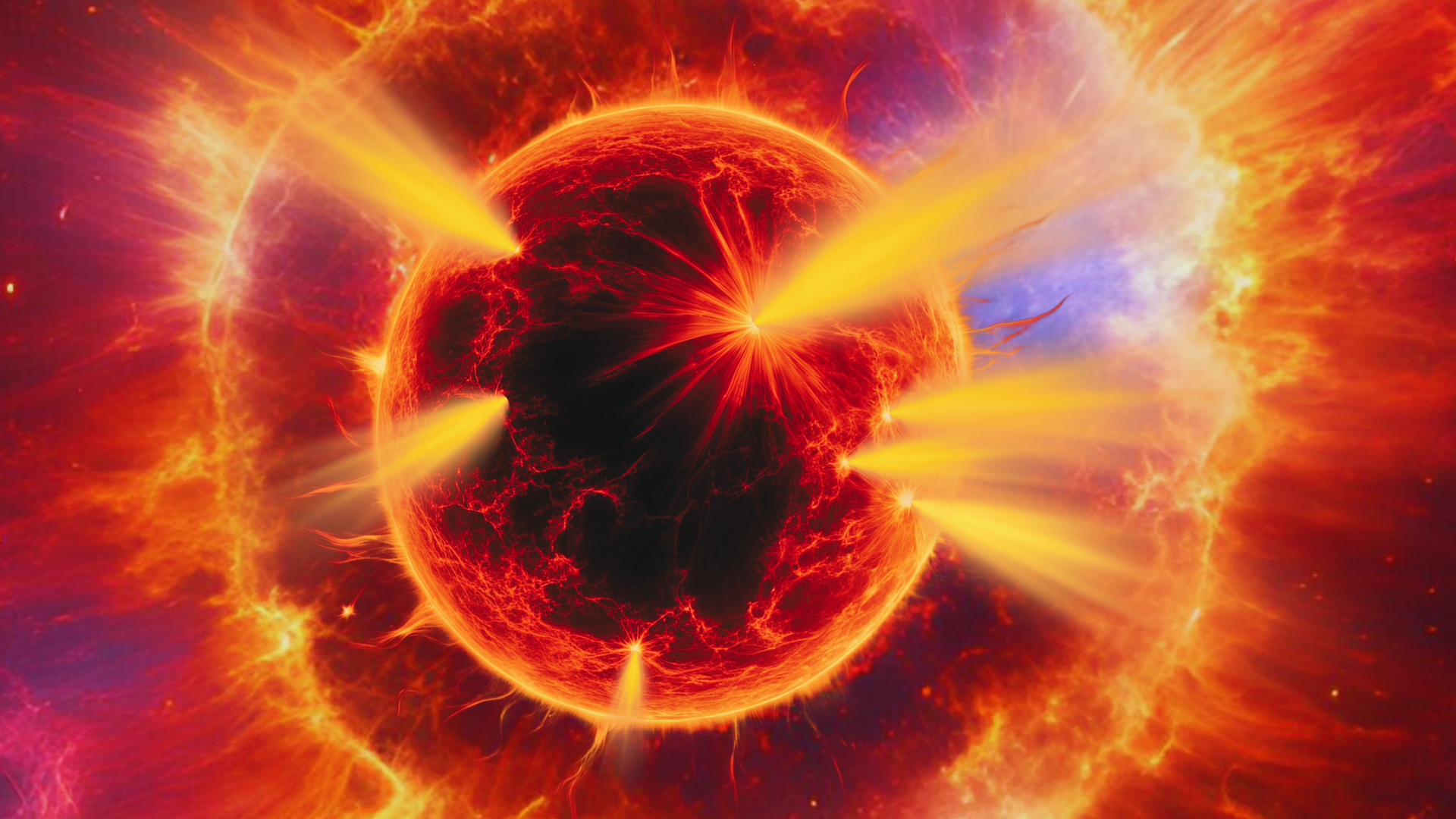
Recent research utilizing gravitational wave data from LIGO, Virgo, and KAGRA suggests that some massive stars may have met their demise in a "whimper" rather than the traditional "bang" of a supernova. Such failed supernovas could give rise to black holes, challenging the conventional understanding of black hole formation. The team, led by Katerina Chatziioannou from Caltech, analyzed over 300 black hole collisions observed since 2015 and found that a majority of these merging black holes are around 10 times the mass of our sun.
This indicates a possible distinct subpopulation of black holes that may have formed from stars that failed to undergo a supernova explosion.
The researchers examined the mass and spin of 257 black hole mergers detected over the past decade. They discovered a peak in the distribution of 10-solar-mass black holes, comprising 75% of the sample. Interestingly, there is a notable lack of black holes with masses ranging from 12 to 16 times the sun's mass. This discrepancy could suggest a unique set of physical processes involved in forming the majority of these 10-solar-mass black holes.
The spin rates of black holes in mergers also provide evidence for a common origin, pointing towards the implosion of massive stars without the dramatic supernova explosion. While the existence of failed supernovas is supported theoretically, direct evidence remains elusive. However, this study offers compelling support for the idea that the formation of most binary black holes may be linked to a special kind of failed supernova, opening new avenues for understanding the extreme environments where black holes are born.
Written by urgent.news from Space.com's reporting — not their text. Machine-written — may contain errors; check the original before relying on it.