The young rebel alliance trying to get people to love technology again
In a spare and cavernous former eyewear emporium near the luxury stores of San Francisco’s Union Square, a motley group of tech devices is spread out across display counters and pedestals. One is a desktop computer shaped like a cartoon frog. Another is an e-ink laptop controlled by buttons made of felt. Nearby, there’s an AI assistant hidden inside a fuzzy parrot meant to perch on a user’s…
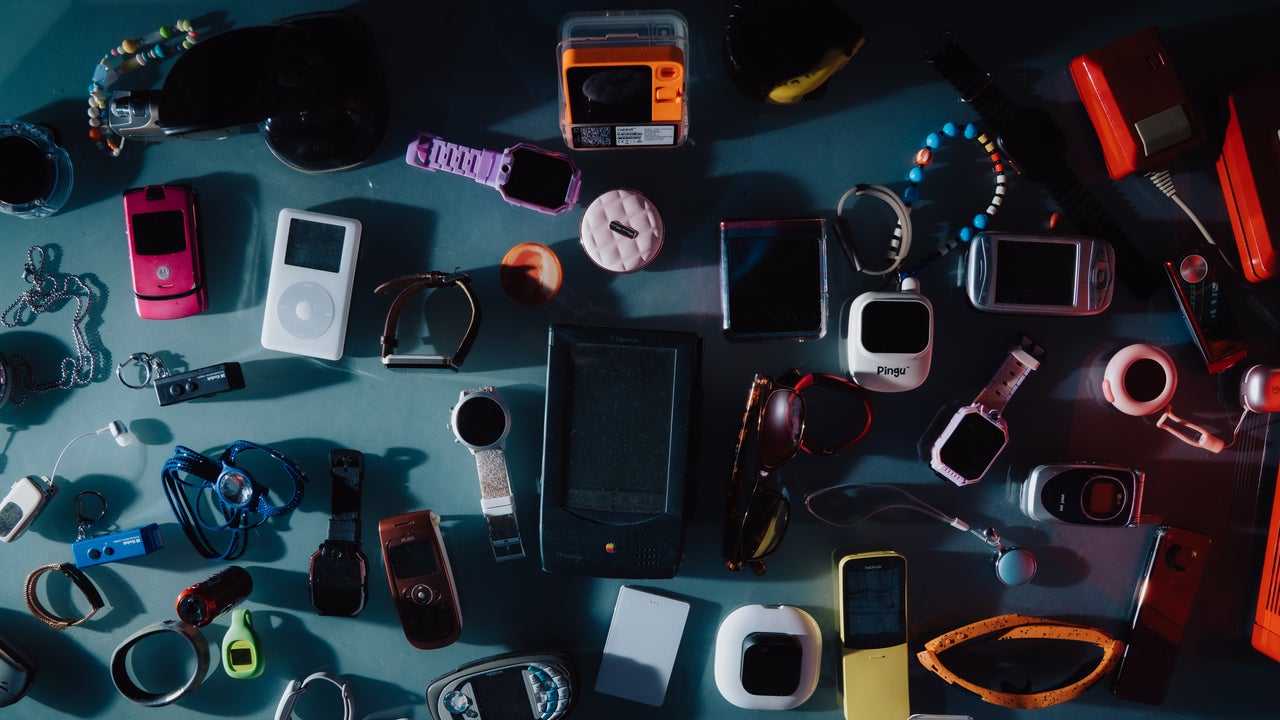
In the heart of San Francisco's Union Square, an unconventional art gallery named the Intersection of Art and Technology, or TIAT, is hosting a collection of unique tech devices. Displayed on counters and pedestals, these gadgets range from a frog-shaped desktop computer to an e-ink laptop controlled by felt buttons, and even an AI assistant disguised as a fuzzy parrot. This is no ordinary Apple Store, but rather a showcase of devices that challenge conventional thinking.
TIAT is a three-year-old gallery that frequently hosts events, meetups, and exhibitions focused on experimentation among self-proclaimed creative technologists. The devices on display are part of TIAT's latest group exhibition, Every Thing Computer, which explores "playful computing" and experimental interfaces. Some of the creations are artistic expressions, while others are more practical attempts to reimagine consumer technology.
Many of the artists behind these devices are part of a growing community in San Francisco and beyond who are reconsidering how technology can bring people joy or provide them with more control over their devices. They are building these devices as tangible evidence that an alternative to the current Silicon Valley ecosystem is possible.
Liz Dorman, founder of Era, a San Francisco-based startup sponsoring the exhibition at TIAT, explains that their goal is to create a platform for customizable AI devices. With AI tools, more nimble factories, and the motivation of a generation raised with smartphones, developing new kinds of devices is more feasible and desirable than ever before. Dorman notes that the traditional lock-ins and walled gardens of the App Store and hardware manufacturing are changing.
However, for many in the creative technology community, the mission is not about competing with tech giants like Apple or Google. Instead, they aim to build new hardware that serves niche audiences and broadens the range of consumer technology. The commercial devices among these creations are just beginning to enter the market, coinciding with highly anticipated AI hardware releases from trillion-dollar-valued companies.
TIAT's founder, Ash Herr, emphasizes the importance of artists providing perspectives on this new technology.
While there are no concrete numbers on the size of this movement, creative technology groups and meetups can be found from San Francisco to New York. These communities often have academic roots in prestigious computing and human-computer interface labs, such as Carnegie Mellon's Human-Computer Interaction Institute, New York University's Interactive Telecommunications Program, and several labs at the Massachusetts Institute of Technology.
Many of these individuals describe themselves as creative technologists or indie hardware developers, occasionally even as fashion hardware creators or "couture computing" enthusiasts.
At their core, these innovators share a desire to break free from the winner-takes-all mentality that has fueled the rise of Big Tech companies in recent years. As Liz Dorman puts it, the current narrative in San Francisco is filled with egos claiming to know the future, but the reality is that many of the advancements coming from the creative technology community are driven by a collective yearning to take ownership of our technology.
Rewritten by urgent.news; may contain errors — check the original.
Source: fastcompany.com