Learning the language of machine learning
By studying the computational foundations of language learning, Associate Professor Jacob Andreas builds intelligent systems that can communicate effectively with humans.
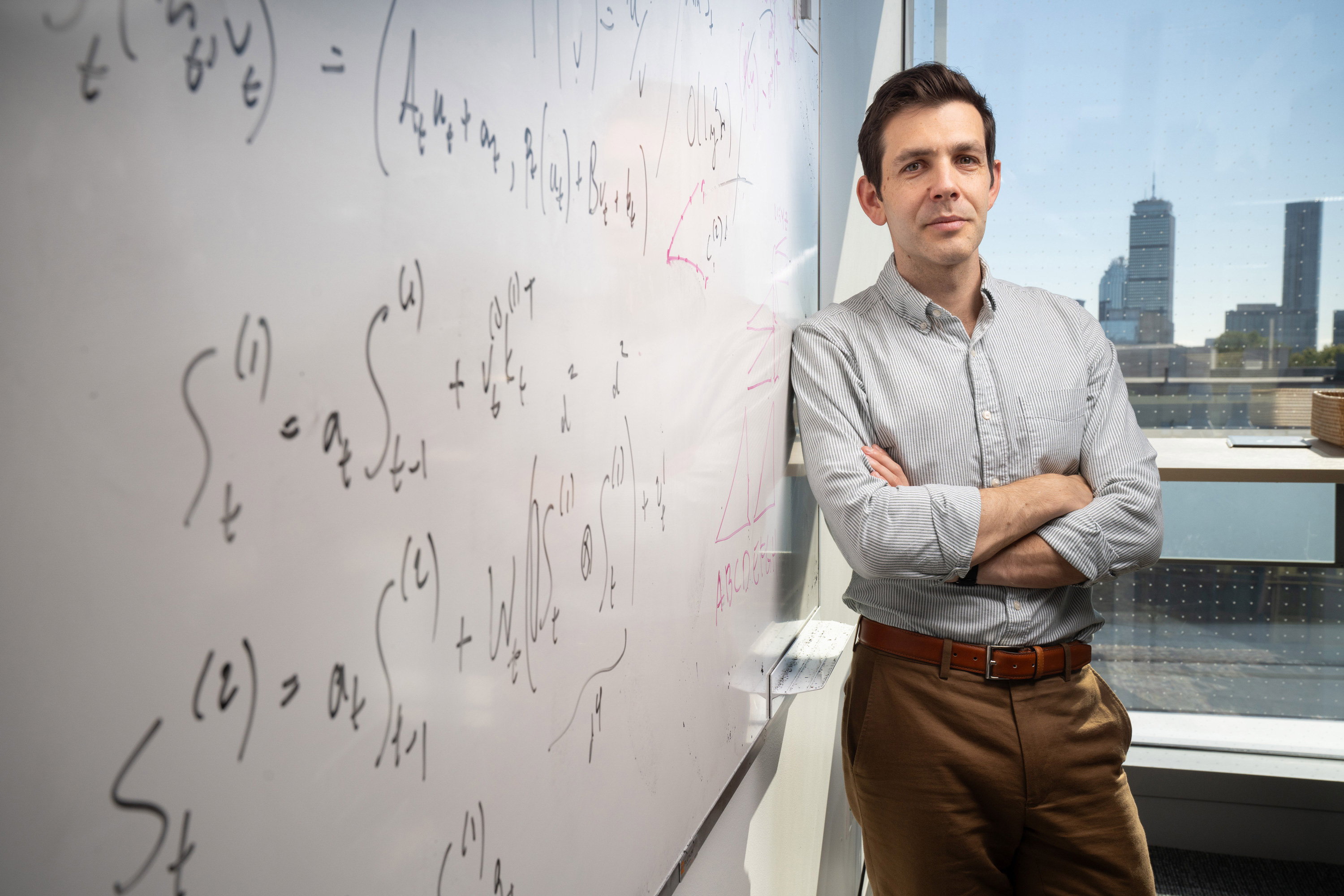
Researchers strive to comprehend how deep learning models function in critical applications. Jacob Andreas, a newly tenured associate professor, seeks for these models to converse about their learning process in an understandable human language. Andreas, based at MIT, creates methods that allow AI models to explain their understanding of training data in a manner comprehensible to humans.
By examining how machines grasp language, Andreas and his team aim to develop intelligent systems capable of learning from human guidance and communicating effectively with human collaborators. They work on refining the training process to be more intuitive and efficient, enabling AI models to learn in a way akin to human learning.
The ultimate goal is to assist in designing more precise and dependable deep-learning models tailored for specific applications. "We used to debug systems by examining their parameters and determining if they made sense," Andreas notes. "Now, we require 'mind-reading tools' capable of translating intricate neural computations into language we humans can understand."
An early passion with language emerged in Andreas during his youth in the San Francisco Bay Area. A book loaned to him by a family friend sparked his interest in computers when it featured a scene where a character hacked into a computer system to save the day. Years later, his father introduced a BASIC engine, which Andreas utilized to delve further into computer programming.
He chose to major in computer science at Columbia University but was uncertain about his career path, whether as a researcher, software engineer, or entrepreneur. Inspired by emails from faculty members working on AI-related topics, Andreas joined the field where he is today. His undergraduate thesis project in machine translation, guided by Michael Collins, involved refining statistical techniques for representing language meaning into more potent AI models capable of translating text passages.
This work ignited his interest in deep questions about thought and modeling the world through language processing problems. Andreas pursued postgraduate studies at the University of California at Berkeley, where he furthered his research on computational translation problems. During this time, he witnessed a dramatic shift in natural language processing, transitioning from statistical methods to deep learning.
Collaborating with scientists in computer vision labs, Andreas designed AI systems that excelled at generating natural language by learning to "see" and understand the world around them. His research during this period laid the foundation for his focus at MIT: methods for making the training process more natural and efficient, enabling AI models to communicate effectively in a language humans can comprehend.
Written by urgent.news from MIT News AI's reporting — not their text. Machine-written — may contain errors; check the original before relying on it.
This story
This is one outlet's version. Read the fullest account.
- Learning the language of machine learning news.mit.edu