Is a Manual Treadmill Worth the Extra Effort?
The curve of a manual treadmill changes the joint movements in the lower body.
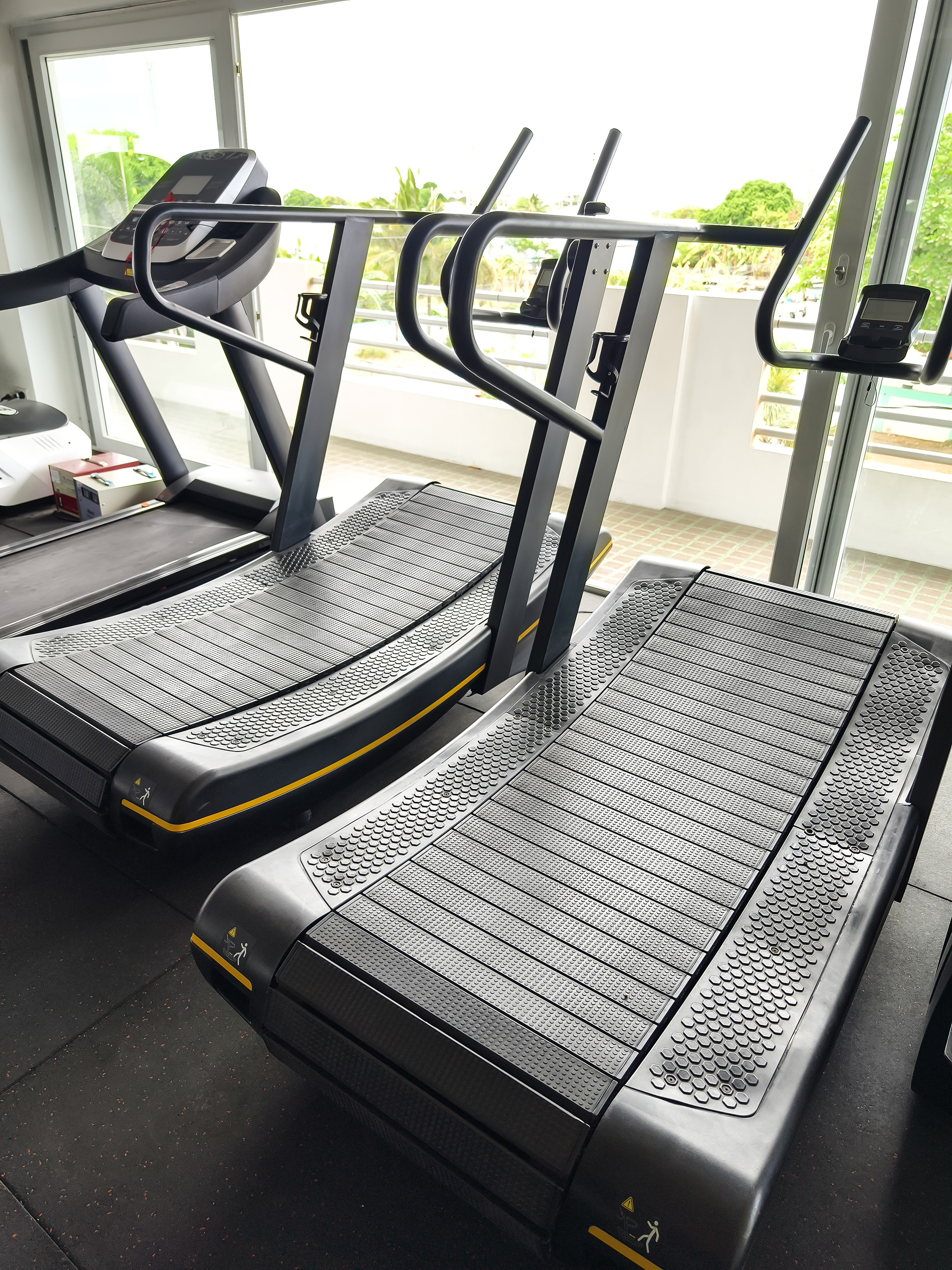
Manual treadmills, also known as self-powered or non-motorized treadmills, are a unique exercise machine that harnesses the power of your own footsteps to move the belt. Unlike traditional treadmills, they lack an electric motor and require no plug-in outlet to function. These machines are designed with a curved surface that forces your feet to work against the downward force of each stride, thus powering the treadmill.
This unique design has led to various claims about their benefits and drawbacks, with some fitness enthusiasts swearing by their effectiveness, while others remain skeptical.
Despite the controversial nature of manual treadmills, they have garnered a significant following, especially among CrossFit enthusiasts and on online fitness communities like Reddit. Professionals in the field, such as Richard Willy, an associate professor in the School of Health and Rehabilitation Sciences at The Ohio State University, argue that the misconception that motorized treadmills do all the work is widespread.
According to Willy, many believe that they require manual treadmills to achieve the full benefits of running. However, Willy emphasizes that this notion is mostly a misconception.
Multiple studies have shown that traditional treadmills can effectively replicate outdoor running, with little difference between the two types of machines. Richard Willy points out that the difference is minimal, highlighting that the curvature of a manual treadmill alters joint movements in the lower body, leading to a different gait pattern.
This altered gait, characterized by higher thigh lifts, increased hip flexion, greater ankle range of motion, and more flexed knees, shifts the mechanical load away from the knees and onto the hips and ankles. The higher energy demand of manual treadmills can be advantageous for individuals with knee pain but may pose challenges for those with glute, hamstring, calf, or Achilles issues.
One of the most notable differences between manual and motorized treadmills lies in the effort required to run on a manual treadmill. It takes significantly more energy to power a manual machine, with metabolic costs ranging from 16-38% higher than motorized treadmills. This increased effort translates to higher oxygen consumption, elevated heart rates, heavier breathing, and a perception of the workout as harder.
The extra energy needed to move the belt and the curved surface that mimics uphill running contribute to this increased metabolic demand.
Despite the higher energy cost, some professionals, such as James Smoliga, a professor in the Department of Rehabilitation Sciences at Tufts University, suggest that manual treadmills might offer some advantages. Smoliga's research indicates that manual treadmills can lead to a more efficient running pattern, characterized by a shorter stride and higher cadence. These patterns have been associated with improved running efficiency. However, it remains unclear if these gait changes translate when running outdoors.
A crucial factor to consider when using a manual treadmill is the mental challenge it presents. Unlike motorized treadmills, where you simply set the pace and run, manual treadmills demand constant attention and effort to maintain the desired speed. This mental focus can help runners develop the ability to gauge their own intensity during a workout, which can be beneficial for race day preparation. In essence, using a manual treadmill can cultivate a more mindful and self-regulated training approach.
In summary, manual treadmills are a unique fitness tool that harnesses the power of the user's effort to propel the belt. They offer benefits such as fostering a more natural gait, potentially aiding in injury prevention, and cultivating mental focus during workouts. However, they come with a significantly higher energy cost, making them less suitable for long endurance runs.
Instead, manual treadmills are best suited for short, intense workouts like sprints or high-intensity intervals. Despite the controversies surrounding their use, manual treadmills remain a fascinating and versatile piece of equipment that continues to capture the interest of fitness enthusiasts worldwide.
Written by urgent.news from Time's reporting — not their text. Machine-written — may contain errors; check the original before relying on it.