The Leonid meteor shower peaks tonight: How to see more than a dozen 'shooting stars' per hour
Up to 15 shooting stars per hour may be visible as the Leonids peak under dark skies tonight (Nov. 16 - 17), with the moon setting before the best viewing hours.
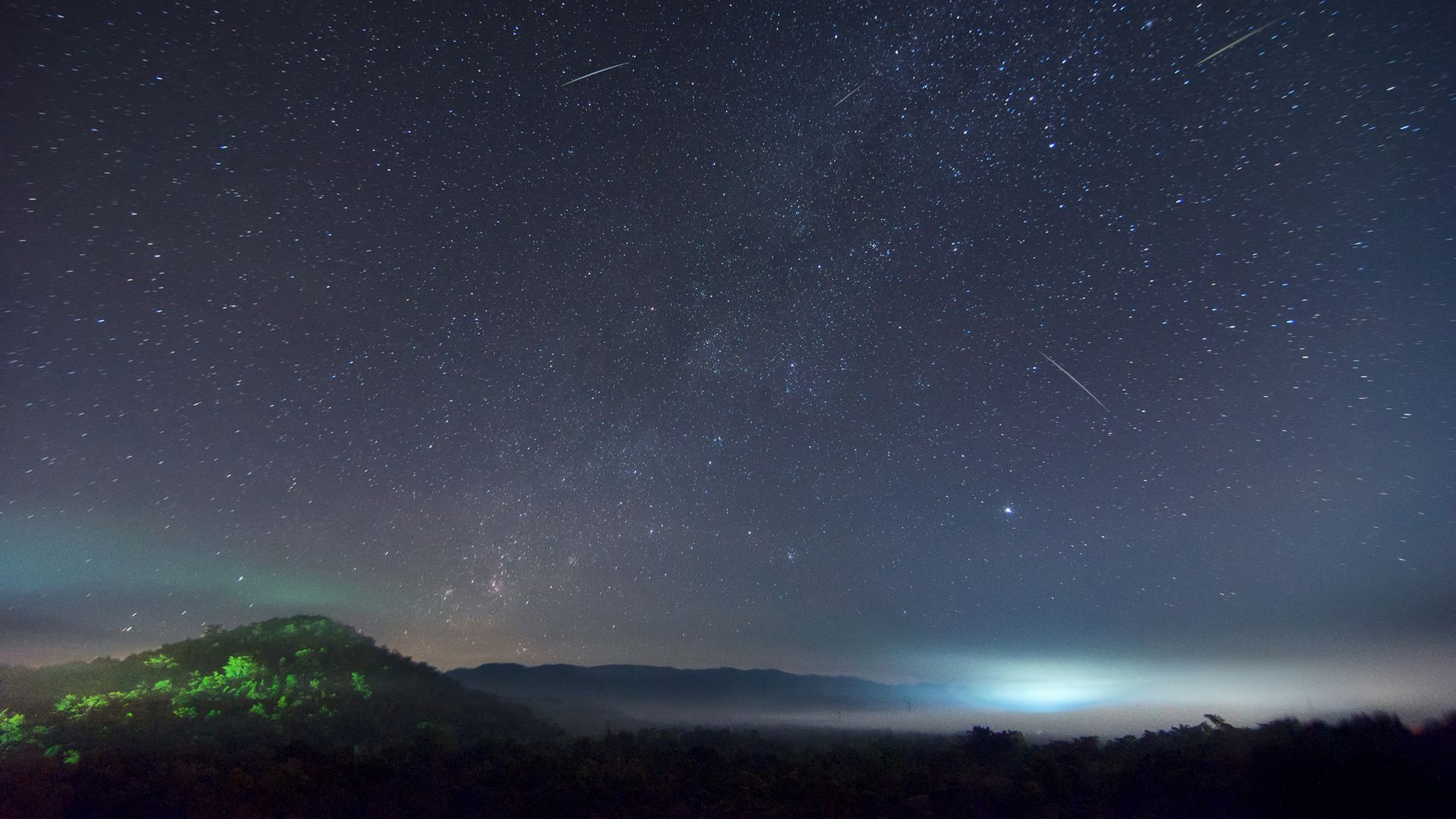
The Leonid meteor shower will reach its peak tonight and tomorrow, with up to 15 shooting stars expected to streak across the sky per hour under a near-moonless night. Peak viewing occurs between midnight and dawn on Tuesday, Nov. 17, when the radiant constellation Leo climbs higher. Although the meteors typically reach speeds of 43 miles per second, they often produce bright meteors with glowing trails.
The waxing crescent moon will set just before midnight, providing ideal dark skies for observation. To get the best view, find a spot away from artificial lights, lie back with a wide field of view, and allow your eyes to adjust to the darkness for about 20 minutes. Avoid using binoculars or telescopes, as they can limit your view.
The Leonids are particles of dust and debris from Comet 55P/Tempel-Tuttle, which orbits the sun every 33 years. The comet last visited the inner solar system in 1998 and will return again in 2031. While the Leonids usually produce around 15 meteors per hour, they are known for occasional bursts of up to 1,000 shooting stars per hour, with such storms occurring in 1833, 1866, 1966, 1999, 2001, and 2002.
The next outburst is anticipated in 2099. Following the Leonids, the Geminid meteor shower will peak on Dec. 13-14, with potential rates of up to 120 meteors per hour under dark skies, thanks to a slim crescent moon that sets shortly after dark.
Written by urgent.news from Live Science's reporting — not their text. Machine-written — may contain errors; check the original before relying on it.
This story
This is one outlet's version. Read the fullest account.
- The Leonid meteor shower peaks Nov. 17-18! Here's what you need to know space.com
- Leonid meteor shower returns to Spain with its best display of shooting stars euroweeklynews.com
- Look up! The Leonid meteor shower is coming freemalaysiatoday.com
- Leonid Meteor Shower to peak over Qatar on Wednesday gulf-times.com
- Leonid meteor shower's stormy past r.smartbrief.com