The Leonid meteor shower peaks Nov. 17-18! Here's what you need to know
The Leonid meteor shower peaks overnight on Nov. 17-18, sending shooting stars racing across the night sky from the direction of the constellation Leo.
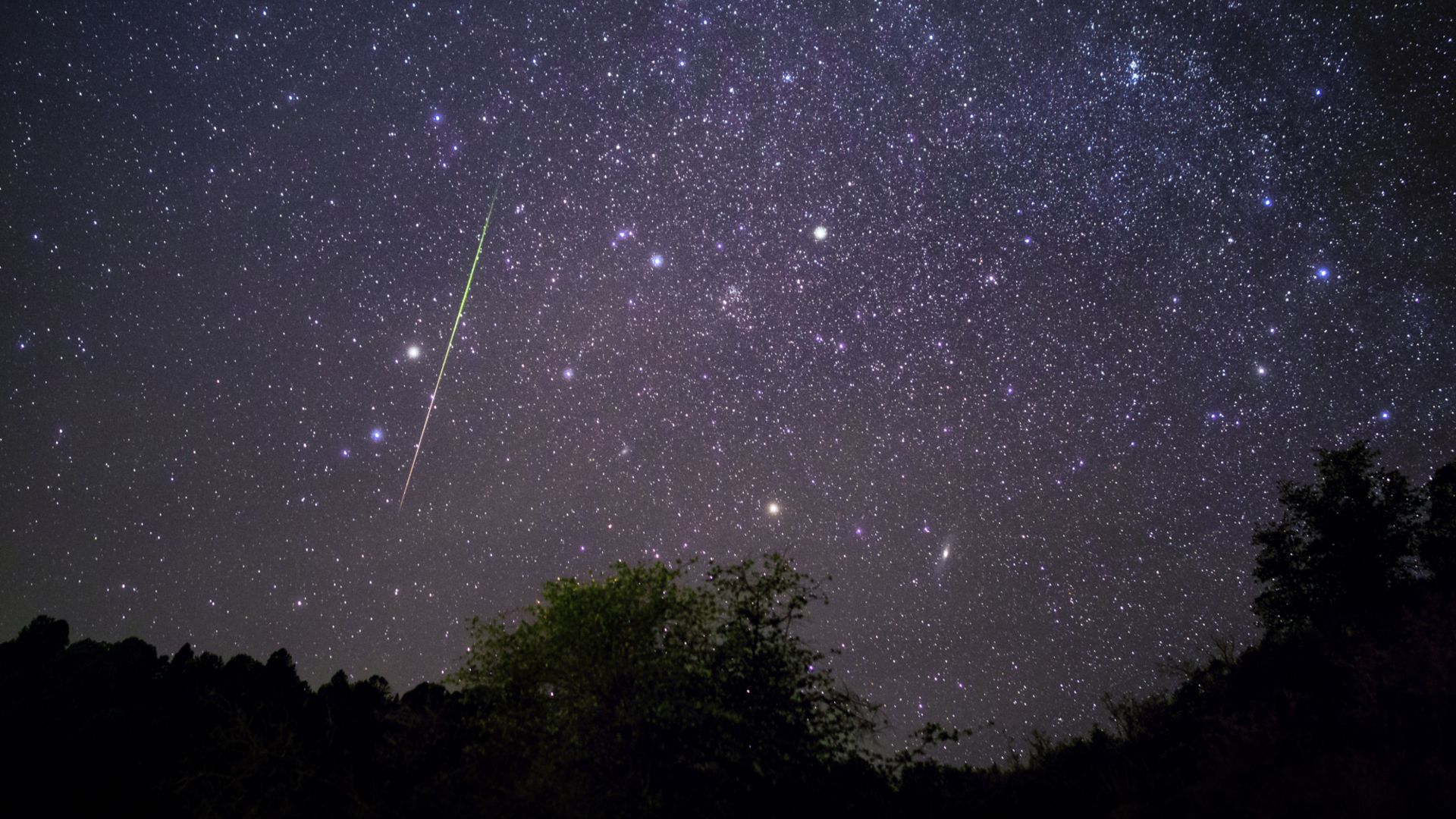
The Leonid meteor shower will reach its peak between November 17 and 18, 2026, as Earth crosses paths with debris from Comet 55P/Tempel-Tuttle. Around 15 meteors per hour may be visible under ideal dark sky conditions on November 17-18, according to the International Meteor Organisation. However, NASA estimates a less impressive rate of fewer than three meteors per hour.
These meteors seem to emanate from the constellation Leo, which will be prominently positioned above the southeastern horizon during pre-dawn hours in mid-November. Both Jupiter and Mars will be positioned near Leo on the night of the peak, simplifying its identification.
For the best view of Leonid meteors, it is recommended to look in the hours before dawn on November 18, when the radiant will be at its highest point in the southeastern sky, granting optimal visibility of meteors entering Earth's atmosphere. By this time, the waxing moon will have set, providing darker skies and an increased chance of sighting fainter meteors.
Meteors originating near the radiant will have short trails, as they enter Earth's atmosphere nearly head-on. To witness the most impressive meteors, focus on a region of sky a short distance away from Leo. Allow your eyes 20-30 minutes to adjust to the darkness for optimal viewing.
The Leonid meteor shower is renowned for producing vivid fireballs and elongated Earth-grazing meteors, which skim through Earth's atmosphere at an oblique angle, leaving long trails as they pass before exiting back into space. Another noteworthy characteristic of the Leonids is their capacity to generate meteor storms when Earth traverses highly dense debris trails left behind by Comet 55P/Tempel-Tuttle, which orbits the sun approximately every 33 years.
The next significant storm is anticipated to happen in 2031, according to the Planetary Society, although a 2026 study predicts potentially spectacular displays in 2033 and 2034.
Written by urgent.news from Space.com's reporting — not their text. Machine-written — may contain errors; check the original before relying on it.
This story
This is one outlet's version. Read the fullest account.
- Leonid meteor shower returns to Spain with its best display of shooting stars euroweeklynews.com
- Look up! The Leonid meteor shower is coming freemalaysiatoday.com
- Leonid Meteor Shower to peak over Qatar on Wednesday gulf-times.com
- Leonid meteor shower's stormy past r.smartbrief.com