Has AI’s ‘Black October’ changed the way you secure your code?
PARTNER CONTENT: AI agents are making security vulnerabilities easier to find and exploit in your code. Software engineering and application security teams need new ways to find and fix them
The period between October 2025 and early 2026 has been marked by a surge in AI-driven attacks on software applications. These attacks, facilitated by the proliferation of AI agents, have introduced new attack vectors and entry points that were not previously considered. A significant development in this context was the Pillar OpenCode disclosure, which revealed how a malicious Model Context Protocol (MCP) server could execute commands on a developer's machine during authentication. This revelation underscored the vulnerability of development environments to AI-based attacks.
Moreover, the discovery of PHP2Shell vulnerabilities further heightened the urgency to secure codebases. These vulnerabilities, uncovered thanks to OpenAI's models, allowed remote code execution in PHP runtimes, posing a significant threat to web applications. Microsoft's findings demonstrated the rapid capabilities of AI agents, as one managed to move from searching for exposed credentials on GitHub to stealing data from Azure Key Vault within five minutes.
Anthropic's report highlighted the concerning trend of individual operators using agent frameworks to carry out multi-victim campaigns that previously required specialized teams. These agents could conduct reconnaissance, exploit vulnerabilities, and steal data across multiple targets simultaneously, making sophisticated attacks accessible with minimal human intervention.
According to Tomasz Tunguz, the cost of deploying an attack using a low-cost model like GLM-5.3 could be as low as $90, which is dramatically lower than the estimated $5,000 to $10,000 for comparable attacks by traditional means.
These developments emphasize the need for a shift in how software security is approached. Traditional application security checks, such as rule-based static analysis, dependency scanning, and secret detection, are no longer sufficient to combat these novel threats. Developers and security teams must now adopt a more proactive stance, incorporating defensive AI agents that can proactively trace attack paths, identify missing safeguards, and assist in fixing business logic vulnerabilities.
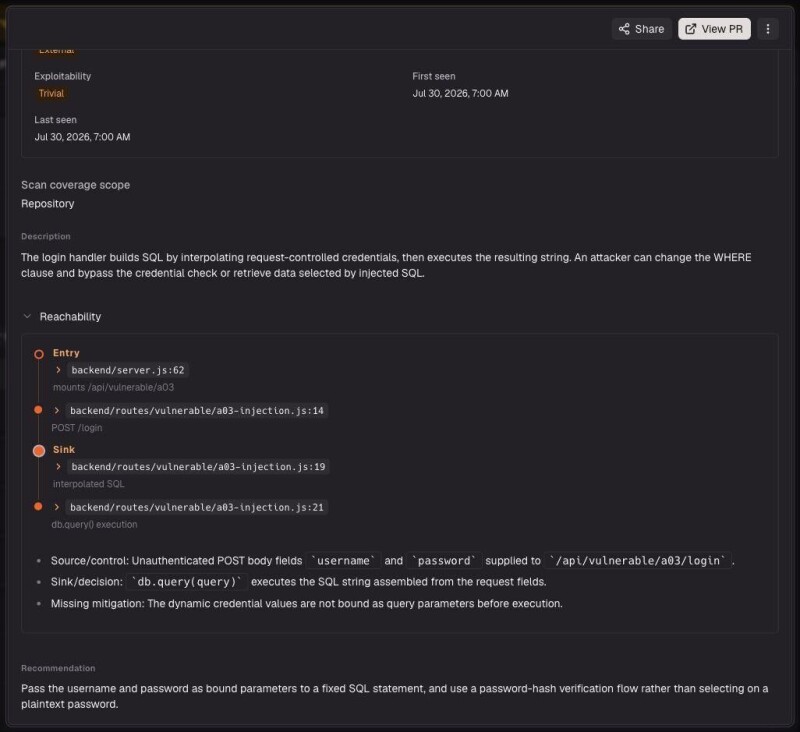
One promising solution is CodeRabbit Secure, which employs semantic analysis to understand codebases and reason about them in the manner of a security engineer. It can trace requests, check permissions and business rules, and generate reviewable fixes for identified vulnerabilities. CodeRabbit Secure offers several key functionalities that can significantly enhance code security throughout the software development lifecycle.
Firstly, it can review each commit in a new pull request, flagging potential security risks. Secondly, it can scan the entire repository to detect vulnerabilities, providing a comprehensive view of the application's security posture. Finally, CodeRabbit Secure enables incremental security scans, allowing for continuous validation of code at runtime, ensuring that any vulnerabilities that might have emerged during runtime are promptly addressed.
Written by urgent.news from The Register Science's reporting — not their text. Machine-written — may contain errors; check the original before relying on it.