FDA OKs First Drug for Primary Membranous Nephropathy
(MedPage Today) -- The FDA has once again expanded the label for the B-cell depleter obinutuzumab (Gazyva), this time to include treatment of primary membranous nephropathy. The new indication, announced by the agency on Friday, stipulates use...
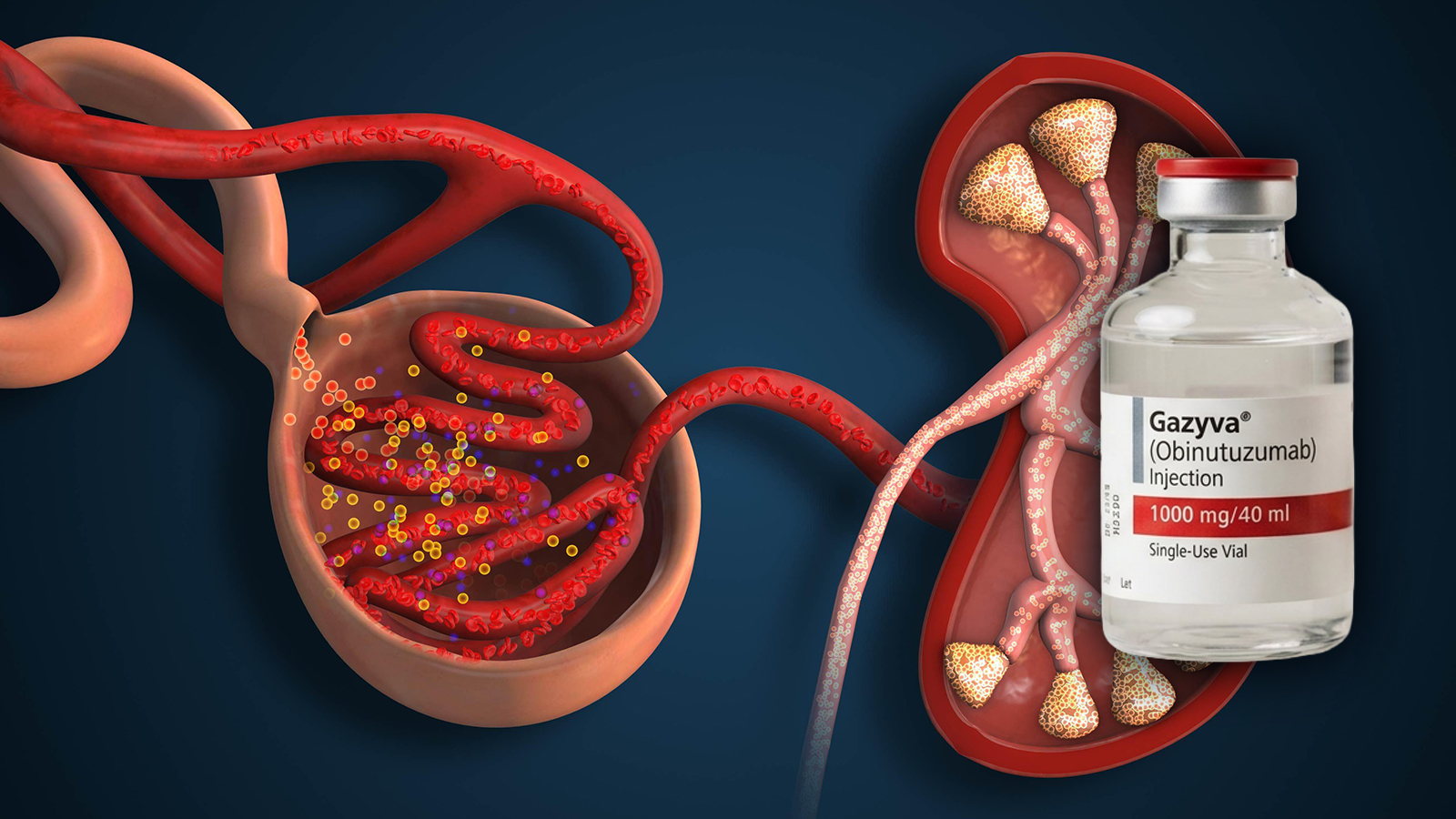
The FDA has approved the first drug specifically for primary membranous nephropathy, a rare autoimmune kidney disease. The medication, obinutuzumab (Gazyva), is a B-cell depleter that induces remission of proteinuria in adults at risk of disease progression. This marks a significant advancement, as off-label options had previously been the standard of care for this condition.
Primary membranous nephropathy occurs when the immune system attacks the glomeruli, tiny filters in the kidneys responsible for removing waste products from the blood. The inflamed and damaged glomeruli lead to excessive protein leakage into the urine, causing complications such as high cholesterol, high blood pressure, severe swelling, fatigue, and potentially kidney failure.
Phase III trial data from the MAJESTY study, which formed the basis for the FDA's decision, demonstrated that obinutuzumab outperformed the immunosuppressive drug tacrolimus in achieving complete proteinuria remission at two years. In the trial, 37% of patients receiving obinutuzumab achieved complete remission, compared to just 6% of those on tacrolimus (P 0.001).
The drug's approval expands its indications to include primary membranous nephropathy, childhood-onset idiopathic nephrotic syndrome, and active lupus nephritis. As the first FDA-approved treatment for this specific autoimmune kidney disease, obinutuzumab offers new hope for patients seeking effective management of their condition.
Written by urgent.news from MedPage Today's reporting — not their text. Machine-written — may contain errors; check the original before relying on it.