Can Robots Bring Stroke Surgery to Remote Hospitals?
I am practicing brain surgery on a patient lying 6 meters away, out of my sight and reach. I press a foot pedal, activating the controller in my hand, and carefully steer a thin flexible tube called a catheter up through the patient’s blood vessels. I head for what I believe to be the brain, tracking my progress on the live X-ray feed. As I imagine finding a blood clot, David Bell , the surgeon…
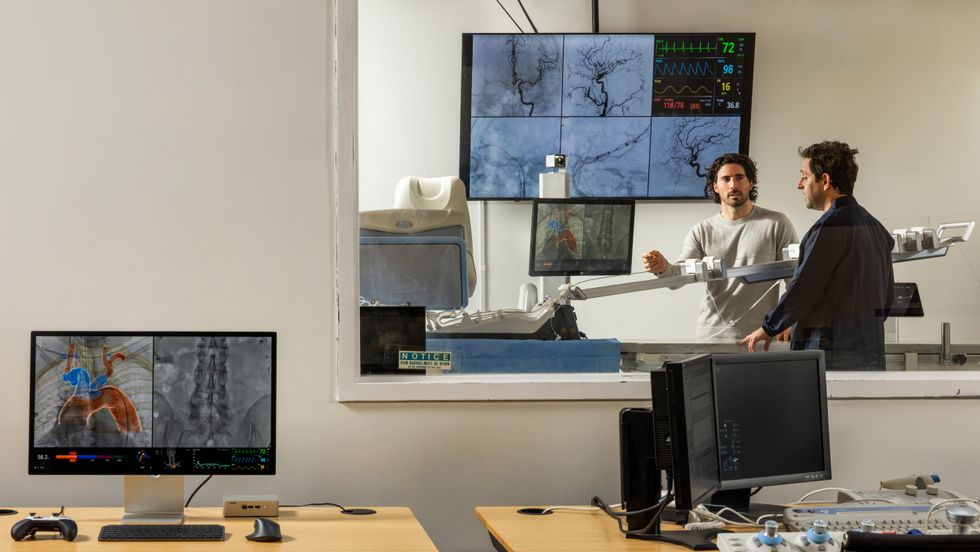
A pioneering surgical robot, the Remedy N1, could potentially revolutionize stroke treatment in remote hospitals. This innovative device, developed by Remedy Robotics co-founders Jake Sganga and David Bell, enables surgeons to perform thrombectomies remotely, a standard brain operation for acute ischemic strokes caused by blood clots.
Ischemic strokes, caused by a restriction of blood flow, are the most common type and affect an estimated 5 million people annually worldwide. In the United States alone, strokes are the fourth leading cause of death. Currently, only about 1 in 10 eligible patients receive thrombectomies in time, as treating stroke remains a challenge due to the need for swift and precise intervention.
Bell, an Australian clinician and former cardiac-surgery trainee, and Sganga, an engineer, recognized the urgent need to bring life-saving treatment to remote and rural areas where such care is often unavailable. Their goal is to make telesurgery a practical part of stroke care, addressing both the technical and logistical hurdles that currently hinder access to thrombectomies.
The Remedy N1 robotic catheter and its related software are designed to help patients in remote locations who would otherwise face significant delays in receiving care. By providing surgeons with enhanced visualization and precise control, the robot aims to improve the accuracy and safety of thrombectomy procedures, ultimately benefiting stroke patients who might otherwise suffer irreversible damage.
Written by urgent.news from IEEE Spectrum's reporting — not their text. Machine-written — may contain errors; check the original before relying on it.