Analysis: Gibran’s exit and the unraveling of the Jokowi legacy
Gibran Rakabuming Raka’s resignation as vice president marks a turning point, not only for his own career but for the balance of power within Indonesia’s governing elite. With his resignation letter delivered to President Prabowo Subianto on Nov. 11, the drama over his future appears to have entered its final phase.
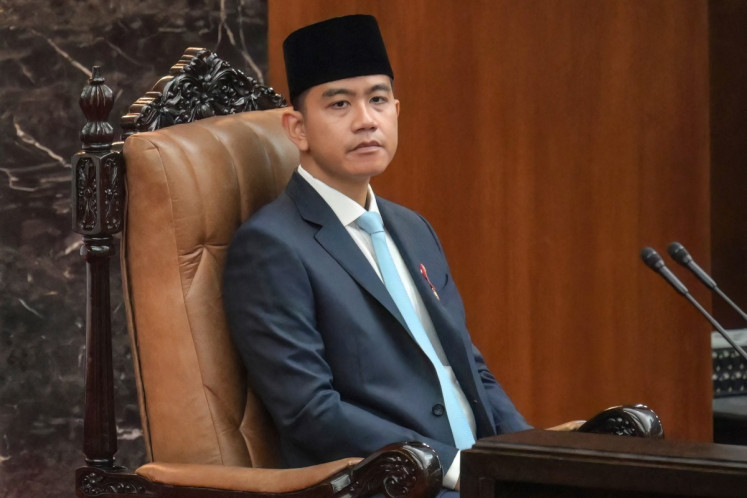
Gibran Rakabuming Raka's resignation as vice president signifies a significant shift, not only in his career but also in the power dynamics within Indonesia's ruling elite. His resignation letter was handed over to President Prabowo Subianto on November 11, signaling the final stages of his departure. Although the process is not yet legally finalized, the subsequent steps are largely routine constitutional procedures.
The People’s Consultative Assembly (MPR) must accept the letter and subsequently initiate the selection of a new vice president.
The key question now is not whether Gibran stays, but what his departure implies for Indonesia's political landscape. This resignation does not conclusively end the House of Representatives' pursuit of the "right to express opinion" (HMP) process regarding Gibran's impeachment. Supporters have a vested interest in continuing this pursuit, as it would solidify the removal of Gibran, whether through resignation or a formal constitutional decision.
This outcome would enable legislators to establish a historical record of the crisis's underlying causes.
However, Gibran's resignation may not be sufficient for his opponents, who might seek a definitive repudiation of his legitimacy by the MPR. Nonetheless, the ramifications extend far beyond a single individual. Gibran's vice presidency served as the most visible and institutionalized link between Prabowo and Joko "Jokowi" Widodo, Indonesia's seventh president who governed from 2014 to 2024.
Gibran's presence allowed Jokowi to maintain a degree of influence within the administration even after leaving office, and his political network retained representation at the highest levels, thereby sustaining the perception of a collaborative effort during the 2024 election. With Gibran's resignation, this crucial institutional foothold has been fundamentally weakened.
Prabowo now holds the authority of office, control over the state apparatus, and a sizable coalition in the legislature, while Jokowi becomes increasingly reliant on informal networks. This relationship has been evolving, but the resignation hastens the transition from a shared arrangement to one that is unequivocally centered on Prabowo.
Many political actors have already acknowledged this shift. Three senior figures reportedly left the Indonesian Solidarity Party (PSI) while retaining their cabinet positions, signifying a shift in loyalty from Jokowi to the President. The PSI has often been seen as Jokowi's political vehicle, particularly since he exited office, and their decision underscores that loyalty to the President now takes precedence over loyalty to the party.
In politics, loyalty often follows power, and the tilt toward Prabowo's sphere of influence reflects an emerging consensus that Indonesia's political future is linked to Prabowo rather than Jokowi.
Gibran's resignation may even have benefited the governing coalition. Had he remained and contested the allegations, Indonesia could have faced months of intense political struggle. An impeachment would have been likely to be contentious, protracted, and divisive, forcing coalition parties to choose sides, pressure ministers to defend or abandon Gibran, and dominate the national agenda with hearings and constitutional debates.
Prabowo would have been caught between defending his elected running mate and preserving his administration's credibility, while the opposition would have gained a powerful platform.
Written by urgent.news from The Jakarta Post Academia's reporting — not their text. Machine-written — may contain errors; check the original before relying on it.
This story
This is one outlet's version. Read the fullest account.
- Gibran’s exit: The Machiavellian end of a political alliance thejakartapost.com