No Phones, No Tiger Selfies: Can India's Safari Ban Bring The Focus Back To The Jungle?
Across India's national parks, home to over 3,600 tigers, safaris are the only way to see the big cat in its own habitat. Growing interest among domestic and inbound travellers has sustained micro-economies around parks like Ranthambore, Tadoba, Jim Corbett, Kanha and Bandhavgarh for close to 50 years. But the pressure has also exposed cracks in a system regulated separately by each state's…
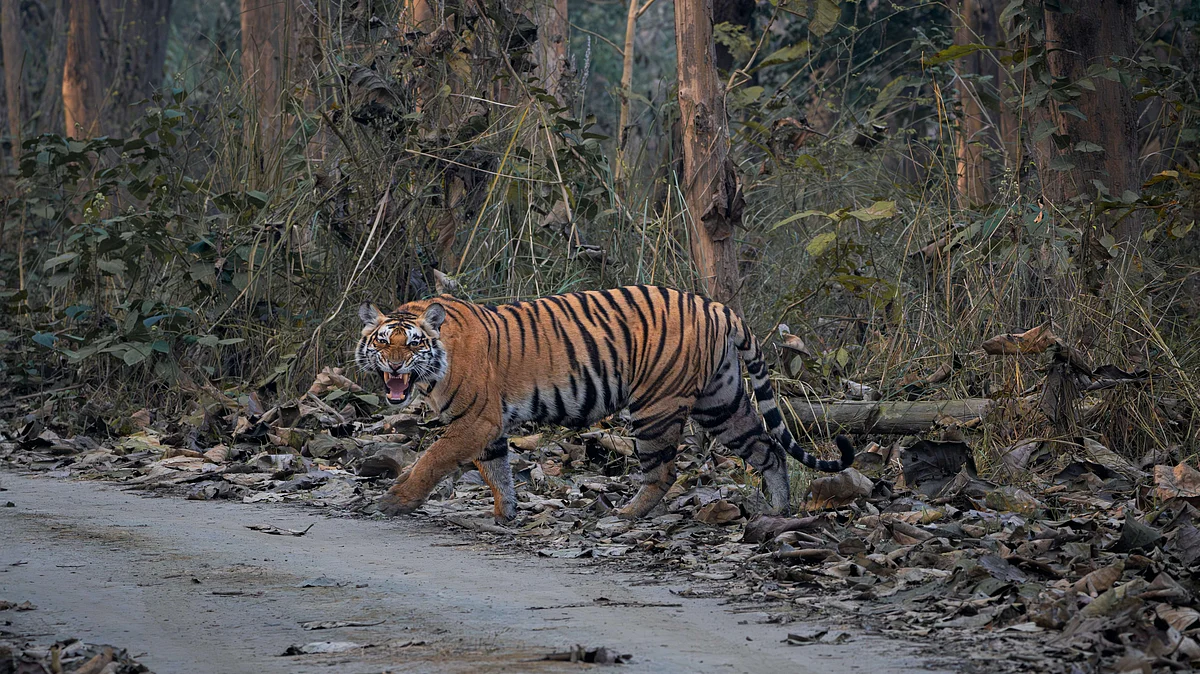
Across India's national parks, home to over 3,600 tigers, safaris remain the primary method for observing the big cat in its natural habitat. The popularity of these safaris has bolstered local economies at destinations like Ranthambore, Tadoba, Jim Corbett, Kanha, and Bandhavgarh for several decades. However, this increased demand has also highlighted the limitations of a system overseen by individual state forest departments.
Despite efforts such as online permit bookings and expanding zones, safari experiences in popular parks often become chaotic, with vehicles competing to capture a glimpse of the elusive tiger. A recent Supreme Court ruling in November 2025 went a step further, banning mobile phones during safaris in all tiger reserves, national parks, and wildlife sanctuaries across India.
Under the new ban, visitors are no longer permitted to bring their phones on safaris. Instead, they must hand them over to a secured box carried by the vehicle's guide. While Tadoba Andhari Tiger Reserve had already implemented this rule in 2018, the nationwide ban aims to curb the disruptive impact of phone usage on the overall safari experience.
Varun Taneja, Brand Head at Sublime Wilderness Odyssey, notes that guests often view a safari as successful only if they spot the tiger and manage to take a memorable photo or selfie, which can lead guides and drivers to chase sightings and encroach closer to the animals, posing safety risks.
The ban has elicited mixed reactions. Juhi Jain, a Delhi-based entrepreneur who has experienced safaris both before and after the ban, says she now appreciates the "jungle" without the distraction of a camera. She admits being annoyed initially but has since come to enjoy the quieter, more immersive experience. However, Pradyumna Ravindra, a wildlife enthusiast, argues that outright banning phones misses the point for those who simply want to capture a memory. He prefers a system that enforces "flight mode" rather than a complete ban.
The decision to ban phones was not made lightly, and its scope does not extend to guides and drivers, whose phones are still necessary for contacting authorities in emergencies. While some argue that the ban addresses the issue of crowding, others point out that indisciplined visitors have displayed similar behavior even before the advent of smartphones.
Uttara Gangopadhyay, a Kolkata-based writer, suggests that awareness-building sessions should be mandatory before every safari, with guides empowered to halt vehicles if rules are violated.
Naturalist Manavendra Mishra believes that the real challenge lies in enforcement rather than the device itself. He proposes a graded system for repeat offenders, rather than a blanket ban that overlooks the underlying reasons for the problem. Taneja agrees that disconnecting from technology does ease the pressure on guides and allows for a more serene safari experience. Ultimately, the ban is seen as a step towards restoring the focus on the jungle and its inhabitants, rather than the act of capturing images.
Written by urgent.news from Free Press Journal's reporting — not their text. Machine-written — may contain errors; check the original before relying on it.