I asked Claude Code, Google Antigravity, and ChatGPT Codex to build the same game, and only one made something I wanted to keep playing
One of them built their own engine, and I couldn't believe my eyes
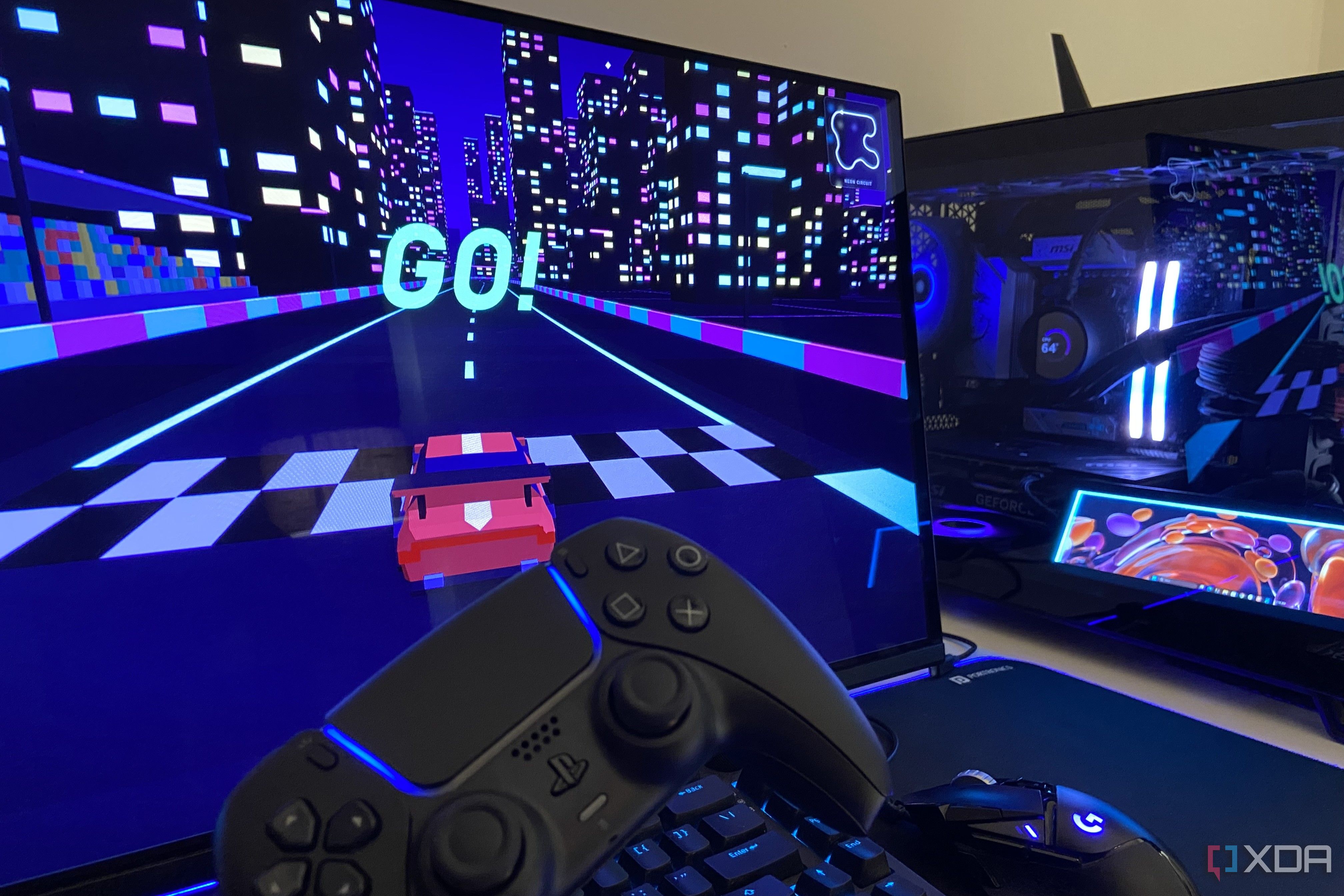
I asked Claude Code, Google Antigravity, and ChatGPT Codex to build the same 3D time-trial racing game that runs in a browser with no installation required. The game should feature one car, three short tracks, bronze, silver, and gold target times for each track, and a ghost of the player's best lap. The game should play well on both a PlayStation controller and a keyboard.
I sent each agent the prompt verbatim, with no follow-up messages. After 3 minutes and 16 seconds of generation, it became apparent that ChatGPT Codex had provided insufficient content. Its HTML file seemed to only meet the minimum requirements, including the three tracks and time targets. When I attempted to play, the track appeared to be floating in the sky and the car, which was shaped like a dashboard with a thin red stripe, was placed on what was supposed to be grass.
The DualSense controller failed to start or restart runs, requiring me to reach for the mouse for each attempt. In contrast, Antigravity took about 12 minutes to generate a more promising result. It offered a folder of files with a feature list that included three tracks, a ghost with live gap to the best lap, sector splits, a minimap, drift mechanics, camera switching, and six paint colors.
Upon launching the game on my DualSense, I noticed the controls were inverted. After some trial and error, I completed the first track, Coastal Sprint, in 55.9 seconds, which was nearly 20 seconds slower than the bronze time. However, the inverted controls made the experience feel like driving with crossed arms. Antigravity's game was far less enjoyable than Codex's offering, despite being a significant improvement over Codex's minimal effort.
Claude Code, on the other hand, took the longest to generate its game, clocking in at 35 minutes and 46 seconds. Its approach involved writing its own 3D renderer, building the car and sky elements from code, and synthesizing engine and tire sounds without using any audio files. Additionally, Claude Code meticulously tested its own game by loading it in its own browser, driving laps to check the ghost and finish screen, and even mimicking a DualSense controller by injecting a mock gamepad into the page and scripting button presses.
The tracks were designed by drawing them and redrawing them multiple times to ensure proper curvature. The game itself felt smooth and responsive, with the DualSense controller providing tactile feedback for curbs and drifts. The game offered multiple camera views, including hood, chase, and far chase, which could be cycled through using the square button.
Overall, Claude Code's game demonstrated the effort put into its development and provided a more satisfying and immersive experience than the other two agents' offerings.
Written by urgent.news from XDA Developers's reporting — not their text. Machine-written — may contain errors; check the original before relying on it.
This story
This is one outlet's version. Read the fullest account.