How did Cleopatra really die?
Ancient writers couldn't agree on how Egypt's last queen took her own life, and the famous snakebite story may owe more to her enemies than to the facts.
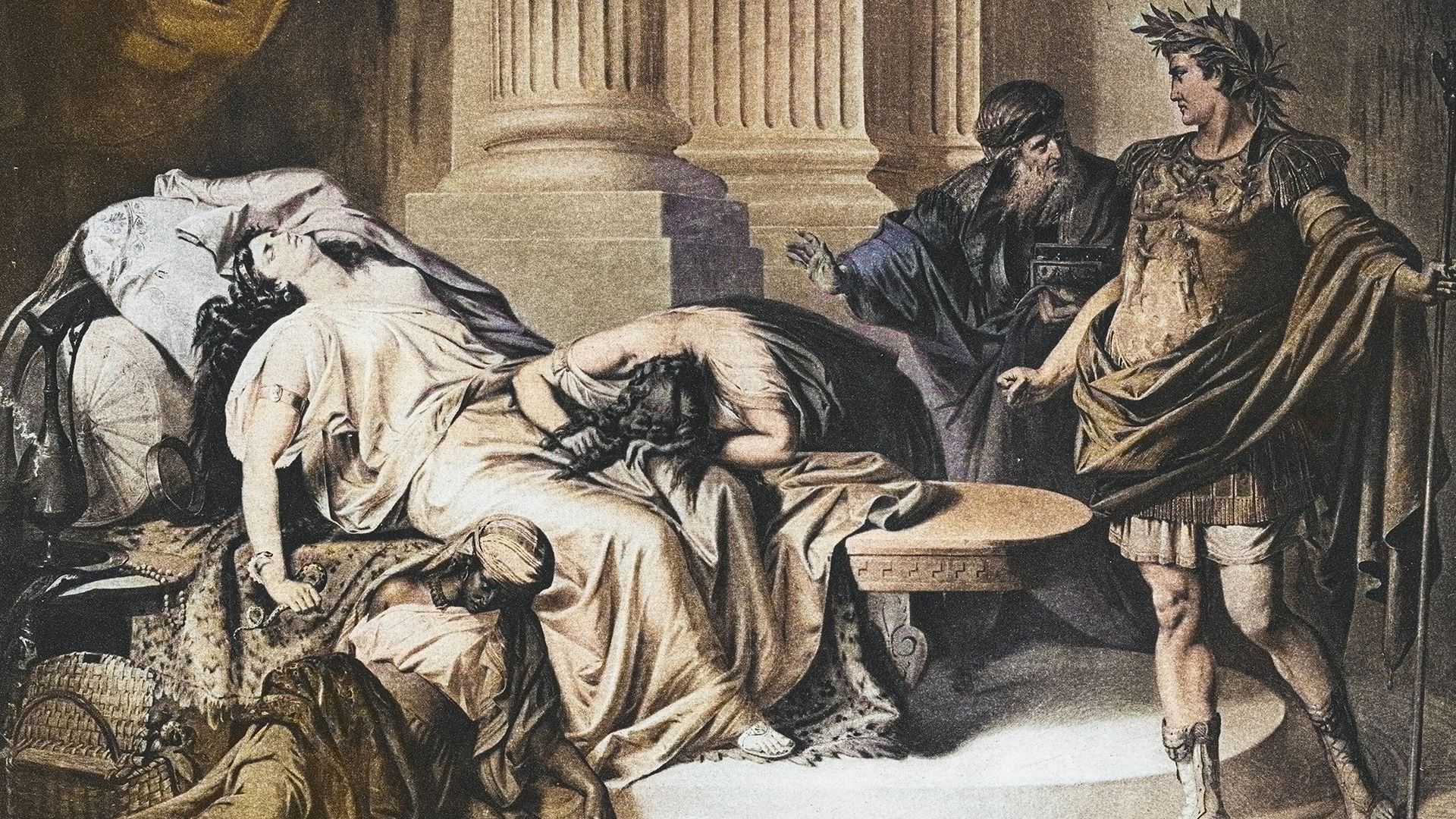
Cleopatra's death is one of history's most legendary tales. In 31 B.C., she and her lover Mark Antony were defeated by Octavian, who later became Rome's first emperor Augustus. After their defeat in the Battle of Actium, Cleopatra was captured in a Roman ambush at her royal tomb in Alexandria. Octavian claimed she ended her life by allowing a venomous asp snake to bite her, but modern historians are skeptical about this account, considering it possible Roman propaganda to enhance Octavian's rise to power.
Most historians now believe Cleopatra took her own life, choosing a method that preserved her dignity. Precise details about her death remain unknown, as much of Alexandria's royal area is now underwater, making it difficult to find physical evidence of her final moments. Ancient sources, such as Roman poet Horace and historian Plutarch, offer varying accounts, but many mention a snakebite.
However, other theories propose alternative causes, including a poisonous ointment, a poisoned hairpin, or even snake venom from a bite or self-inflicted wound. Despite the uncertainty, historians generally agree that Cleopatra took her own life, likely using a swift and dignified method of poison.
Written by urgent.news from Live Science's reporting — not their text. Machine-written — may contain errors; check the original before relying on it.