Ahmed Ibrahim calls for stronger government-academia partnership to tackle environmental challenges
The Minister for Works, Housing and Water Resources, Ahmed Ibrahim, has called for stronger collaboration between government, universities, industry and civil society to address Ghana’s growing environmental challenges.
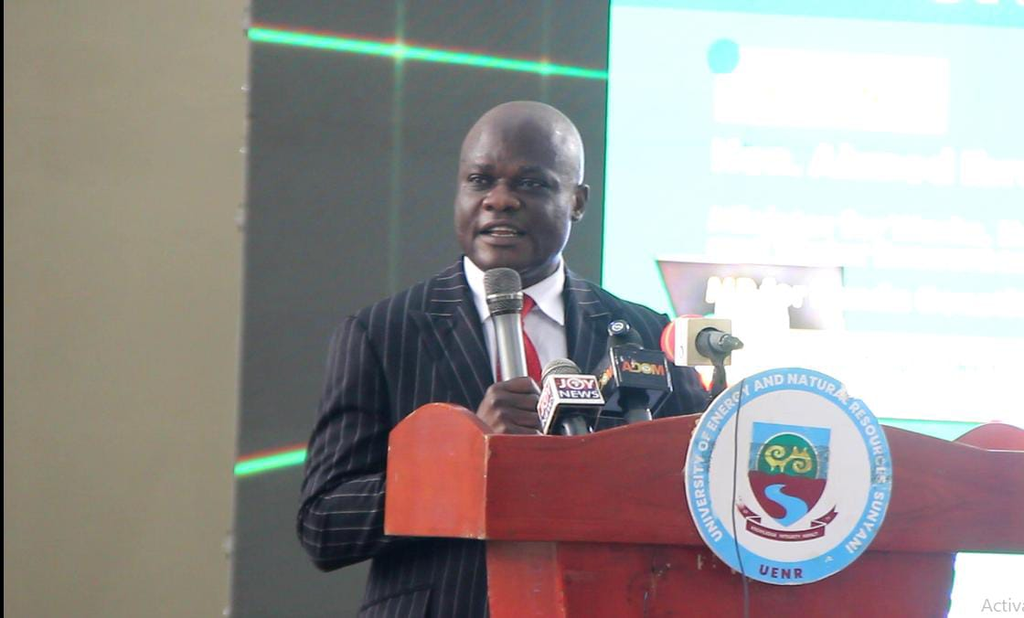
Ghana's Minister for Works, Housing and Water Resources, Ahmed Ibrahim, has advocated for greater collaboration among government, universities, industry and civil society to tackle the nation's escalating environmental issues. Speaking at the inauguration of the School of Natural Resources Students' Association (SNARSA) at the University of Energy and Natural Resources (UENR), the minister emphasized that addressing challenges like climate change, illegal mining, deforestation, land degradation, pollution, flooding and water depletion demands a collective effort, with academia and young people playing pivotal roles.
The minister underscored the importance of the students' knowledge and skills in devising practical solutions to Ghana's environmental predicaments. He described the theme of the event, "Natural Resources Students at the Forefront of Sustaining the Environment: Partnering Government Against Environmental Backlashes," as particularly pertinent, given the mounting environmental pressures globally.
Ibrahim underscored that the sustainable development of Ghana cannot be achieved without safeguarding the country's natural resources, highlighting that economic growth, public health, food security, energy production and urban development are all intricately tied to responsible resource management. The minister also expressed concerns over water security in Ghana, noting that the country's per capita water availability stands at 1,509 cubic meters annually, which is below the internationally recommended level of 1,700 cubic meters per person.
He stressed the urgent need to prioritize water security through sustainable management, protection and equitable distribution of water resources.
The minister pledged the government's commitment to investing in water supply infrastructure, rural water systems and urban water expansion projects to enhance access to safe and affordable water. However, he cautioned that government efforts alone would not suffice to protect the country's water bodies and ecosystems. "Preserving our rivers, wetlands, and watersheds necessitates responsible conduct from all stakeholders," Ibrahim said, urging students to become advocates for water conservation and environmental stewardship.
Additionally, Ibrahim called for increased investment in climate-resilient infrastructure designed to withstand floods, droughts and other environmental disturbances. He highlighted the critical role of roads, housing, drainage systems, water supply networks and sanitation facilities in national development, stating that infrastructure planning must increasingly consider the impacts of climate change.
"Infrastructure that is safe and sustainable not only protects lives and property but also fosters economic growth, productivity and social inclusion," he remarked.
The minister also stressed the significance of responsible management of natural resources, warning that deforestation, environmental degradation and unsustainable resource extraction pose serious threats to Ghana's development. He identified universities, particularly UENR, as key partners in addressing these challenges.
Written by urgent.news from MyJoyOnline Ghana's reporting — not their text. Machine-written — may contain errors; check the original before relying on it.