Mechatronics student builds 3D printer made from 92% LEGO for less than $180
A mechatronics engineering student made an open-source 3D printer, 92% of which is LEGO, and can print a decent benchy despite the imprecise LEGO leadscrews.
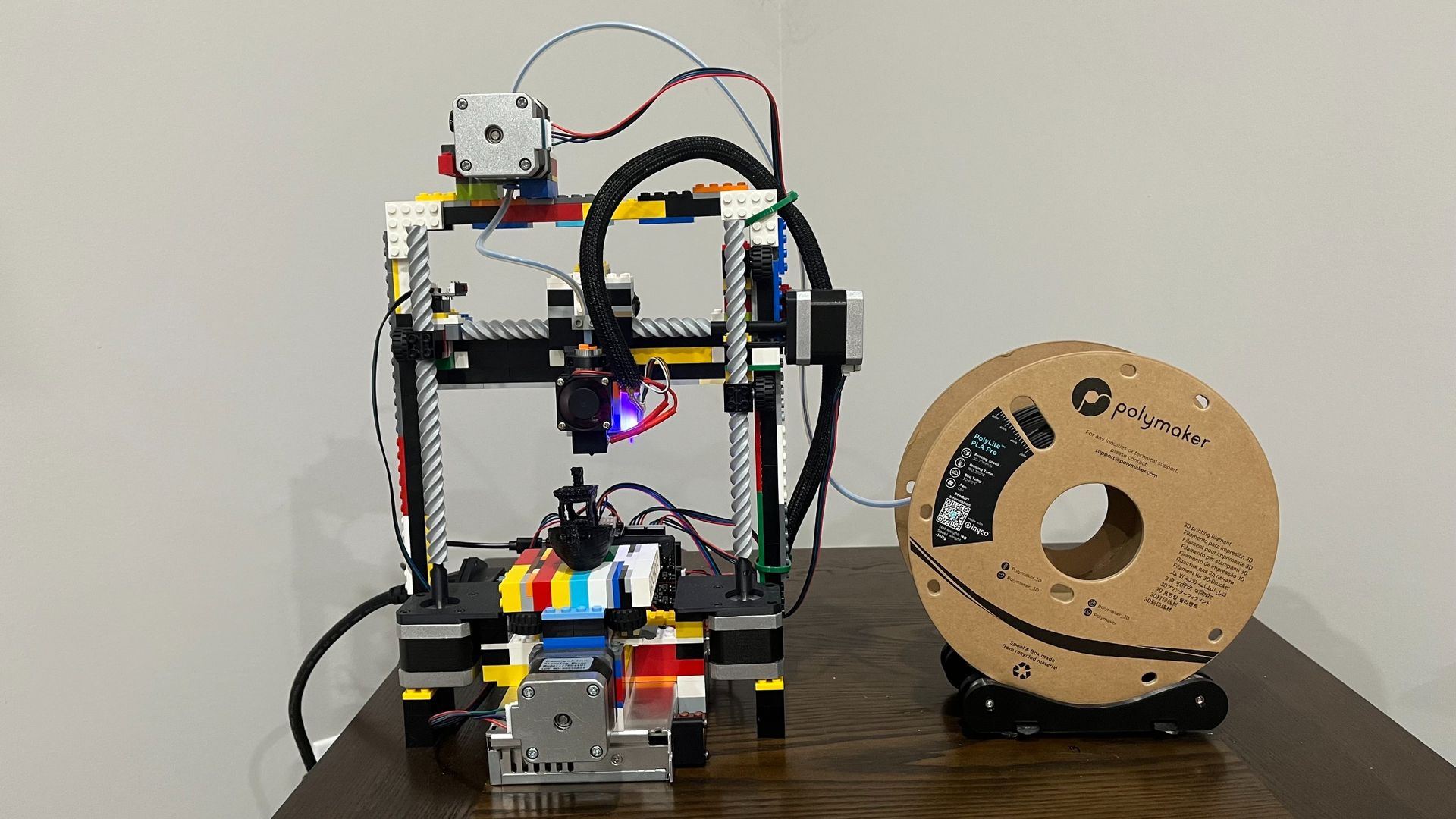
Adam Turaj, a Mechatronics Engineering student at the University of Waterloo, constructed an open-source LEGO 3D printer called “Studprint” using only 13 components that are not made of LEGO. The total cost of the build was $173.35, with $30 allocated for LEGO pieces, which make up 92% of the entire build. At the Rocky Mountain RepRap Festival 2026, Turaj was flown to the event, met Prusa CMO Zack Freedman, and presented his creation to over 4,000 attendees.
Turaj's project emerged from a Hack Club challenge named Infill, inviting makers and hobbyists to design their 3D printers from scratch and receive a $350 grant to build them. Turaj submitted his LEGO 3D printer design in SOLIDWORKS, naming it Studprint after the studs on a LEGO brick. He decided to use only "classical LEGO," avoiding Technic pieces. The project's CAD designs appear virtually identical to a virtual LEGO builder.
The printer's bill of materials includes three major electronics components: the BTT SKR Pico V1.0 control board, a Raspberry Pi Zero 2 W for wireless capability, and a Mean Well LRS-150-24 switching power supply. Each component cost around $25, with the remaining $30 spent on LEGO pieces. The backbone of the printer is composed of five NEMA 17 stepper motors, four of which control the axes, and one feeds filament to the Trianglelab V6 Extruder.
The build plate, too, is constructed from LEGO blocks. On the GitHub repository, Turaj showcased a Benchy print, which took 1.25 hours to slice and print. Despite using LEGO leadscrews, the result was surprisingly impressive.
Written by urgent.news from Tom's Hardware's reporting — not their text. Machine-written — may contain errors; check the original before relying on it.