James Webb telescope finds ice older than the star it orbits
Radiation and collisions reshape the planetary building materials.
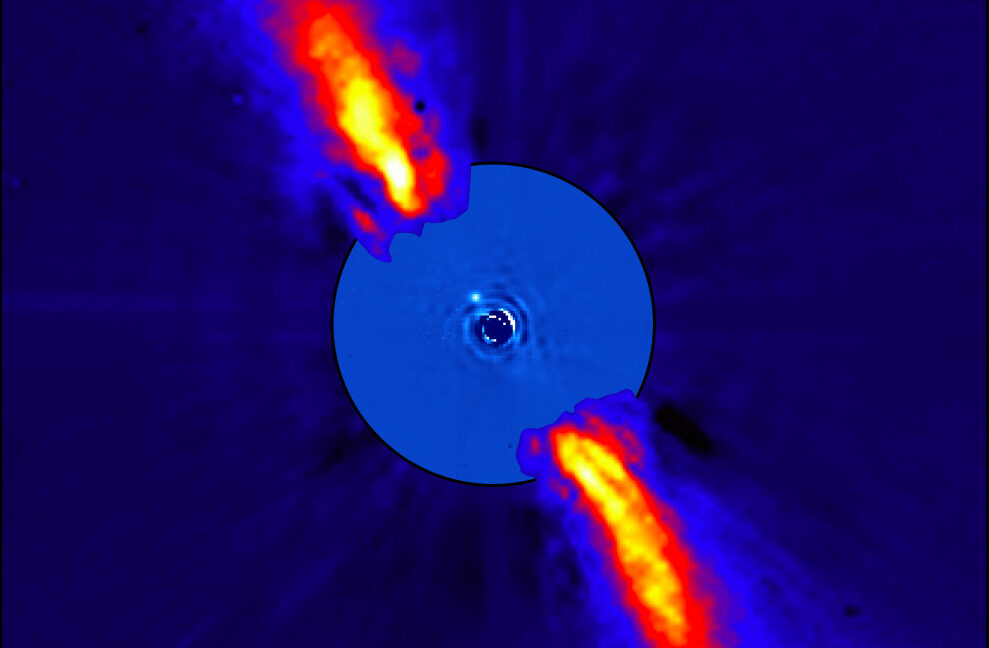
James Webb telescope reveals that ice discovered in the Beta Pictoris system is older than the star itself. Beta Pictoris, a young star approximately 20 million years old, resides around 64 light-years away from Earth. The star is encircled by an extensive disk composed of dust and debris, where planets are in the process of formation.
Astronomers have already identified three planets within this disk. A team led by Sarah Betti, an astronomer at the Space Telescope Science Institute in Baltimore, utilized the James Webb Space Telescope to investigate the presence of ice in this disk. Their findings have discovered both water and carbon dioxide ice. The water ice is amorphous rather than crystalline and is combined with carbon dioxide in proportions akin to those observed in comets within our own Solar System.
This discovery indicates that the necessary components to create water-rich planets could be widespread around newborn stars. Beta Pictoris is one of the most extensively studied stars in the sky. Its disk was among the inaugural images captured, back in 1984, and it appears almost exactly edge-on, making it an ideal "laboratory" for examining the development of planetary systems.
The disk is classified as a debris disk, where dust is perpetually replenished by collisions among comets and planetesimals, which are the building blocks of planets.
Written by urgent.news from Ars Technica's reporting — not their text. Machine-written — may contain errors; check the original before relying on it.
This story
This is one outlet's version. Read the fullest account.
- James Webb telescope finds ice older than the star it orbits arstechnica.com