James Webb telescope finds ice older than the star it orbits
Radiation and collisions reshape the planetary building materials.
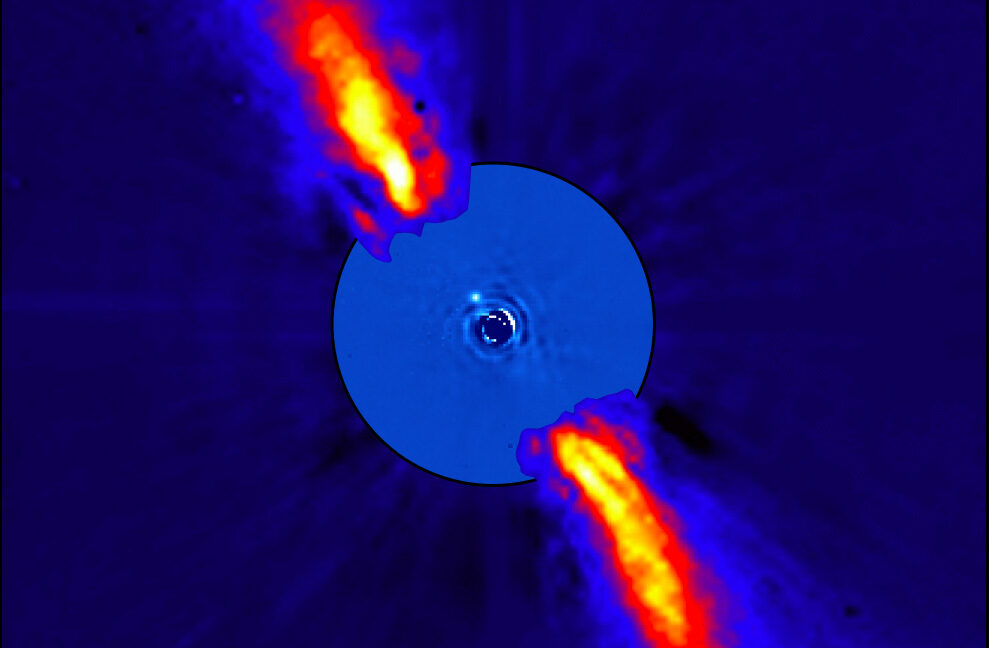
Beta Pictoris, a youthful star approximately 20 million years old and situated around 64 light-years from Earth, harbors a colossal disk of dust and debris where planets continue to emerge. Astronomers have already identified three planets within this disk. According to a fresh study published in Science, a team spearheaded by Sarah Betti, an astronomer at the Space Telescope Science Institute in Baltimore, employed the James Webb Space Telescope to probe for ice in this disk.
The researchers detected both water ice and carbon dioxide ice. The water ice is amorphous rather than crystalline and is intermingled with carbon dioxide in proportions akin to those observed in comets within our own Solar System. This observation implies that the components essential for nurturing water-rich planets may be prevalent around nascent stars.
Beta Pictoris stands as one of the most extensively scrutinized stars in the cosmos. Its disk was among the initial ever captured in 1984, and it is observed almost precisely edge-on, rendering it an ideal research subject for understanding the growth of planetary systems. The disk is classified as a debris disk, where the dust is perpetually replenished by collisions among comets and planetesimals, the building blocks that eventually form planets.
Written by urgent.news from Ars Technica Science's reporting — not their text. Machine-written — may contain errors; check the original before relying on it.
Also reported by 1 other outlet
- James Webb telescope finds ice older than the star it orbits arstechnica.com