Lupo dobra aposta no ‘made in Paraguay’
Nem a crise bancária tirou a confiança da Lupo no Paraguai. A fabricante de meias, cuecas e roupas esportivas está dobrando a aposta no país vizinho, anunciando uma ampliação de sua fábrica em Ciudad del Este, na fronteira com o Brasil.
The Lupo footwear company has doubled down on its investment in Paraguay, announcing plans to expand its factory in Ciudad del Este, on the border with Brazil. The goal is to conquer South America, starting with Paraguay, Argentina, and Uruguay. The company is installing 200 new looms in the unit, increasing the plant's capacity from 20 million to 33 million pairs of socks per year, a 65% growth.
The workforce is also expected to double, from 250 current employees to around 500 after the expansion is completed. This project is part of a R$30 million investment announced in 2025, when Lupo opened its first factory outside Brazil. The plan was already in place before the Ueno Bank crisis, which led to the resignation and impeachment of President Santiago Peña.
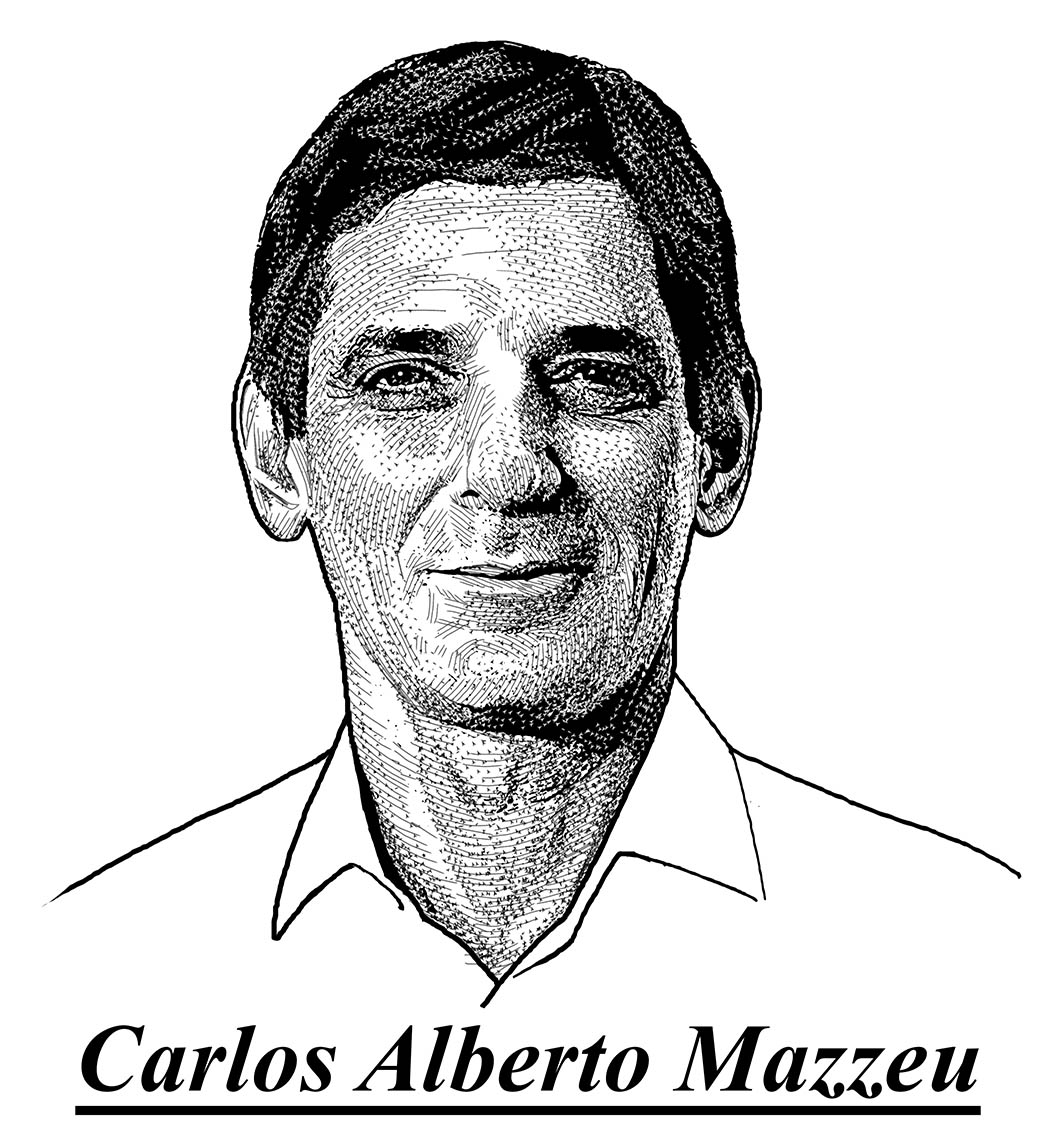
CEO Carlos Alberto Mazzeu said the new equipment was purchased in August and started arriving this month. "It was a decision made long before," Mazzeu told Brazil Journal. In addition to expanding the factory, the company is building a distribution center in Ciudad del Este, which should start operating in February. The facility will supply the Paraguayan market and serve as a logistics hub to boost sales in Argentina and Uruguay, where Lupo already operates through distributors, in addition to Paraguay.
According to Mazzeu, the strategy combines three channels: franchises, multi-brand retail, and e-commerce. Today, the company has eight stores in Paraguay, operated by a local distributor. The plan is to adapt them to Lupo's franchise model and open new units, eventually reaching 20 international stores in the coming years. Expansion will start in Paraguay before more aggressively moving to Argentina and Uruguay.
There is a lot of room for growth, says the CEO. In the third quarter, sales to the external market amounted to R$6.5 million, a jump of 156% compared to the same period last year. Despite this, exports still represent only 1.6% of the company's total revenue. "There is a huge potential for growth abroad. We are very known in Brazil and would like to have the same recognition outside," Mazzeu said.
The decision for Lupo to produce in Paraguay was a response to growing competition from Asian products and a Paraguayan manufacturer that was gaining ground in the Brazilian sock market. The competition is especially fierce in basic sport socks, especially cotton ones, products with little differentiation and tighter margins. According to Mazzeu, these types of socks represent half of the Brazilian market – a segment in which the company has a 25% share.
The bet worked. The manufacturing costs of socks in Paraguay are already about 30% to 32% lower than in Brazil. According to Mazzeu, the main advantage is access to raw materials. With the maquila regime and the commercial conditions of Paraguay, Lupo can import various raw materials at significantly lower prices than those found in Brazil.
(The maquila regime allows importing raw materials and equipment with suspension of customs duties for producing goods destined for export, subject to a single tax of 1%.) Mazzeu said the company's not affected by the Ueno Bank crisis. The company did not operate with the bank and only maintains the necessary resources for cash flow operations, mainly the payment of salaries.
"We used another bank and only keep the operating capital in Paraguay," said the executive. However, operating in Paraguay is not as simple as it seems. Mazzeu says many Brazilian companies are looking at the country as a cheaper industrial alternative, but underestimate the challenges of setting up an operation there. Before opening the factory, Lupo spent a year preparing its future employees.
The company installed some looms in a school and trained dozens of people, a process that also required adapting Brazilian professionals to the local culture. "Who goes there cannot think only in training: they have to think in education," he said. "It's not just about having the will to open a company, go there and think you will be able to.
It's not the same thing." Additionally, there are structural issues. Mazzeu said that at the beginning of operations, the factory's energy would be interrupted up to four times a week due to failures in the electrical grid. Lupo had to negotiate changes in the energy supply infrastructure to resolve the problem. The CEO also sees limits to industrial growth in the country.
With more and more companies seeking to produce in Paraguay, the competition for workers is increasing. "Paraguay has its limits. It's a small country and everyone is trying to be there," he said.
Written by urgent.news from Brazil Journal's reporting — not their text. Machine-written — may contain errors; check the original before relying on it.